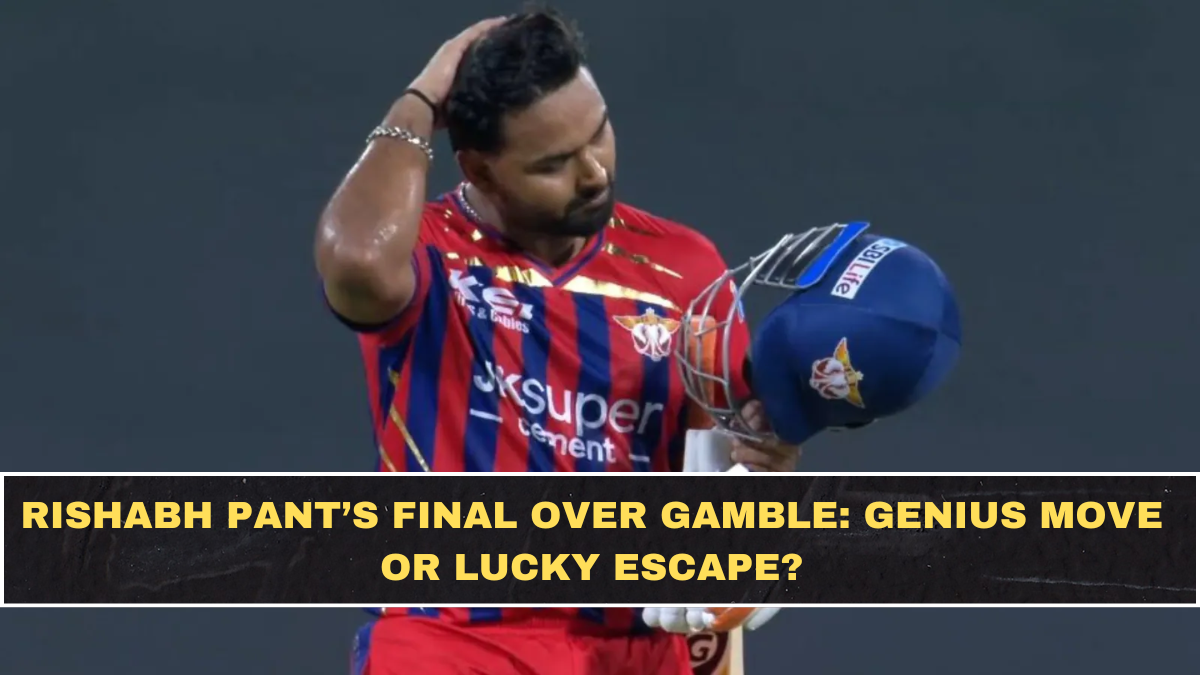
Rishabh Pant’s final-over decision has become one of the biggest talking points from LSG’s dramatic IPL 2026 win over RCB. Lucknow Super Giants were defending 20 runs in the last over, and Pant chose Digvesh Rathi instead of a more obvious safer option. That decision looked risky because RCB still had power-hitters who could change the match in three balls.
Pant later admitted it was a tough call and said LSG were under pressure, but he felt Rathi was the right match-up for Romario Shepherd. That explanation matters because captaincy is not only about who has the best economy rate; it is also about match-ups, batter weakness, ground conditions and pressure handling.

What Actually Happened In The Final Over?
RCB needed 20 runs from the final over, and Digvesh Rathi had to defend it under serious pressure. ESPNcricinfo’s live blog noted that Rathi held his nerve as Shepherd could not get the early sixes RCB needed. The over started with singles and a dot ball, which instantly pushed the chase out of RCB’s control.
LSG eventually won by nine runs under the DLS method in a rain-affected match. Mitchell Marsh’s century had already given Lucknow a strong total, while Prince Yadav’s bowling also played a major role. But the final-over decision became the headline because it showed Pant taking responsibility when one wrong ball could have destroyed the match.
| Match Moment | Why It Mattered |
|---|---|
| RCB needed 20 in final over | Pressure was still alive |
| Pant picked Digvesh Rathi | Risky match-up-based call |
| Early singles and dot ball | RCB lost chase control |
| LSG won by 9 runs DLS | Losing streak finally ended |
| Pant defended the move | Showed captaincy confidence |
Was It Genius Or Just Luck?
Calling it pure genius is too much. Calling it pure luck is also lazy. The truth is somewhere in the middle. Pant made a calculated gamble based on match-up logic, but final overs in T20 cricket always carry chaos. A good ball can disappear for six, and a poor decision can suddenly look brilliant if the batter fails.
This is where fans need to be honest. If Shepherd had smashed two sixes, the same people praising Pant would have called the decision foolish. That is why captaincy should not be judged only by result. The better question is whether the decision had logic behind it, and Pant’s explanation shows that it did.
Why Was This Win So Important For LSG?
This win mattered because LSG had been stuck in a damaging losing streak. Hindustan Times reported that Pant said the team finally “came to the same page” after snapping the nightmare run against RCB. That statement shows the win was not just about two points; it was about confidence, dressing-room belief and momentum.
For Pant personally, the match also gave him some relief. Times of India reported that he scored an unbeaten 32 off 10 balls, while Marsh’s 111 helped LSG post a strong total. Pant has faced questions over his T20 form and captaincy pressure, so this performance gave him a badly needed positive headline.
What Did Pant Get Right?
Pant’s best move was trusting a clear plan instead of panicking. Captains often choose reputation over situation in final overs, but Pant went with the bowler he believed matched the batter better. That is brave, but it also means he must own the decision if it fails.
Key things Pant got right:
- Match-up thinking: He picked Rathi because he believed the bowler suited the batter.
- Pressure control: He did not look trapped by RCB’s late hitting threat.
- Clear communication: His field and bowling plan appeared specific, not random.
- Team belief: Trusting a bowler in pressure can lift the dressing room.
- Result timing: The win came exactly when LSG needed momentum badly.
Conclusion?
Rishabh Pant’s final-over gamble was not a miracle. It was a risky but logical captaincy call that worked because Digvesh Rathi executed under pressure. The result made Pant look sharp, but the real credit should be shared between the captain’s decision and the bowler’s nerve.
The blunt truth is that Pant still has plenty to prove as a T20 captain and batter. One smart call does not erase every concern around his form or LSG’s season. But against RCB, when the match was alive and pressure was high, he made the call, backed his bowler and walked away with a win.
FAQs?
Why Did Rishabh Pant Give The Final Over To Digvesh Rathi?
Pant said it was a tough decision, but he felt Digvesh Rathi was the right match-up for Romario Shepherd. LSG were defending 20 runs, so the call carried real risk. The decision worked because Rathi began the over strongly and did not allow RCB the early big hits they needed.
How Did LSG Beat RCB?
LSG beat RCB by nine runs under the DLS method in a rain-affected IPL 2026 match. Mitchell Marsh’s century gave Lucknow a strong platform, while their bowlers held their nerve in the chase. The final over became the biggest talking point because RCB still had a chance.
Was Pant’s Decision Lucky?
There was some risk involved, but it was not blind luck. Pant explained that the decision was based on match-up thinking. In T20 cricket, even a logical call can fail, so the result made the decision look much stronger.
Why Was This Match Important For Pant?
This match was important because LSG ended a losing streak and Pant finally had a strong personal contribution with the bat. He also made a bold captaincy call that worked under pressure. For a player facing questions over form and leadership, this win gave him badly needed breathing space.