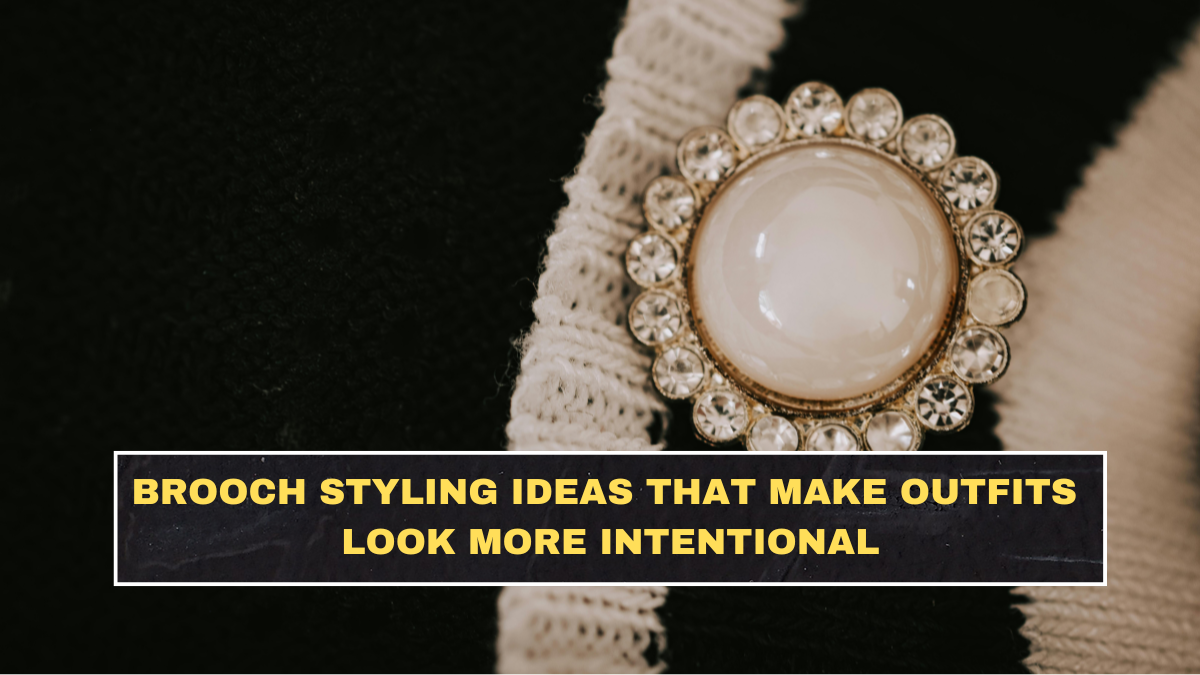
Brooches are back, and not in the dusty “borrowed from someone’s jewelry box” way people still imagine. British Vogue called brooches the biggest catwalk jewelry trend of autumn/winter 2026, with placements showing up on blazers, scarves, shoulders, hoodies, and even belt loops. Harper’s Bazaar also published a 2026 styling guide built around multiple modern ways to wear them, which tells you this is not a one-runway fluke.
The real reason the trend works now is simple: a brooch makes an outfit look considered without forcing you to buy a whole new wardrobe. That matters when people are trying to refresh repeat outfits more intelligently. Vogue Arabia described the 2026 comeback as fashion’s most deliberate styling choice rather than a nostalgic leftover, and Pinterest Predicts 2026 highlighted “Brooched” as a rising styling direction, especially for men experimenting with pins on ties, sleeves, and other unexpected placements.
Why are brooches trending again?
Because fashion is in one of those cycles where personal styling matters more than obvious newness. Accessories that can shift the same blazer, coat, knit, or bag into a different mood are more useful than another basic item. British Vogue’s runway report highlighted brooches at Giorgio Armani, Tory Burch, Chopova Lowena, Simone Rocha, Ralph Lauren, Ulla Johnson, and others, showing that the trend spans polished tailoring, eccentric styling, romantic dressing, and casual wear.
The comeback is also tied to placement freedom. Harper’s Bazaar’s March 2026 piece explicitly argued that there is no one correct placement anymore, and that is what makes brooches feel modern again. Vogue Adria’s early-2026 styling roundup said the same thing in a different way by showing brooches on hats, necklines, and layered jewelry placements instead of just the traditional lapel position.
Which brooch placements look most modern now?
| Placement | Why it works | Best outfit type |
|---|---|---|
| Blazer lapel | Classic but still sharp | Tailoring, office looks |
| Sweater shoulder | Makes knitwear feel styled | Plain crewnecks, cardigans |
| Shirt collar or neckline | Acts like a jewelry focal point | Button-downs, simple tops |
| Scarf or shawl | Adds structure and shape | Winter layers, draped wraps |
| Bag strap or bag front | Refreshes an old bag cheaply | Minimal everyday bags |
| Belt loop or waist | Feels more fashion-led | Denim, trousers, skirts |
This is where people usually overthink the trend. A modern brooch does not need a complicated outfit. It usually works best when the outfit is simple and the placement does the talking. Harper’s Bazaar specifically called out using brooches on bags and shawls, while British Vogue pointed to runway placements on shoulders, necklines, hoodies, and belt loops as proof that the accessory now functions across far more than formal jackets.
How can a brooch make simple outfits look better?
The easiest way is to use it where the outfit lacks a focal point. A plain blazer, black knit, white shirt, or camel coat can look finished with one brooch placed near the shoulder or lapel. That is the smart version of the trend because it upgrades basics instead of fighting them. Vogue Scandinavia’s Copenhagen Fashion Week coverage noted brooches in plain metal, pearl, and logo styles, which supports the idea that the styling can stay clean rather than costume-heavy.
This is also why brooches are more useful than people think. They can add polish without changing silhouette, fit, or comfort. Harper’s Bazaar framed them as a way to zhuzh clothes you already own, which is exactly right. If one accessory can make your fifth wear of the same jacket look intentional again, that is a practical style tool, not just a trend.
Which brooch styles are easiest to wear in real life?
Simple metal brooches, pearls, vintage-look florals, and small symbolic motifs are the easiest starting points. Vogue Scandinavia highlighted plain metal, pearl, and logo versions during Copenhagen Fashion Week, while British Vogue’s runway roundup pointed to natural motifs like fish, kittens, squirrels, butterflies, and more decorative rhinestone pins.
For most people, the smarter choice is to start quieter. One sculptural metal brooch on a blazer is easier to pull off than a huge crystal insect pinned to a hoodie, even if both appeared on runways. The runway version is inspiration. Real life still needs editing.
How do you wear a brooch without looking dated?
The biggest rule is restraint. One brooch on a strong placement usually looks more modern than several scattered randomly. Another rule is contrast. A brooch often looks fresher on unexpected pieces like a crisp shirt, soft knit, scarf, or even a bag than it does on something already heavily ornate. Vogue Arabia’s 2026 feature on the brooch comeback argued that the trend feels compelling precisely because it had been neglected for so long, which means the styling works best when it feels deliberate rather than inherited.
You also need to avoid making the whole outfit vintage-coded unless that is truly the point. If the brooch, blouse, skirt, bag, and hairstyle all lean old-fashioned at once, the look can tip into costume. A brooch works better when the rest of the outfit stays cleaner, sharper, or more current.
Can brooches work outside formalwear?
Yes, and that is one of the biggest reasons the trend has spread. British Vogue’s runway report explicitly noted brooches used on hoodies and belt loops, while Pinterest Predicts 2026 framed the trend partly around men wearing them on ties, socks, and sleeves. That is a broader styling range than most people expect.
This matters because it breaks the old assumption that brooches are only for occasion dressing. A brooch can absolutely work with denim, knits, plain outerwear, and even casual accessories if the piece itself is not too precious and the placement feels intentional.
What styling mistakes make brooches look forced?
The biggest mistake is adding a brooch to an outfit that already has too many competing details. Another is choosing a placement with no visual logic, where the brooch looks like it landed there by accident. A third is using a very ornate brooch on a fabric that cannot support it well. The trend is about intention, not randomness.
The other mistake is fear. People still assume the lapel is the only acceptable place, which is exactly why their styling looks stiff. The 2026 coverage across Vogue, Harper’s Bazaar, and other fashion outlets makes it clear that the modern revival depends on freer placement and more personality-led choices.
What is the easiest brooch formula to try first?
Start with one brooch on one plain item. A dark blazer, cashmere knit, or structured coat is the safest entry point. After that, try one less expected placement such as a scarf, neckline, or bag. You do not need to jump straight into maximal styling to make the trend work.
Conclusion
Brooches are trending again because they do something useful: they make outfits look more intentional without requiring a whole new wardrobe. The 2026 fashion coverage is clear that this revival is not limited to formal lapels anymore. Brooches are showing up on blazers, scarves, knitwear, bags, hoodies, and even belt loops across current runways and styling guides. The smartest way to wear them is simple: use one good brooch, place it where it adds focus, and keep the rest of the outfit edited enough that the styling looks deliberate instead of nostalgic.
FAQs
Are brooches really in style in 2026?
Yes. British Vogue called brooches the biggest catwalk jewelry trend of autumn/winter 2026, and multiple fashion outlets have published 2026 styling guides around the trend.
What is the easiest way to wear a brooch?
One of the easiest ways is on a blazer lapel, sweater shoulder, or simple coat. These placements feel polished without being too complicated.
Can brooches be worn casually?
Yes. Current runway and trend coverage shows brooches on hoodies, belt loops, scarves, and bags, not just formal jackets.
How do you keep a brooch from looking old-fashioned?
Use it with cleaner, more modern pieces and avoid overloading the outfit with too many vintage-coded elements at once. The modern comeback is driven by deliberate placement and simpler styling.