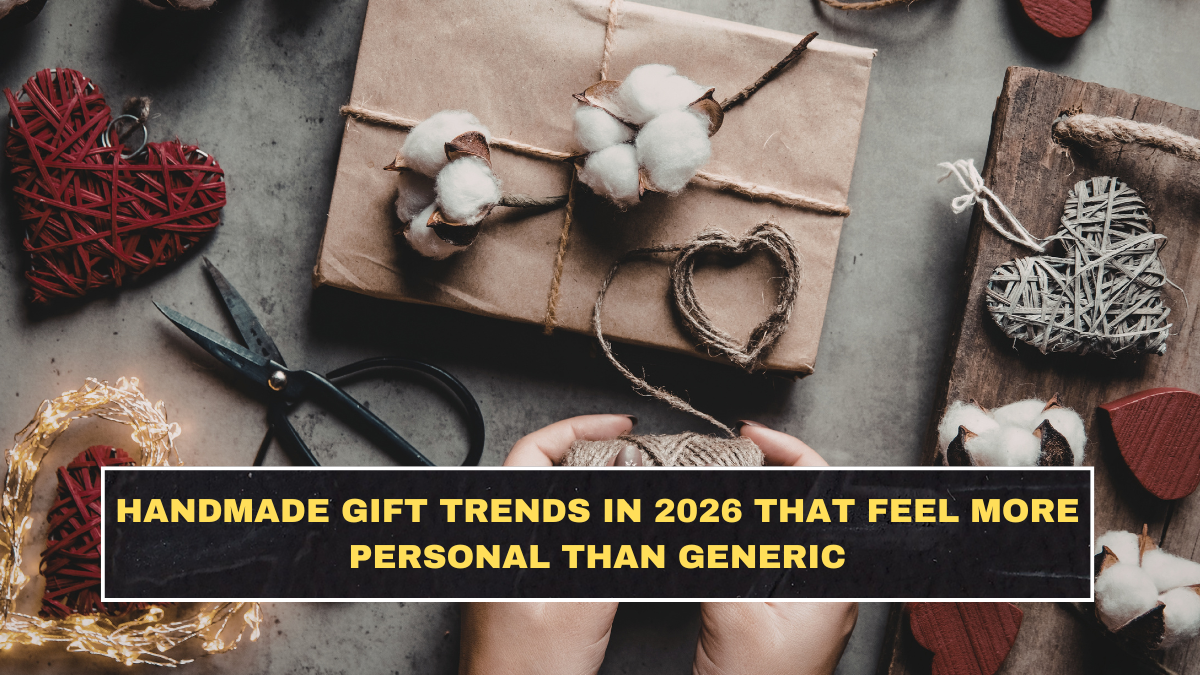
Handmade gift trends in 2026 are getting stronger because generic gifting is getting weaker. People still buy candles, gift cards, and mass-market bundles, but more shoppers now want gifts that feel specific to the person receiving them. That is why personalization, handmade detail, and sentimental storytelling are doing better than one-size-fits-all products. Etsy’s Spring and Summer 2026 Seller Trend Report says its trend guidance is based on Etsy search data and industry forecasting, which matters because Etsy remains one of the clearest marketplaces for tracking handmade and custom gift demand.
The emotional side of gifting is showing up in broader spending too. Forbes reported that Americans are expected to spend a record $29.1 billion on Valentine’s Day in 2026, showing that gifting demand remains strong even when buyers are more selective. At the same time, older Etsy trend reporting and current marketplace activity continue to show strong interest in custom and personalized gift categories rather than purely generic items.
Why are handmade gifts feeling more relevant again?
Because people are tired of gifts that look expensive but feel empty. A handmade or personalized gift creates a stronger sense of effort, memory, and thoughtfulness. Forbes reported in 2025 that 78% of consumers said a personalized gift makes them feel like they are forming a one-to-one relationship with the brand, which is a useful signal of how powerful personalization has become in shaping perceived value.
There is also a practical buying reason. A generic gift can be bought anywhere, which makes it easier to replace and easier to forget. Handmade gifts compete differently. They often win by being harder to copy, more emotionally specific, and more connected to a moment, name, memory, or relationship. That is why personalized kitchenware, handmade pottery, embroidered linens, and custom keepsakes keep showing up in Etsy trend reporting.
What kinds of handmade gifts are trending most in 2026?
Personalized and sentimental formats are doing the best. Etsy’s current community trend activity shows strong momentum in custom gift categories, with Mother’s Day search behavior this week showing jewelry gift terms rising sharply and custom details such as birthstones continuing to gain traction. That suggests buyers still respond strongly to gifts that feel tied to identity and family meaning, not just to trend aesthetics.
Older Etsy gifting guidance also pointed to name or initial jewelry, stamped accessories, leather goods, kitchen tools, and one-of-a-kind customized items as popular personalization categories. That is still consistent with what handmade commerce rewards now: gifts that can be tailored without feeling mass-produced.
Why are personalized gifts outperforming more generic options?
Because they reduce gifting uncertainty. A personalized gift signals that the buyer actually thought about the recipient instead of buying the safest thing on a bestseller list. That matters more in a crowded gifting environment where everyone has access to the same large marketplaces and the same trending product lists.
The stronger handmade gift categories in 2026 also fit broader consumer behavior around emotion-driven purchases. Personalized gifting works because it combines product value with story value. A mug is ordinary. A mug with a family phrase, hand-painted design, or custom illustration becomes a memory object. That difference is exactly why custom and handmade products remain resilient even when shoppers are being more selective.
Which handmade gift categories feel strongest right now?
Here is the practical breakdown:
| Handmade gift category | Why it works | Best use case | Main weakness |
|---|---|---|---|
| Personalized jewelry | Feels intimate and identity-based | Birthdays, anniversaries, Mother’s Day | Can become generic if overused |
| Custom kitchenware | Useful and sentimental together | Family gifting, weddings, housewarmings | Needs strong design to avoid looking cheap |
| Handmade pottery and decor | Feels unique and display-worthy | Home gifts, host gifts, milestone occasions | Style mismatch can limit appeal |
| Embroidered or stitched gifts | Feels thoughtful and crafted | Baby gifts, family keepsakes, seasonal gifting | Too-specific designs narrow reuse |
| Gift sets with story themes | Feels curated rather than random | Holidays, comfort gifting, nostalgia gifting | Easy to become gimmicky |
This table matters because the strongest handmade gifts do not just look handmade. They solve for meaning. That is the difference between a real gift and decorative filler.
What is pushing handmade gifting beyond just holidays?
The answer is emotional utility. Buyers increasingly want gifts that help them say something: thank you, I remembered, I know your taste, I know your history, I know what matters to you. That emotional function makes handmade gifting useful for birthdays, weddings, baby milestones, friendship gifting, self-gifting, and everyday comfort gifting, not just Christmas or Valentine’s Day.
Etsy’s own positioning still centers handmade, vintage, custom, and unique goods, which reflects how the platform continues to win by offering alternatives to generic retail gifting. That matters because if large numbers of shoppers only wanted convenience, handmade marketplaces would weaken much faster than they have.
Is this trend really about sentiment, or just better branding?
Both. Some of it is genuine emotional buying, and some of it is brands and marketplaces learning how to package emotion more effectively. Technavio says the gifts, novelty, and souvenirs market is expected to grow by $21.07 billion from 2026 to 2030, with product innovation and premiumization helping drive that expansion. Handmade gifting fits neatly into that premiumization story because it gives buyers a reason to pay more for products that feel less interchangeable.
But the trend is not fake just because it is marketable. If anything, the fact that personalization keeps winning shows that buyers are pushing back against generic gifting fatigue. They still spend, but they want the spending to feel more intentional.
What should buyers look for in a handmade gift now?
They should ask three questions. First, does the gift clearly connect to the person receiving it? Second, does it still feel useful or display-worthy after the moment passes? Third, is the customization meaningful, or is it just a name printed on a random product? Those questions eliminate a lot of weak gifting decisions fast.
The smartest buyers are not just buying handmade for the label. They are buying gifts that feel specific, durable, and emotionally accurate. That is why sentimental gifts are getting stronger in 2026: they offer differentiation in a market drowning in sameness.
Conclusion
Handmade gift trends in 2026 are growing because people want gifts that feel more personal than generic retail options. Personalized jewelry, custom kitchenware, handmade decor, stitched keepsakes, and curated story-driven gift sets are all benefiting from that shift. The real driver is not just “craft.” It is meaning. Buyers still want to spend, but they want the gift to say something. The handmade products that keep winning are the ones that make that message feel real.
FAQs
Why are handmade gifts trending in 2026?
Because shoppers increasingly want gifts that feel unique, personalized, and emotionally specific rather than generic and easily replaceable. Etsy’s 2026 trend reporting and broader gifting coverage both support that direction.
Are personalized gifts still popular in 2026?
Yes. Recent marketplace signals and broader consumer reporting continue to show strong demand for customized and identity-linked gifts. Forbes also reported that 78% of consumers feel personalized gifts create a stronger one-to-one connection.
What handmade gift categories work best right now?
Personalized jewelry, custom kitchenware, handmade pottery, embroidered keepsakes, and themed handmade gift sets are among the strongest categories based on Etsy trend activity and gifting behavior.
Why do handmade gifts feel better than generic gifts?
Because they usually signal more thought, more specificity, and more emotional relevance. That makes them feel less replaceable and more memorable than generic retail gifts.
Click here to know more