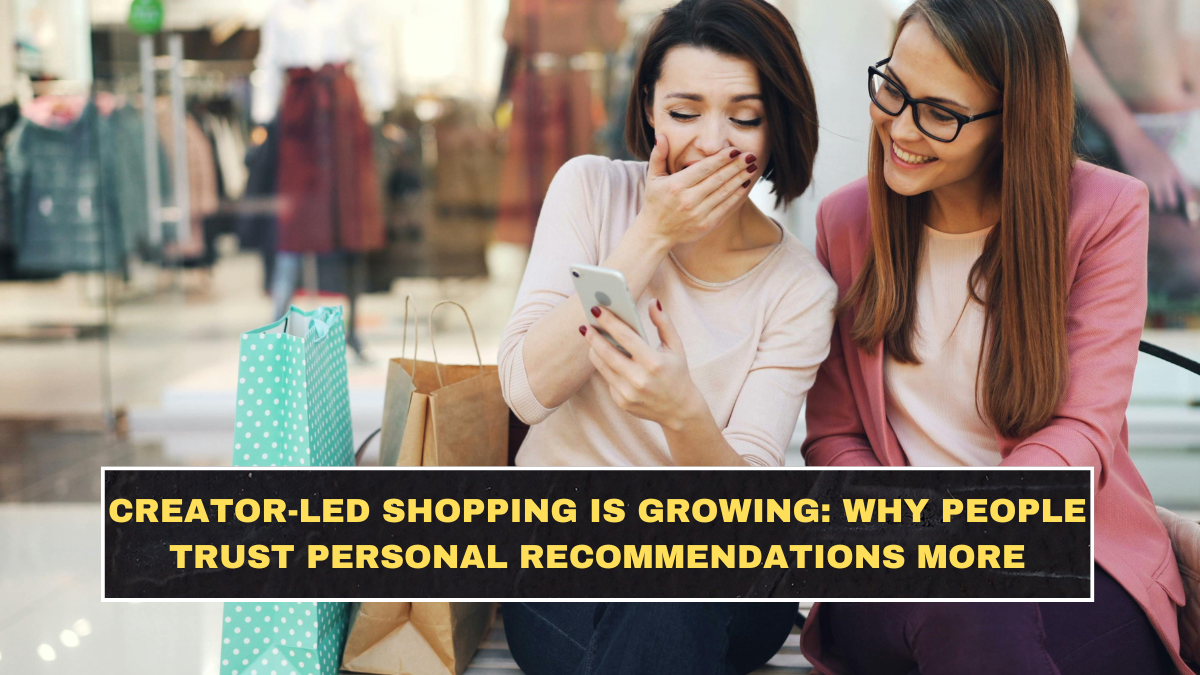
Creator-led shopping is growing because many shoppers trust people more than polished brand advertising. That does not mean consumers are naive. It means they often find a familiar creator’s explanation, demo, or recommendation easier to evaluate than a traditional ad that is obviously trying to sell them something. Recent 2026 reporting shows this clearly. Ogilvy Social Lab data covered by Exchange4media said 86% of consumers made an influencer-inspired purchase in the past year, while affiliate revenue for creators doubled from $570 million in 2021 to $1.1 billion in 2024.
This is also becoming structurally important for commerce, not just a passing content trend. DD India, citing a new report in late 2025, said India has around 2 to 2.5 million monetised digital creators influencing more than 30% of consumer purchase decisions, with creator-led influence already shaping an estimated $350 billion to $400 billion in annual consumer spending.
Why do people trust creator recommendations more than traditional ads?
Because creators usually sell through context, not interruption. A normal ad appears as a demand for attention. A creator recommendation often appears inside a routine the audience already chose to watch, whether that is skincare, gadgets, fashion, cooking, or home organization. Forbes’ March 2026 piece on creator commerce said consumers have grown to trust creators more than standard ad content, especially as creator-led commerce matures into a more integrated part of shopping behavior.
But this trust is not equal across all creators. Mediabrief’s coverage of the iCubesWire Consumer Report 2026 found that 35% of consumers trust influencers with 10,000 to 100,000 followers the most, while 30% trust creators with under 10,000 followers, showing that smaller creators often feel more credible than giant personalities.
What is actually driving creator-led shopping in 2026?
Three things are driving it hardest: short-form video, easier shopping paths, and better creator monetisation. Unicommerce’s 2026 India social commerce guide lists short-form video selling, creator-led commerce, and chat-based buying among the biggest social commerce trends now shaping how products get discovered and bought.
The category is also becoming more direct. Vogue Business reported that affiliate platform ShopMy processes around $80 million in monthly sales and is trying to turn creator recommendations into a more permanent shopping format rather than a fleeting social post. That matters because creator-led shopping is moving from “someone posted a link” to more structured creator-curated storefronts and recommendation systems.
Why does creator-led shopping work better than old-style advertising for some buyers?
Because it feels closer to advice than to promotion. That feeling may sometimes be manipulated, but it is still powerful. Shoppers often want to know how something looks on a real person, whether it performs in everyday use, and whether someone with similar taste or needs actually recommends it. Exchange4media’s Ogilvy report coverage said creator-led commerce is becoming one of the strongest extensions of social media because it is reshaping how consumers discover and buy products.
At the same time, the most useful creator commerce content usually looks less like a perfect ad and more like an honest filter. That is why micro-influencers keep gaining ground. ET Brand Equity reported in January 2026 that Indian consumers are increasingly pivoting toward micro-influencers as trust in digital creators matures.
Which kinds of creator-led shopping work best?
Usually the formats that combine demonstration with clear recommendation work best. Product trials, comparisons, routine-based content, “what I actually use” lists, and creator storefronts tend to be stronger than vague sponsorship shoutouts. Social Samosa reported this week that 45% of consumers buy at least one product every month based on creator recommendations, rising to 69% among Gen Z. That tells you creator commerce works especially well when the audience is already used to buying through content streams.
Here is the practical breakdown:
| Creator-led shopping format | Why it works | Best use case | Main weakness |
|---|---|---|---|
| Routine or demo video | Shows product in real use | Beauty, home, gadgets | Can blur ad and honest review |
| Micro-influencer recommendation | Feels more personal and believable | Niche products, local buying | Smaller reach |
| Creator storefront or curated list | Makes shopping friction lower | Fashion, beauty, gifting | Easy to become generic affiliate clutter |
| Livestream or short-form selling | Creates urgency and impulse | Limited drops, trend products | High chance of hype-driven buying |
| Chat-based creator commerce | Feels conversational and direct | India social commerce, D2C | Trust depends heavily on creator authenticity |
That table matters because creator-led shopping is not one thing. It works best when the content helps the buyer judge the product, not just admire the creator.
Where does creator-led shopping still go wrong?
It goes wrong when trust becomes lazy. Creator recommendations are not automatically honest, and audiences are getting better at noticing that. The New York Post’s March 2026 coverage of a Walr study for We Are Talker said 72% of Gen Z ranked customer reviews as the most credible factor, while influencer endorsements ranked lower. Useful information and real people talking about products mattered more than polished promotion.
That means creator-led shopping works only as long as it still feels closer to peer guidance than to obvious performance marketing. Once creators overpost links, hide sponsorship tone badly, or recommend random products outside their actual niche, the trust collapses quickly.
Why are brands leaning so hard into creator commerce?
Because it shortens the path from attention to purchase. Brands no longer want creators only for awareness. They want creators to move product directly. Britopian’s 2026 creator marketing report says ad spend on creator marketing reached $37 billion in 2025, while Goldman Sachs projected the creator economy could hit $480 billion by 2027.
The business logic is obvious: if a creator can generate attention, trust, and conversion in one place, that is more attractive than paying separately for branding, traffic, and sales. That is also why affiliate systems, creator shops, and direct social-commerce tools keep expanding.
Is creator-led shopping a real long-term shift or just hype?
It looks like a real shift, but not in the stupid “ads are dead” way people like to say online. Traditional advertising is still there. What changed is that commerce now works better when recommendation, identity, and content are mixed together. Kotak Mutual Fund’s 2025 overview of India’s creator economy called it a structural shift in how India consumes information, makes choices, and spends money.
But the limit is trust. Creator-led shopping keeps growing only when audiences feel the recommendation is selective, informed, and relevant. Once it becomes pure affiliate spam, the model weakens. That is why creator-led shopping is growing, but also why smaller and more niche creators often outperform louder ones in credibility.
Conclusion
Creator-led shopping is growing because personal recommendation often feels more useful than traditional ad messaging. People want to see products in real life, explained by someone they already follow, not just pushed by a brand voice they do not trust. But the model only works while the recommendation still feels earned. When creators act like walking storefronts, trust drops. So yes, people trust personal recommendations more. Just not blindly, and not forever.
FAQs
What is creator-led shopping?
Creator-led shopping is when consumers discover, evaluate, and buy products through digital creators rather than relying mainly on traditional ads or retail discovery. It often includes affiliate links, creator storefronts, demos, and social commerce features.
Why do people trust creators more than ads?
Because creator content often feels more personal, contextual, and easier to evaluate than standard ad content. Recent reporting also shows consumers increasingly act on creator recommendations in meaningful numbers.
Are micro-influencers more trusted than big influencers?
Often yes. Recent consumer-report coverage suggests people trust smaller creators more, especially those in the 10K–100K range and even under 10K in some cases.
Does creator-led shopping always work?
No. It works best when the creator’s recommendation feels relevant and credible. It weakens when the content becomes over-sponsored, generic, or obviously driven only by affiliate income. This is an inference supported by recent trust reporting showing consumers still value reviews and useful information highly.