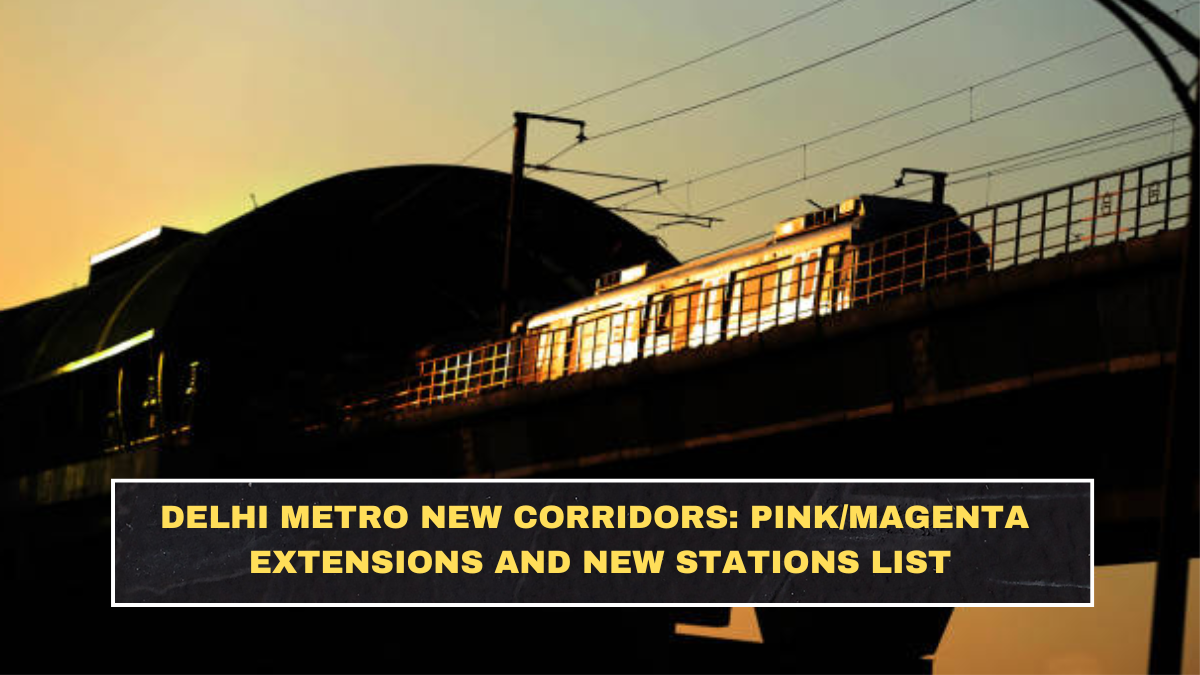
The Delhi Metro expansion plan continues to add new corridors and extend existing lines to improve connectivity across the National Capital Region (NCR). Projects involving the Pink Line and Magenta Line extensions are expected to play a key role in reducing travel time and improving access to residential, commercial, and industrial areas.
Delhi Metro is one of the largest urban transit systems in India, serving millions of commuters daily. As the city expands and population increases, extending metro lines helps reduce road congestion and supports sustainable urban mobility.
The proposed corridor extensions aim to connect developing neighborhoods with existing metro networks, making daily commuting more efficient.
Overview of Delhi Metro Network Expansion
The Delhi Metro Rail Corporation (DMRC) regularly develops expansion projects under different phases of the metro network development plan.
| Expansion Phase | Objective |
|---|---|
| Phase III | Network connectivity across major city zones |
| Phase IV | New corridors and line extensions |
| Interchange stations | Easier transfers between lines |
| Urban connectivity | Access to growing residential areas |
These phases are designed to gradually increase coverage across the city and surrounding regions.
Pink Line Extension Details
The Pink Line is one of the longest lines in the Delhi Metro network and connects multiple parts of the city through an orbital route.
| Feature | Details |
|---|---|
| Line color | Pink |
| Route type | Circular connectivity around Delhi |
| Interchange stations | Links with multiple metro lines |
| Extension purpose | Improve last-mile connectivity |
Extensions on this line are expected to improve access to developing areas and reduce travel time for commuters.
Magenta Line Expansion
The Magenta Line connects important areas including residential zones, business districts, and the airport region.
| Feature | Details |
|---|---|
| Line color | Magenta |
| Key connectivity | Links west and south Delhi areas |
| Technology | Driverless metro operations |
| Expansion goal | Reduce travel congestion |
Additional stations along this line can increase accessibility to emerging residential hubs.
Potential New Stations in Expansion Projects
Expansion projects typically include new metro stations designed to serve growing neighborhoods and improve transportation coverage.
| Station Type | Purpose |
|---|---|
| Residential area stations | Serve local communities |
| Interchange stations | Connect multiple metro lines |
| Commercial district stations | Improve business travel |
| Transport hubs | Connect with bus and railway networks |
Strategically placed stations help maximize commuter convenience.
Benefits for Daily Commuters
Metro expansions bring multiple benefits for commuters traveling across Delhi and NCR.
| Benefit | Impact |
|---|---|
| Reduced travel time | Faster commuting options |
| Lower road congestion | Fewer vehicles on roads |
| Improved connectivity | Better access between neighborhoods |
| Environmental benefits | Reduced vehicle emissions |
Such improvements contribute to more sustainable urban transportation.
Impact on Urban Development
Large transit projects often influence real estate development and commercial activity in nearby areas.
| Development Area | Effect |
|---|---|
| Residential housing | Increased demand near stations |
| Commercial spaces | Business growth near metro corridors |
| Infrastructure | Improved roads and facilities |
| Property values | Potential increase in real estate prices |
Transit-oriented development often emerges around metro stations.
Future Outlook for Delhi Metro
The Delhi Metro network continues to expand as part of long-term transportation planning for the city.
| Future Focus | Objective |
|---|---|
| Network expansion | Cover more urban areas |
| Multimodal connectivity | Integration with buses and railways |
| Smart transit systems | Technology-driven operations |
| Passenger capacity | Handle increasing commuter numbers |
These developments aim to support the growing transportation needs of the capital region.
Conclusion
The Delhi Metro Pink Line and Magenta Line extensions represent important steps in expanding the city’s public transport network. By adding new corridors and stations, the project aims to improve connectivity, reduce traffic congestion, and make commuting more efficient for millions of passengers.
As the network continues to grow, Delhi Metro remains a central component of the city’s long-term urban mobility strategy.
FAQs
What are the new corridors in the Delhi Metro expansion?
The expansion includes extensions of existing lines such as the Pink Line and Magenta Line along with additional stations.
Why is Delhi Metro expanding its network?
The expansion aims to improve connectivity, reduce road congestion, and support urban development.
Which areas will benefit from the new metro stations?
Residential neighborhoods, commercial districts, and transport hubs located near the new corridors will benefit.
How does metro expansion affect property prices?
Areas near metro stations often see increased demand for housing and commercial spaces.
Who manages the Delhi Metro system?
The Delhi Metro Rail Corporation (DMRC) is responsible for planning, construction, and operation of the metro network.