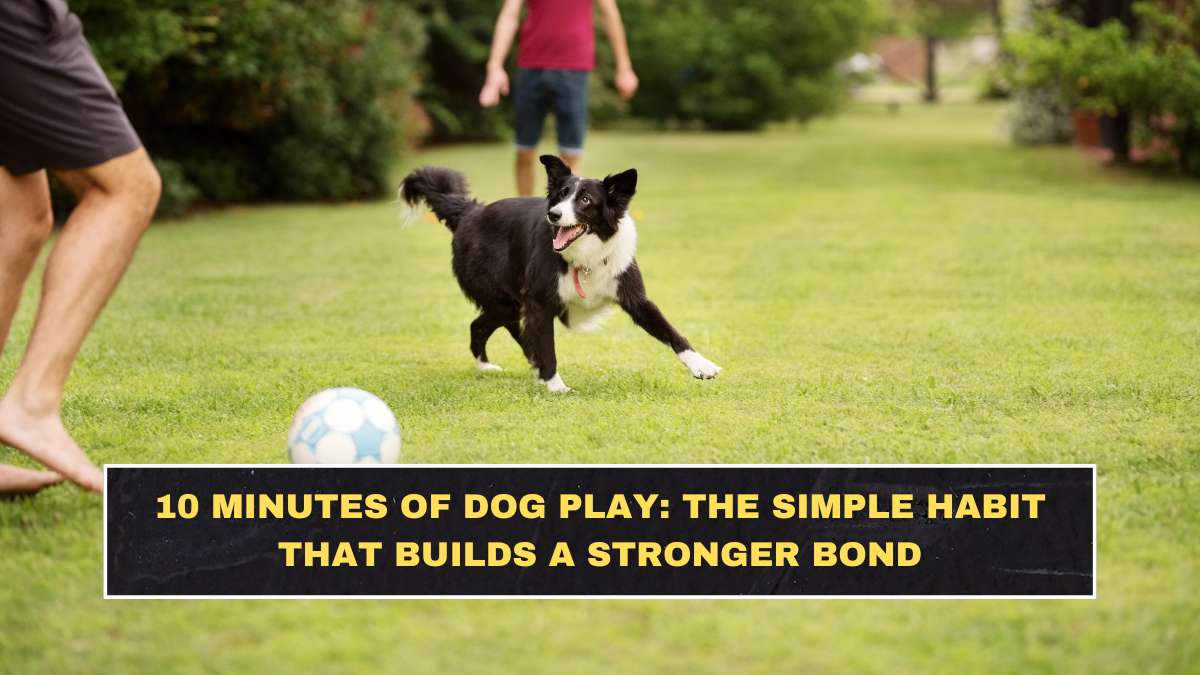
Just 10 minutes of focused dog play can matter because dogs do not measure love only through food, beds or expensive toys. They understand attention, routine, body language and shared activity. A recent study from Linköping University reported that play interactions can improve the dog-owner relationship, and that owners who played more with their dogs showed stronger emotional bonds.
The important word here is “focused.” Throwing a ball while scrolling your phone is not the same as actually playing with your dog. Dogs notice whether you are present or distracted. A short, intentional session of tug, fetch, chase, scent games or gentle floor play can tell your dog: “You matter right now.” That message is more powerful than many owners realise.
What Does Research Say About Dog Play And Bonding?
Research around the human-dog bond shows that daily interactions such as play, training and cooperative activities can influence relationship strength. A Royal Society Open Science study found that higher frequencies of play and training were linked with stronger dog-owner relationships, while a separate intervention showed that extra play improved the emotional bond.
This does not mean training is useless. Training builds communication and safety. But play gives something different: joy, trust and emotional connection. The mistake many owners make is treating play as optional entertainment. It is not. For dogs, play is communication. It is how they release energy, read your signals and build confidence around you.
| Play Habit | Time Needed | Main Benefit | Best For |
|---|---|---|---|
| Tug game | 5–10 minutes | Builds engagement and impulse control | Active dogs |
| Fetch | 10 minutes | Burns energy and improves recall | Dogs who enjoy chasing |
| Hide-and-seek | 5–10 minutes | Strengthens attention and problem-solving | Indoor play |
| Scent search | 10 minutes | Mental stimulation and calm focus | Anxious or bored dogs |
| Gentle floor play | 5–10 minutes | Builds affection and trust | Puppies and senior dogs |
| Training-play mix | 10 minutes | Combines obedience with fun | Dogs needing structure |
Why Is Play Better Than Just Giving Toys?
Toys alone do not build the same bond because the dog is interacting with the object, not with you. A toy can keep your dog busy, but shared play makes you part of the reward. That difference matters. When your dog connects fun with your presence, your relationship becomes stronger and your dog becomes more interested in listening to you.
This is also why bored dogs often create their own “games,” like chewing shoes, barking at windows, digging, stealing socks or demanding attention at the worst time. The dog is not always being “naughty.” Sometimes the dog is under-stimulated and has learned that bad behaviour gets a reaction faster than calm behaviour. That is an owner problem, not just a dog problem.
How Much Playtime Do Dogs Actually Need?
The American Kennel Club explains that puppies, adult dogs and senior dogs all need play, but the amount and intensity should match age, breed, health and energy level. Adult dogs still need playtime for physical exercise and mental stimulation, while senior dogs may prefer gentler, age-appropriate games.
This means 10 minutes is not a full exercise plan for every dog. A young Labrador, Husky or German Shepherd may need much more movement than that. But 10 minutes is a realistic daily minimum for busy owners who keep saying they have “no time.” Be honest: most people waste more than 10 minutes scrolling. Your dog should not suffer because your attention is poorly managed.
What Type Of Play Builds The Strongest Bond?
The strongest bonding play is the kind your dog actually enjoys. Some dogs love fetch. Some love tug. Some prefer sniffing games. Some like chasing you around the room for a few seconds and then getting praise. A good owner watches the dog’s response instead of forcing one style of play because it looks cute online.
Tug is useful for dogs who enjoy physical engagement, but it should include rules like “drop,” “take” and calm breaks. Fetch is good for dogs who love chasing, but repetitive high-speed ball throwing can stress joints in some dogs. Scent games are underrated because they tire the brain without overloading the body. For many dogs, sniffing is more satisfying than pointless running.
Can 10 Minutes Of Play Help Behaviour Problems?
Ten minutes of play can help some behaviour problems, especially boredom, attention-seeking and mild restlessness. Mental stimulation can reduce destructive behaviour because it gives the dog an appropriate outlet. AKC guidance also highlights that dogs need mental exercise, not just physical movement, and brain games can keep them active and engaged.
However, play is not magic. If a dog has severe anxiety, aggression, fear, pain or trauma, 10 minutes of play will not fix everything. Owners need to stop looking for one trick to solve serious behaviour issues. In those cases, a vet or qualified behaviour professional may be needed. Play helps, but it does not replace proper care.
How Should Busy Owners Create A Simple 10-Minute Routine?
Busy owners should attach play to an existing daily routine. For example, play for 10 minutes after the morning walk, after work, before dinner or before bedtime if the game is calm. The more predictable the routine, the easier it becomes for the dog to settle because they know attention is coming.
A simple routine can look like this: two minutes of warm-up interaction, five minutes of the main game, two minutes of calmer sniffing or toy search, and one minute of praise and settling. This avoids overstimulating the dog and then suddenly ignoring them. Ending play calmly teaches the dog that fun does not have to turn into chaos.
What Mistakes Should Dog Owners Avoid During Play?
The biggest mistake is playing too roughly and then blaming the dog for getting overexcited. If you encourage biting hands, jumping, grabbing clothes or wild chasing, do not act shocked when the dog repeats it later. Play should be fun, but it still needs boundaries. Good play teaches control, not chaos.
Another mistake is using play only when the dog misbehaves. If you play only after barking or whining, you may accidentally reward the behaviour. Give attention before the dog becomes desperate for it. Also, avoid forcing play when the dog is tired, sick, overheated or uninterested. A good bond respects the dog’s signals.
Conclusion?
A 10-minute dog play habit is simple, but it can change the quality of your relationship with your pet. Research suggests that play interactions can improve the dog-owner bond, and practical experience shows the same thing: dogs respond deeply to focused, joyful attention. Food keeps a dog alive, but interaction helps a dog feel connected.
The blunt truth is that many owners do not have a “busy schedule” problem; they have an attention problem. Ten minutes is not too much to give an animal that waits for you, trusts you and depends on you every day. Start small, play properly, stay consistent, and your dog will understand the difference.
FAQs
Is 10 Minutes Of Play Enough For A Dog?
Ten minutes of focused play is a good daily bonding habit, but it may not be enough total exercise for every dog. High-energy breeds, puppies and young active dogs often need more walking, training and mental stimulation.
What Is The Best Game To Play With A Dog?
The best game is the one your dog enjoys safely. Tug, fetch, hide-and-seek, scent search and gentle floor play can all work. The key is to stay involved instead of letting the toy do all the work.
Can Playing With My Dog Reduce Bad Behaviour?
Play can reduce boredom-related behaviour such as chewing, barking or attention-seeking, especially when combined with exercise and training. Serious anxiety, aggression or fear issues may need professional help.
Should Senior Dogs Also Play Daily?
Yes, senior dogs can still benefit from play, but the activity should be gentle and age-appropriate. Scent games, soft toys, slow tug and calm interaction can help keep them mentally engaged without stressing their body.