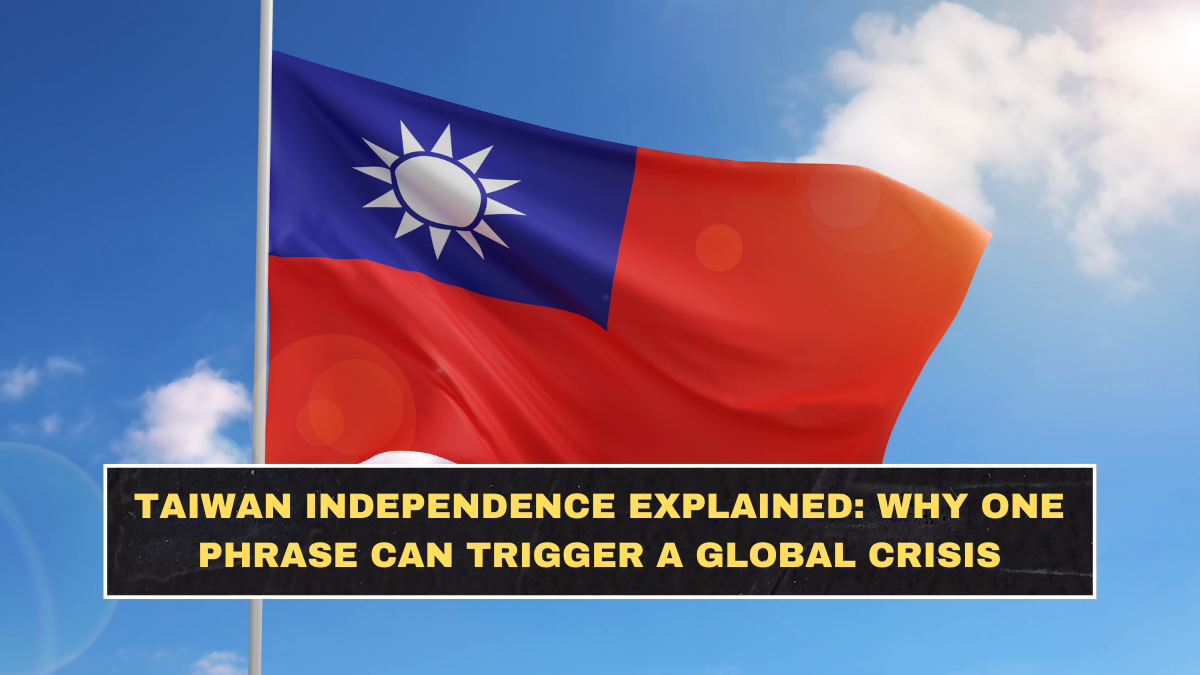
“Taiwan independence” is dangerous because it means different things to different sides. Taiwan already has its own elected government, military, currency, passport and legal system, but it is not widely recognized as a separate country because China claims it as part of its territory. Reuters explains that Taiwan functions like a sovereign state in practice, while Beijing insists the island belongs to China.
That contradiction is why one phrase can create a global crisis. For Taiwan, independence can mean protecting its existing democratic way of life. For Beijing, formal independence is a red line that could justify force. For the United States, the issue is even more delicate because Washington supports Taiwan’s self-defense but avoids officially recognizing it as an independent country.
Is Taiwan Already Independent Or Not?
The honest answer is: practically yes, formally complicated. Taiwan, officially the Republic of China, controls its own territory, elects its own leaders and runs its own institutions. It is not governed by Beijing. Reuters notes that Taiwan has its own government, military, passport and currency, which are core features of statehood in daily life.
But formal recognition is limited. Reuters reports that only 12 countries formally recognize Taiwan, while many others maintain unofficial ties because China pressures countries not to treat Taiwan as a separate state. This creates the confusing reality: Taiwan behaves like a country, but most governments avoid calling it one officially.
| Question | Simple Answer |
|---|---|
| Does Taiwan govern itself? | Yes, Taiwan has its own elected government |
| Is Taiwan controlled by China? | No, Beijing does not govern Taiwan |
| Does China claim Taiwan? | Yes, China claims it as part of its territory |
| Do most countries recognize Taiwan officially? | No, only a small number do |
| Why is independence sensitive? | China says formal independence crosses a red line |
Why Does China React So Strongly To Taiwan Independence?
China reacts strongly because the Chinese Communist Party treats Taiwan as an unfinished part of national reunification. Beijing says there is only one China and Taiwan is part of it. It argues that any move toward formal independence would split Chinese territory and challenge the legitimacy of the Communist Party’s national mission. CFR notes that Beijing seeks Taiwan’s eventual unification with the mainland.
This is not just emotional nationalism. It is political survival logic for Beijing. If Taiwan permanently separates and succeeds as a democratic Chinese-speaking society, it becomes an uncomfortable comparison to China’s one-party system. That is one reason Beijing’s reaction is so intense. Taiwan is not only territory to China; it is also a challenge to the story the party tells about power, unity and legitimacy.
What Does Taiwan’s Government Say About Its Status?
Taiwan’s government says only the people of Taiwan have the right to decide their future. President Lai Ching-te has argued that Taiwan is already independent as the Republic of China, meaning there is no need to declare a new country. Reuters reported that Taiwan rejected China’s latest claim that unification would bring economic benefits, warning against “unification packaged as peace.”
This position is designed to avoid giving Beijing an excuse for escalation while still defending Taiwan’s autonomy. It is a balancing act. Taiwan does not want to appear submissive to China, but it also knows that a formal declaration of a “Republic of Taiwan” could trigger a severe Chinese response. That is why Taiwan’s leaders often defend the status quo while insisting Beijing has no right to decide the island’s future.
Why Does The United States Avoid Calling Taiwan Independent?
The United States avoids calling Taiwan independent because its policy is built on ambiguity. Washington recognizes the People’s Republic of China as China’s government, but it also maintains unofficial relations with Taiwan and supports its defense. The Taiwan Relations Act says US policy is to help maintain peace, security and stability in the Western Pacific.
This ambiguity is intentional. If the US fully recognized Taiwan as independent, China could treat it as a major provocation. If the US abandoned Taiwan, Beijing might feel free to use force. So Washington keeps a careful middle position: no formal recognition of Taiwan as a sovereign country, but no acceptance of China using force to take it either.
Why Is Taiwan Back In Focus Before The Trump-Xi Summit?
Taiwan is back in focus because Beijing reportedly wants stronger US language against Taiwan independence before the Trump-Xi summit. Reuters reported on April 29, 2026, that Taiwan tops Beijing’s agenda for the meeting and that China wants Washington to shift from “not supporting” Taiwan independence toward clearer opposition.
That wording difference may look small, but it is not. In diplomacy, language becomes leverage. If Trump gives Beijing stronger wording, China may present it as proof that the US is moving closer to its position. Taiwan would likely see that as dangerous. It could make Taipei fear that its future is being discussed without its consent.
Why Could A Formal Declaration Trigger A Crisis?
A formal declaration could trigger a crisis because Beijing has repeatedly warned against Taiwan independence. Reuters notes that while some in Taiwan support a formal “Republic of Taiwan,” constitutional and political barriers make it highly unlikely. Such a move would require major domestic approval and would almost certainly provoke Beijing.
This is why most Taiwanese politicians avoid dramatic legal moves even when they strongly reject Beijing’s rule. The island already enjoys practical independence, so a formal declaration may create enormous risk without adding much real control. The smarter strategy, from Taiwan’s point of view, is to protect its democracy, strengthen defense and preserve international support without handing Beijing an easy trigger.
Why Should The World Care About Taiwan’s Status?
The world should care because Taiwan is not only a political dispute. It is a major technology, trade and security issue. Taiwan plays a critical role in advanced semiconductor production, and Reuters notes that its importance as a semiconductor powerhouse makes the issue strategically sensitive for the US and China.
A Taiwan crisis could disrupt chip supply, shake stock markets, drag in US allies and raise the risk of military conflict in Asia. This is why global businesses, investors and governments watch every statement about Taiwan carefully. A badly worded diplomatic concession can create market fear even before any military action happens.
What Is The Bottom Line?
Taiwan independence is explosive because Taiwan is already self-governed, but not widely recognized as an independent country. Beijing claims it, Taiwan rejects Beijing’s rule, and the United States tries to preserve a fragile balance. That balance has helped avoid war, but it is becoming harder to maintain as US-China rivalry grows.
The blunt reality is this: Taiwan’s status is not a simple legal debate. It is a live geopolitical fuse. Beijing wants to prevent formal independence, Taiwan wants to protect its self-rule, and Washington wants to deter war without triggering one. That is why one phrase can shake global politics.
FAQs
What Does Taiwan Independence Mean?
Taiwan independence usually means Taiwan formally declaring itself a separate country from China, often as a “Republic of Taiwan.” In practice, Taiwan already governs itself, but formal independence would be treated by Beijing as a major provocation.
Is Taiwan Currently Controlled By China?
No. Taiwan is not controlled by Beijing. It has its own elected government, military, courts, currency and passport, although China claims it as part of its territory.
Why Does China Oppose Taiwan Independence?
China opposes it because Beijing considers Taiwan part of China and views formal independence as a threat to national unity, territorial integrity and Communist Party legitimacy.
Does The US Support Taiwan Independence?
The US does not officially support Taiwan independence. It maintains unofficial ties with Taiwan, supports Taiwan’s self-defense and opposes any attempt to change the status quo by force.
Could Taiwan Declare Independence Soon?
It is unlikely. Taiwan already operates independently in practice, and a formal declaration could provoke a dangerous Chinese response while offering limited practical benefit.