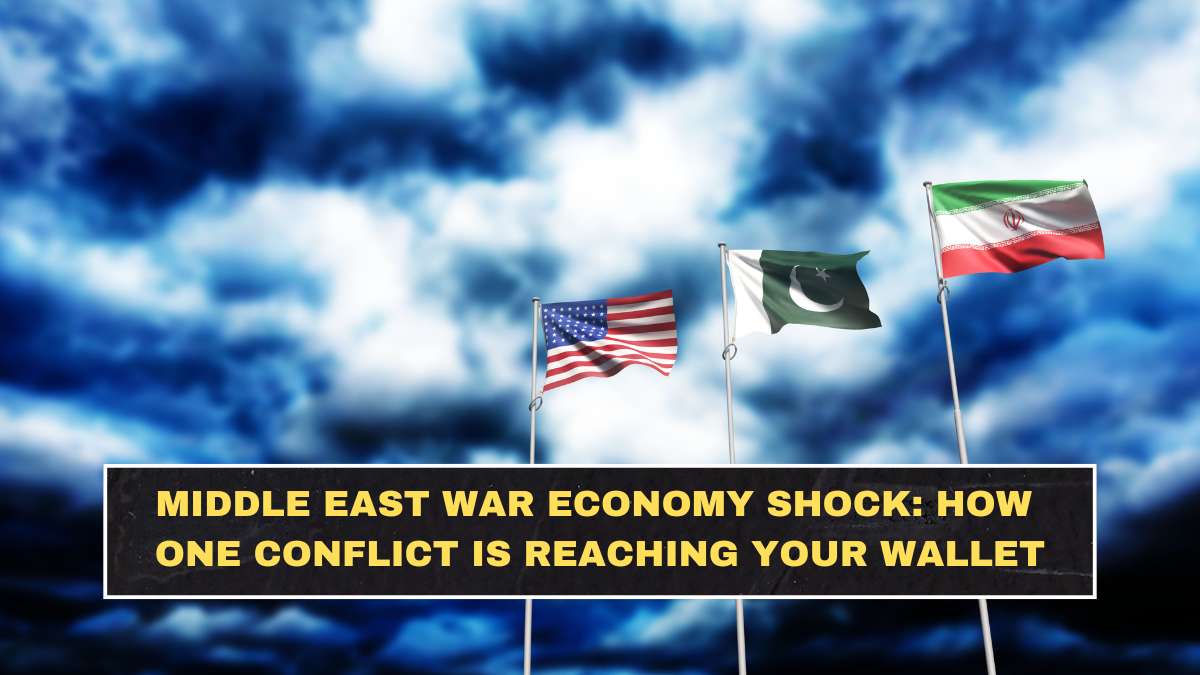
The Middle East war is no longer just a military crisis. It is becoming an economic shock that touches oil, shipping, inflation, factories, government debt, food prices, and household budgets. The reason is simple: the region sits at the centre of global energy flows, and once those flows become unstable, the rest of the economy starts feeling the pressure.
Reuters reported that the war has reduced global oil supply by 13%, while IMF Managing Director Kristalina Georgieva warned that “all roads” now lead to higher prices, slower growth, and tougher conditions for vulnerable countries. That is the part many people miss. A war in one region can quickly become a cost-of-living problem everywhere when energy and trade routes are involved.
Why Does The Strait Of Hormuz Matter So Much?
The Strait of Hormuz is one of the world’s most important energy chokepoints. Oil and liquefied natural gas from the Gulf normally move through this route toward Asia, Europe, and other markets. When Hormuz traffic slows, buyers do not just worry about today’s supply. They worry about tomorrow’s fuel, shipping insurance, delivery delays, and replacement cargoes.
Reuters reported that daily transits through the strait have dropped from around 125–140 ships to just seven, with no oil export cargo moving through in that snapshot. The report also said the US blockade had turned back 37 ships since April 13, including six Iranian oil tankers carrying about 10.5 million barrels of crude. These are not minor disruptions; they are global-market warning signs.
| Economic Channel | What Is Happening? | How It Reaches People? |
|---|---|---|
| Oil supply | Global supply reportedly down 13% | Higher petrol, diesel, and transport costs |
| Hormuz shipping | Traffic sharply reduced | Delayed cargoes and higher insurance |
| Inflation | Energy and goods prices rise | Costlier food, travel, and imports |
| Factories | Raw-material costs increase | Higher product prices and weaker margins |
| Emerging markets | Debt and fuel bills rise | More pressure on government budgets |
Why Are Oil Prices The First Big Problem?
Oil prices react quickly because traders price risk before the full shortage appears. If a major route looks unsafe, markets begin adding a risk premium. That means oil can rise even before every refinery, airline, or consumer feels the hit. Reuters reported that oil prices gained as the Iran war standoff persisted, with markets worried that no clear end to the crisis was in sight.
This matters because oil is not just used in cars. It affects trucking, shipping, aviation, farming equipment, plastics, chemicals, and industrial production. When oil stays expensive, the cost moves quietly through the economy. By the time consumers notice, it may already be inside flight tickets, grocery prices, courier fees, and manufactured goods.
How Does This Push Inflation Higher?
Inflation rises when businesses face higher costs and pass them to customers. Energy is one of the most powerful inflation drivers because it sits under almost everything. If diesel rises, food distribution becomes more expensive. If jet fuel rises, airfares become more expensive. If shipping costs rise, imported goods become more expensive. That is how a Middle East war ends up inside a family budget.
The IMF’s April 2026 World Economic Outlook said the global economy is again being disrupted by the Middle East war, with rising commodity prices, firmer inflation expectations, and tighter financial conditions testing economic resilience. The IMF projected global growth at 3.1% in 2026 and 3.2% in 2027 under a limited-conflict assumption, below recent outcomes and well below pre-pandemic averages.
Why Are Supply Chains Feeling Pressure Again?
Supply chains are feeling pressure because companies fear shortages and begin changing behaviour. Some rush to secure inventory. Some reroute shipments. Some pay higher freight rates or insurance. Others delay production because input costs become unpredictable. That creates the same kind of nervous business behaviour seen during earlier supply-chain crises.
Reuters reported that the Iran war impact is moving deeper into the global economy, with delivery times and output prices hitting their highest levels since the post-COVID supply-chain and inflation wave roughly four years ago. That is a serious warning because businesses are again facing the mix they hate most: slower deliveries, higher costs, and uncertain demand.
Why Are Emerging Markets At Higher Risk?
Emerging markets are at higher risk because many of them import energy, borrow in foreign currencies, and already carry debt pressure. When oil prices rise, their import bills increase. When inflation rises, central banks may need tighter policy. When global investors become nervous, currencies can weaken. That makes imported food, fuel, and debt payments more expensive.
Reuters reported that economic strain is mounting across emerging markets two months into the Iran war, with higher energy costs and market volatility putting pressure on weaker economies. Another Reuters report said the IMF and World Bank were expected to downgrade growth and raise inflation forecasts because of the conflict, while emerging markets faced higher debt, food insecurity, and slower growth risks.
How Is China Reacting To The Shock?
China is treating the war as an energy-security and supply-chain warning. Reuters reported that China’s top leadership pledged to strengthen energy security and tackle external shocks as the Iran war fallout spread. Beijing is worried about rising energy and raw-material costs, factory margins, export demand, and the need for stronger technology self-reliance.
This matters because China is the world’s manufacturing engine. If Chinese factories face higher input costs, global buyers may eventually face higher product prices. If global demand weakens because consumers elsewhere are squeezed by fuel and inflation, China’s export machine also feels the hit. The shock moves both ways.
Could This Hit Food Prices Too?
Yes, and this is where the crisis becomes more dangerous for poorer countries. Energy affects food through fertiliser, transport, irrigation, refrigeration, packaging, and shipping. When fuel and fertiliser prices rise together, food inflation can become harder to control. Countries that import both energy and food are especially exposed.
Reuters reported that more than a dozen countries were seeking IMF support to cope with the Middle East war energy shock, including some in sub-Saharan Africa. That is the clearest sign that this is not only a rich-country market story. For vulnerable economies, higher energy costs can quickly become budget stress, currency pressure, and food-security risk.
What Does This Mean For Ordinary People?
For ordinary people, the war may show up through petrol prices, diesel costs, flight tickets, delivery charges, food prices, electricity bills, and imported goods. The impact may not arrive all at once. It often moves in stages: first oil markets react, then businesses adjust prices, then consumers feel the squeeze.
The blunt truth is that most households do not care about geopolitical strategy until it reaches their wallet. This crisis is already doing that. If the conflict continues, the economic pain will spread from traders and governments to shopkeepers, travellers, factory workers, farmers, and families trying to manage monthly expenses.
Conclusion
The Middle East war has become a global economic shock because it is hitting the systems that keep the world running: oil, shipping, supply chains, inflation, and financial confidence. The Strait of Hormuz disruption, reduced oil supply, higher energy costs, and weaker growth outlook are not separate stories. They are parts of the same pressure chain.
The uncomfortable reality is simple: one regional conflict can reach your wallet faster than politicians admit. If oil stays high and shipping remains uncertain, the world faces slower growth, higher prices, and deeper pressure on poorer countries. Peace talks matter not only for security, but for the cost of living across the globe.
FAQs
Why is the Middle East war affecting the global economy?
The war is affecting the global economy because it is disrupting oil supply, shipping routes, inflation expectations, and business confidence. Since energy is connected to transport, food, factories, and trade, the shock spreads quickly.
How much has oil supply been affected?
Reuters reported that the war has reduced global oil supply by 13%, according to IMF chief Kristalina Georgieva. That supply shock is one reason energy prices and inflation risks have risen.
Why is the Strait of Hormuz so important?
The Strait of Hormuz is a key route for Gulf oil and LNG exports. Reuters reported that daily ship transits fell from around 125–140 to just seven, showing how severely traffic has been disrupted.
How can this crisis affect normal people?
Normal people may feel the impact through higher fuel prices, food costs, airfares, delivery charges, electricity bills, and imported goods. If the conflict lasts longer, those costs can become more persistent.