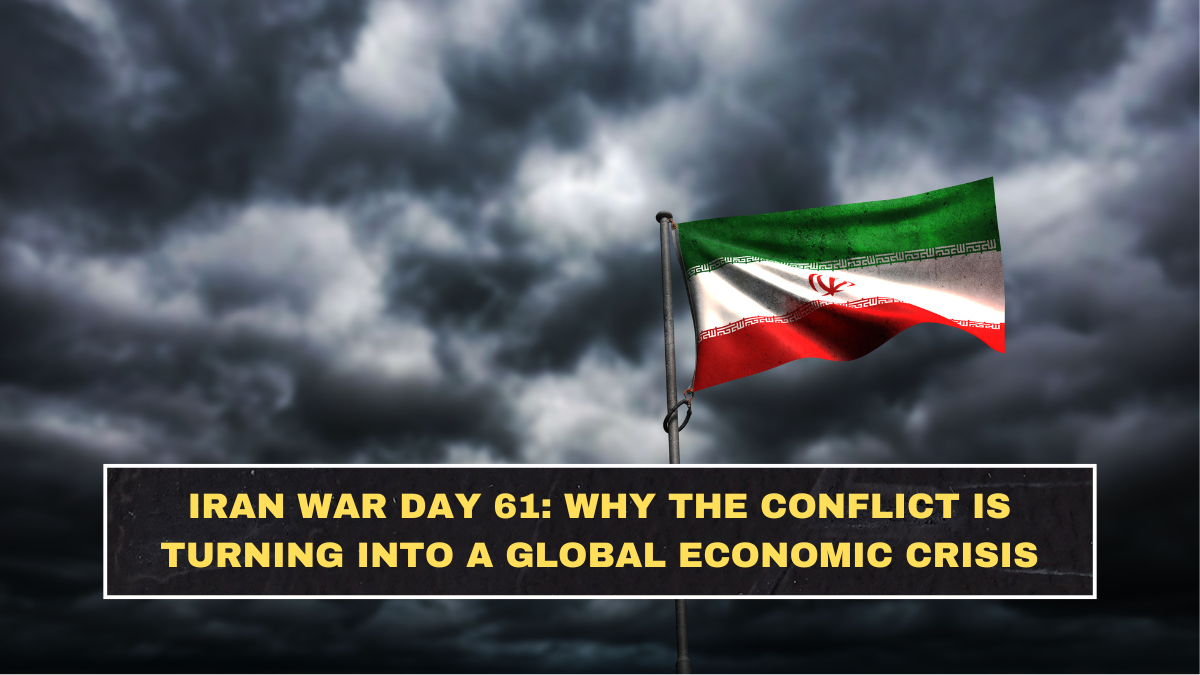
The Iran war has entered day 61, and the conflict is no longer just a military story. It has become a global economic crisis involving oil, shipping, inflation, food security, Gulf politics and diplomatic pressure. Al Jazeera reported on April 29, 2026, that the war had reached day 61 as Trump claimed Iran was in a “state of collapse” and Gulf leaders met in Saudi Arabia.
This stage matters because wars become more dangerous when diplomacy stalls but economic pressure keeps spreading. The longer the conflict continues, the more countries outside the Middle East feel the damage through fuel prices, trade disruption and food inflation. That is why day 61 is not just a date on the calendar. It is a warning that the crisis is moving from regional conflict to worldwide shock.
What Is Happening In The War Right Now?
The latest situation shows three problems happening at the same time: diplomacy is stuck, the Strait of Hormuz remains a key pressure point, and the global economy is absorbing the cost. Reuters reported that Trump said Iran wanted the United States to open the Strait of Hormuz “as soon as possible,” while a US official said Trump was dissatisfied with Iran’s latest proposal to end the war.
Trump has also warned Tehran to “get smart soon,” according to Al Jazeera’s live coverage. That language matters because it signals pressure rather than compromise. If both sides keep using public threats while private talks fail, the risk is that markets, governments and civilians are left waiting for a breakthrough that may not come quickly.
| Crisis Area | What Is Happening? | Why It Matters? |
|---|---|---|
| Diplomacy | US and Iran remain far apart | Peace deal becomes harder |
| Hormuz | Shipping disruption continues | Oil and gas prices stay risky |
| Gulf states | Leaders are holding urgent talks | Regional anxiety is rising |
| Inflation | Energy costs are spreading globally | Consumers pay more |
| Food security | Fertilizer and fuel costs are rising | Poorer countries suffer first |
Why Is The Strait Of Hormuz Still The Core Problem?
The Strait of Hormuz remains central because it is one of the world’s most important energy routes. When that route is blocked, threatened or restricted, oil and gas cannot move normally from the Gulf to global buyers. That affects not only the Middle East but also Asia, Europe, Africa and the wider global market.
This is why Trump’s comments about reopening Hormuz matter so much. If Iran truly wants the route opened quickly, it suggests Tehran is also feeling pressure. But the US appears unwilling to accept a deal that solves shipping first while delaying nuclear talks. That deadlock is exactly why the war is becoming economically dangerous.
How Is The War Hurting The Global Economy?
The economic damage is already visible. Reuters reported that the Asian Development Bank cut its 2026 growth forecast for Asia and the Pacific to 4.7%, down from its earlier estimate of 5.1%, because the Middle East war has pushed up energy prices and disrupted trade networks. The ADB also raised its regional inflation forecast for 2026 from 3.6% to 5.2%.
That is a serious shift. Asia is one of the world’s biggest energy-importing regions, so higher oil and gas prices quickly hit transport, factories, electricity costs and household budgets. If the war continues, the ADB warned that regional growth could fall even further and inflation could rise sharply. That means this conflict is now directly affecting jobs, business confidence and consumer spending far away from the battlefield.
Why Are Food Prices Becoming A Bigger Fear?
Food prices are becoming a bigger fear because energy shocks do not stop at petrol pumps. Farming depends on diesel, fertilizer, shipping and electricity. When energy becomes expensive, fertilizer production and food transportation also become expensive. That is how a Middle East war can turn into a grocery crisis in poorer countries.
The Times reported that the World Bank warned the Iran war could push up to 45 million people into acute food insecurity in 2026. The same report said energy prices are expected to rise by 24%, fertilizer prices by 31%, and urea prices by 60%. That is brutal because fertilizer costs directly affect how much farmers can produce and how expensive food becomes.
Why Are Gulf Leaders So Worried?
Gulf leaders are worried because the war is happening near the economic heart of the region. Saudi Arabia, the UAE, Qatar, Kuwait and others depend heavily on energy exports, shipping security, investment confidence and stable infrastructure. Any prolonged conflict near the Gulf can damage all four at once.
The UAE’s decision to leave OPEC has added another layer of uncertainty to an already unstable moment. Al Jazeera’s day 61 report linked the war update with UAE’s OPEC exit, showing how oil politics and regional security are now moving together. That is bad news for markets because investors hate two things at once: war risk and policy uncertainty.
Is Trump Trying To Force Iran Into A Tougher Deal?
Yes, that appears to be the strategy. Trump’s public remarks suggest he believes Iran is under severe pressure and may eventually accept tougher terms. Reuters reported that he claimed Iran was in a “state of collapse,” though it was unclear how Iran communicated this and Tehran did not immediately confirm the claim.
This is where the strategy becomes risky. If Iran is genuinely under pressure, Washington may think waiting will produce a better deal. But if Tehran refuses to bend, the delay could deepen the blockade, worsen inflation and increase the risk of escalation. Pressure can work in diplomacy, but it can also trap both sides into refusing compromise.
What Is The Bottom Line?
The Iran war on day 61 is dangerous because it has moved beyond missiles and military positioning. It is now affecting oil routes, Asian growth forecasts, inflation, fertilizer prices, food security and Gulf stability. That is why the conflict matters even to people who live thousands of miles away from the Middle East.
The blunt reality is simple: if diplomacy keeps failing, ordinary people will pay the price before politicians do. Fuel, food, shipping and interest rates can all become more painful. Day 61 shows that the Iran war is no longer just a regional conflict. It is becoming a global cost-of-living crisis.
FAQs
What Is Happening On Day 61 Of The Iran War?
The war has entered day 61 with stalled diplomacy, Trump warning Iran to “get smart soon,” Gulf leaders meeting in Saudi Arabia, and markets reacting to continued energy disruption.
Why Is The Strait Of Hormuz So Important?
The Strait of Hormuz is a key route for Gulf oil and gas exports. Any blockade or disruption can raise fuel prices, shipping costs and inflation across the world.
How Is The Iran War Affecting Asia?
The Asian Development Bank cut its 2026 growth forecast for Asia and the Pacific from 5.1% to 4.7% and raised its inflation forecast from 3.6% to 5.2% because of the war’s energy and trade impact.
Why Could Food Prices Rise Because Of The Iran War?
Food prices can rise because higher energy costs make fertilizer, farming, transport and storage more expensive. The World Bank has warned that the war could push millions into acute food insecurity.
Can The War End Soon?
It can end only if the US and Iran agree on the order of concessions. Right now, the biggest dispute appears to be whether shipping and blockade relief come before or after nuclear negotiations.