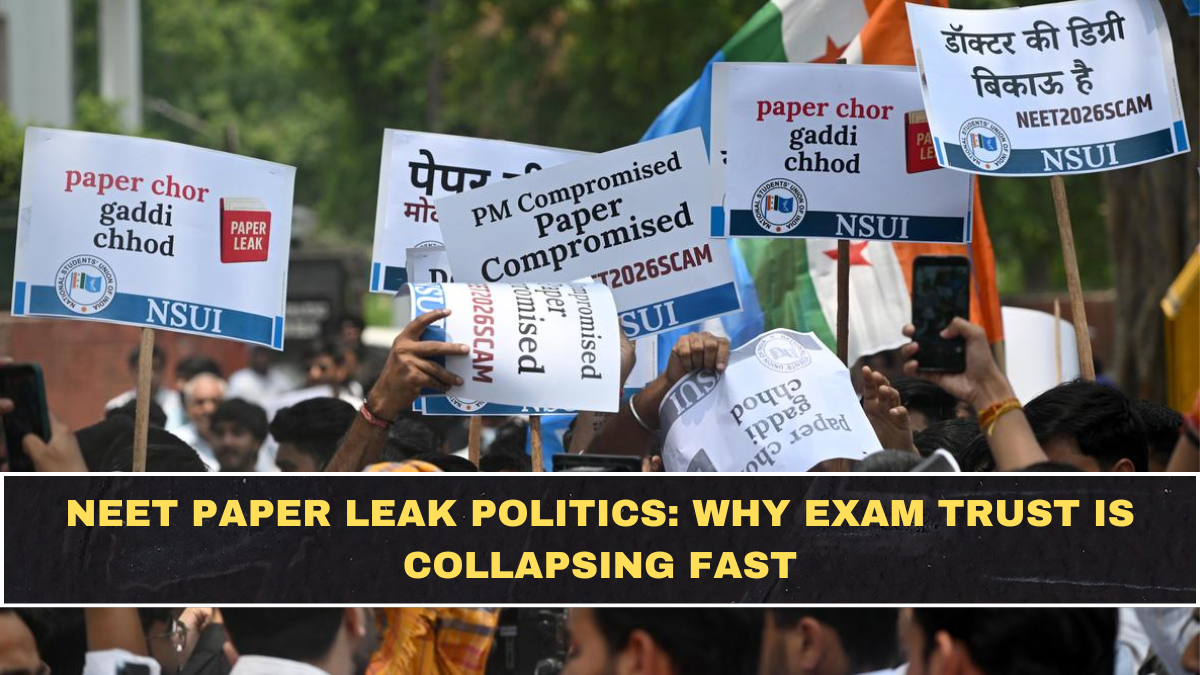
The NEET-UG 2026 paper leak controversy has now moved far beyond an exam-management failure. The exam, held on May 3, was cancelled after paper leak allegations, leaving over 22 lakh medical aspirants and their families in uncertainty. India Today reported that the CBI arrested five people as the Opposition stepped up attacks on the BJP-led government over the issue.
This is why NEET has become political so quickly. When one national exam decides medical careers, college admissions and years of family investment, any leak becomes a trust crisis. Students are not only angry about writing the exam again; they are angry because they feel honest preparation has been punished while powerful leak networks may have benefited.
What Is The Core Issue?
The core issue is exam credibility. NEET is supposed to be a common and uniform entrance test for undergraduate medical admissions across India, conducted by the National Testing Agency. NTA’s own official description says it is responsible for inviting applications, conducting the test, declaring results and providing All India Rank to the authorities.
Once a paper leak allegation becomes serious enough for cancellation and CBI probe, students naturally question whether the system can protect merit. The issue is no longer only about one leaked paper. It is about whether national-level testing has enough security, accountability and transparency to handle exams affecting millions.
| Issue | Why It Matters | Political Impact |
|---|---|---|
| Exam cancellation | Students must prepare again | Anger rises nationwide |
| CBI probe | Criminal angle becomes serious | Govt faces pressure |
| NTA credibility | Exam body under scrutiny | Reform demand grows |
| Student protests | Public anger becomes visible | Parties enter debate |
| Paper leak networks | Merit system gets damaged | Accountability becomes central |
Why Are Students Protesting?
Student protests are spreading because aspirants feel helpless after months or years of preparation. Times of India reported that student groups in Nagpur protested against alleged NEET paper leak and irregularities, demanding cancellation of the compromised exam, a fair investigation and stricter punishment for those responsible.
The anger is not emotional drama; it is rational. A NEET aspirant may spend lakhs on coaching, test series, hostel fees, travel and study material. If the exam is compromised, the student loses time, money, mental peace and confidence in the system. That is why a paper leak feels like theft of opportunity, not just administrative failure.
Why Is NTA Facing Heat?
NTA is facing heat because it sits at the centre of the exam process. Even if leak networks operate outside official channels, the public still expects the exam authority to prevent, detect and respond to breaches quickly. If the agency cannot protect the sanctity of the paper, students will naturally demand structural change.
Kerala Chief Minister Pinarayi Vijayan called the controversy a serious threat to students’ future and criticised repeated controversies under NTA’s oversight. He also demanded a transparent and time-bound investigation, arguing that students’ futures should not be compromised.
Why Are Political Parties Attacking?
Political parties are attacking because education failure creates direct public anger. Punjab Chief Minister Bhagwant Mann called the paper leak a failure of the Centre and said it betrayed lakhs of students. He argued that leaks hurt honest aspirants and benefit those who can afford to buy access to the paper.
But students should be careful here. Political outrage can help build pressure, but parties can also use student pain for headlines. The real demand should remain focused: identify the leak chain, punish guilty people, protect the re-exam process and rebuild trust in national testing.
What Must Change Now?
The government cannot fix this crisis with routine statements. Students need a clean re-exam, transparent investigation updates and visible accountability. If the same system simply announces a fresh date without explaining how security will be strengthened, distrust will continue.
Immediate reforms should include:
- Stronger paper-setting and digital-security protocols
- Independent audit of exam centres and logistics
- Faster investigation updates without political spin
- Severe punishment for leak networks and insiders
- Better student communication from NTA
- Mental health support for aspirants under stress
The uncomfortable truth is that India cannot keep treating exam leaks as isolated accidents. If leaks keep happening, the system is not unlucky; it is weak.
What Is The Conclusion?
NEET paper leak politics is not just about ruling party versus opposition. It is about whether India’s exam system can still convince students that hard work matters. Once students begin believing that access, money or connections can beat merit, the damage becomes much deeper than one cancelled paper.
The government, NTA and investigating agencies now have only one real job: restore trust with action, not slogans. Students do not need speeches about fairness. They need a leak-proof exam, visible arrests, transparent updates and a system where honest preparation is protected.
FAQs?
Why Was NEET-UG 2026 Cancelled?
NEET-UG 2026 was cancelled after serious paper leak allegations and investigation inputs. The exam was held on May 3 and affected over 22 lakh students who are now waiting for a fresh exam process.
Why Has NEET Paper Leak Become Political?
It has become political because NEET affects lakhs of students and their families across India. Opposition parties and state leaders are questioning the Centre, NTA and exam-security system after the cancellation and CBI probe.
What Is The Role Of NTA In NEET?
NTA conducts NEET-UG, invites applications, manages the entrance test, declares results and provides All India Rank for medical admissions. Because of this role, its credibility is directly questioned when exam leaks occur.
What Do Students Want Now?
Students want a fair re-exam, strict punishment for guilty people, transparent investigation updates and stronger exam security. Their biggest demand is simple: protect merit and stop repeated paper leak failures.