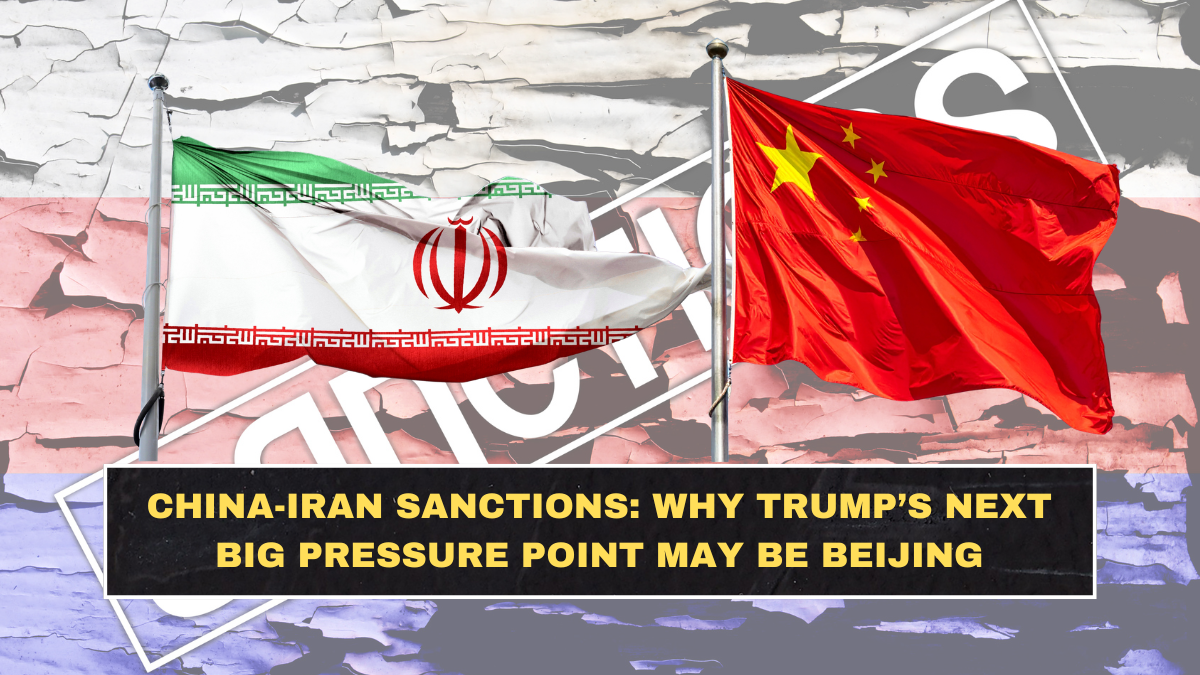
China-Iran sanctions are becoming a major global issue because Washington is trying to cut one of Tehran’s most important financial lifelines: oil sales to China. Reuters reported that Chinese independent refiners, often called “teapots,” import around 90% of Iran’s oil, with purchases hitting a record 1.8 million barrels per day in March 2026. That makes China central to the pressure campaign on Iran.
This is not just about one refinery or one oil shipment. It is about whether US sanctions can still work when a major power like China keeps buying Iranian crude. Trump’s pressure on Beijing could turn the Iran war from a Middle East crisis into a direct US-China confrontation over energy, finance and sanctions enforcement. That is why this story matters beyond oil traders.
What Is The US Trying To Stop?
The US is trying to stop Iranian oil money from reaching Tehran through Chinese buyers, shadow fleets, front companies and banking networks. The US Treasury recently sanctioned Hengli Petrochemical (Dalian) Refinery, describing it as China’s second-largest independent refinery and one of Iran’s major crude customers. Treasury said such purchases provide a vital source of revenue to Iran and its armed forces.
Washington is also warning banks and financial institutions that they may face secondary sanctions if they support Chinese refiners buying Iranian oil. That is the real pressure point. Sanctioning a refinery hurts, but threatening banks can create much wider fear because financial institutions usually avoid anything that risks access to the US financial system.
| Pressure Point | What It Means In Simple Terms |
|---|---|
| Iranian crude | Oil sales give Tehran hard cash |
| Chinese teapots | Independent refiners buy most Iranian oil |
| Shadow fleet | Tankers hide origin and ownership |
| Secondary sanctions | US punishes non-US firms helping sanctioned trade |
| Bank warnings | Financial institutions may avoid risky deals |
Why Is China So Important To Iran’s Oil Trade?
China is important because it has been the main destination for Iran’s shipped oil. Reuters reported that China bought more than 80% of Iran’s shipped oil last year, according to Kpler data. That gives Beijing huge influence over whether Iran can keep earning from crude exports despite US restrictions.
The trade survives because much of it does not move through the clean, transparent channels that normal oil trade uses. Cargoes can be moved through ship-to-ship transfers, dark tankers and rebranded origins. Reports say Iranian crude is often disguised as Malaysian or Indonesian oil, which makes tracking and enforcement much harder.
Why Did The US Target Chinese Refiners?
The US targeted Chinese refiners because they are the buyers keeping Iranian oil revenue alive. Al Jazeera reported that the US sanctioned Hengli refinery for buying hundreds of millions of dollars’ worth of Iranian oil, saying the money helped Iran’s military. The move is important because Hengli is much larger than many previous targets.
This is a stronger signal than symbolic sanctions. By going after a major Chinese private refiner, Washington is telling Beijing that Iranian oil purchases are no longer being treated as background violations. They are now part of the Iran war strategy. That raises the cost for Chinese firms and forces Beijing to decide how far it wants to push back.
Can Trump Really Pressure China Through Sanctions?
Trump can create pressure, but he cannot fully control China’s behavior. The US has powerful tools because many banks, insurers, shipping firms and commodity traders still depend on dollar access or fear US penalties. That is why secondary sanctions can be effective even against companies outside America. The threat makes global firms ask one question: is Iranian oil worth the risk?
But China is not a small country that can be easily bullied. Beijing rejects unilateral US sanctions and often frames its trade with Iran as legitimate. Reuters reported that despite renewed US pressure, Iranian oil continues flowing to China, especially into Shandong province. That shows the pressure campaign may slow trade, but it may not stop it completely.
Why Are Chinese Refiners Still Buying Iranian Oil?
Chinese refiners buy Iranian oil because it is usually discounted. Independent refiners operate on thin margins, so cheaper crude can be attractive. However, Reuters reported that Chinese buying of Iranian oil has recently slowed because domestic refining margins have weakened, with negative processing margins estimated at a one-year low of minus 530 yuan per ton.
This means the slowdown is not only because of sanctions. It is also because the economics are getting worse. Higher crude prices, weak domestic fuel demand and lagging fuel prices reduce the benefit of buying discounted Iranian oil. That is important because sanctions work best when the market is already making the trade less profitable.
What Is The Risk For Global Oil Markets?
The risk is that sanctions on China-Iran oil trade can tighten supply while the Hormuz crisis is already pushing prices higher. Reuters reported that Brent crude hit a one-month high of $114.34 per barrel on April 29, 2026, as concerns grew over prolonged Hormuz disruption and the US extending its blockade of Iranian ports.
If Iranian barrels disappear from the market faster than replacement supply arrives, prices can rise further. But if China keeps buying through shadow channels, sanctions may create a messier market instead of a cleaner one. More hidden shipping, more risky transfers and more financial avoidance can make oil trade harder to track and more volatile.
Why Could This Become A US-China Diplomatic Flashpoint?
This could become a US-China flashpoint because sanctions are not only economic tools. They are political weapons. If Washington punishes Chinese companies and banks, Beijing may accuse the US of overreach and respond with its own pressure tactics. That could affect trade talks, technology controls, AI competition and wider diplomatic negotiations.
The blunt reality is that Iran is becoming another front in the US-China rivalry. Washington sees China as helping Iran survive sanctions. Beijing sees US sanctions as unilateral pressure designed to control global trade. Neither side is likely to fully back down without a larger bargain.
What Is The Bottom Line?
China-Iran sanctions matter because they target the money behind Tehran’s resilience. As long as Chinese refiners keep buying Iranian crude, Iran can continue earning revenue despite US pressure. That weakens Washington’s strategy and makes Beijing a critical player in the Iran war.
But Trump’s pressure campaign is risky. It may squeeze Iran, but it can also escalate tensions with China and push more oil trade into hidden channels. The real question is not whether the US can sanction Chinese firms. It can. The harder question is whether those sanctions can change Beijing’s behavior without triggering a wider economic fight.
FAQs
Why Is China Important In Iran Sanctions?
China is important because Chinese independent refiners buy most of Iran’s exported oil, giving Tehran a major source of revenue despite US restrictions.
What Are Secondary Sanctions?
Secondary sanctions are penalties the US can impose on foreign companies, banks or individuals that help sanctioned countries or entities do business.
Which Chinese Refinery Was Sanctioned By The US?
The US sanctioned Hengli Petrochemical (Dalian) Refinery, which Treasury described as China’s second-largest independent refinery and a major buyer of Iranian oil.
Can Sanctions Stop China From Buying Iranian Oil?
They can slow or complicate purchases, but they may not fully stop them because China rejects unilateral US sanctions and some trade continues through shadow shipping networks.
Why Could This Raise Oil Prices?
If sanctions reduce Iranian oil supply while the Hormuz crisis continues, global crude markets can become tighter, pushing fuel and shipping costs higher.