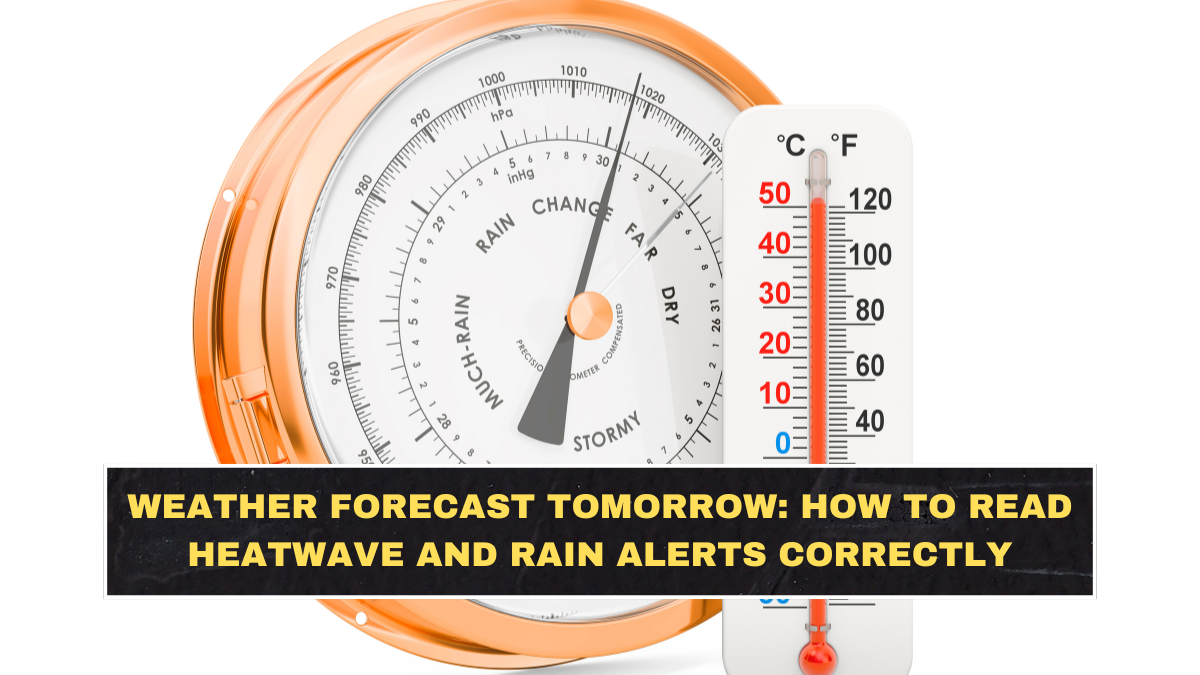
Weather forecast tomorrow searches are rising because India is seeing mixed weather conditions at the same time. Some regions are facing heatwave warnings, some are dealing with hot and humid weather, and others may see thunderstorms or heavy rainfall. This makes one national-level forecast almost useless unless readers understand how to read regional alerts properly.
For April 25, 2026, IMD’s warning page showed heatwave warnings for both West Rajasthan and East Rajasthan, while Mumbai was under a yellow alert for hot and humid conditions until April 25. IMD’s earlier bulletin also said isolated heavy rainfall was likely over Sub-Himalayan West Bengal and Sikkim on April 25 and 26. That means tomorrow’s weather is not “hot everywhere” or “rainy everywhere”; it depends heavily on location.
What Is The Main Weather Pattern For Tomorrow?
The main pattern for tomorrow is heat in northwest and western India, humidity along parts of the west coast, and rainfall or thunderstorm activity in selected eastern, northeastern and southern regions. Rajasthan remains one of the sharpest heat zones, with Sriganganagar recently recording 44.5°C, almost 5°C above normal. That kind of heat can create serious outdoor risk, especially during afternoon hours.
At the same time, rain alerts remain active in some regions. IMD’s April 22 bulletin said isolated heavy rainfall was likely over Sub-Himalayan West Bengal and Sikkim on April 25 and 26, while light to moderate rainfall with thunderstorms, lightning and gusty winds was likely over parts of Kerala, Telangana, Coastal Karnataka and Interior Karnataka during April 22 to 26.
| Region | Tomorrow’s Likely Weather Signal | What People Should Watch |
|---|---|---|
| West Rajasthan | Heatwave warning | Avoid afternoon outdoor exposure |
| East Rajasthan | Heatwave warning | Hydration and heat safety needed |
| Mumbai | Hot and humid yellow alert | Discomfort can feel worse than temperature |
| Sub-Himalayan West Bengal & Sikkim | Isolated heavy rainfall likely | Travel delays, slippery roads, local flooding |
| Kerala & Mahe | Rain/thunderstorm activity possible | Lightning and humidity risk |
| Telangana | Thunderstorm and gusty wind possibility | Sudden local weather changes |
| Coastal/Interior Karnataka | Light to moderate rain with thunderstorms | Outdoor plans need caution |
How Should You Read IMD Colour Alerts?
IMD colour alerts are meant to tell people how seriously they should respond to the weather, not just whether the weather looks dramatic. A yellow alert usually means “be aware” or stay updated. Orange means people should be prepared for more serious conditions. Red means action is needed because the weather risk may become dangerous.
The mistake many people make is ignoring yellow alerts completely. That is careless. A yellow alert for hot and humid weather may not look scary, but for elderly people, children, pregnant women, outdoor workers and people with health issues, it can still create real discomfort and health risk. Kerala’s heat alert advisory, for example, specifically urged caution for vulnerable groups and advised people to avoid outdoor activity during peak heat hours.
Why Does Hot And Humid Weather Feel Worse Than Normal Heat?
Hot and humid weather feels worse because sweat does not evaporate properly when humidity is high. Sweating is the body’s natural cooling system, but when the air is already loaded with moisture, the body struggles to cool down. This is why 35°C in humid Mumbai can feel more exhausting than a dry 38°C in another region.
Mumbai’s Santacruz observatory recorded 35.9°C, about 2.4°C above normal, while humidity stayed around 70% to 76% in Mumbai areas, adding to discomfort. IMD’s newer “feels-like index” approach also recognises that actual heat stress depends on temperature, humidity and wind, not just the thermometer reading.
What Should You Do If Your City Has A Heatwave Alert?
If your city has a heatwave alert, avoid outdoor work between late morning and afternoon as much as possible. Drink water before feeling thirsty, wear loose cotton clothes, cover your head, and avoid standing in direct sunlight for long periods. Do not leave children, elderly people or pets inside parked vehicles, even for a few minutes.
You should also plan travel earlier in the morning or later in the evening. If you are a delivery worker, construction worker, traffic staff member, vendor or daily-wage worker, take shade breaks whenever possible. The harsh truth is that heatwaves punish people who cannot avoid outdoor work. Ignoring the alert to “be tough” is not strength; it is stupidity.
What Should You Do If Your Area Has A Rain Or Thunderstorm Alert?
If your area has a rain or thunderstorm alert, the biggest risks are lightning, waterlogging, poor visibility and slippery roads. Avoid standing under trees during lightning. Do not drive fast through waterlogged roads because open manholes, potholes or stalled vehicles can become hidden hazards. Keep phones charged and avoid unnecessary travel during intense rain spells.
For hilly or sub-Himalayan areas, isolated heavy rainfall can also affect road movement and local drainage. Tourists should be especially careful because they may not understand local weather behaviour. If you are travelling toward Sikkim, hill roads or forested regions, check local updates before leaving instead of depending only on a generic national forecast.
Why Can Two Apps Show Different Weather Forecasts?
Two apps can show different forecasts because they may use different models, update times, location grids and data sources. A weather app may show city-level weather, but IMD warnings can be subdivision-wise or district-wise. That means your neighbourhood may not match the broad city forecast perfectly.
The smarter method is to check three things together: IMD alert, local temperature, and hourly forecast. Do not rely only on the rain percentage shown in one app. A 40% rain chance does not mean it will rain for 40% of the day. It usually means there is a probability of rain in that forecast area. Many users misunderstand this and then blame the forecast.
How Should Students, Workers And Travellers Plan Tomorrow?
Students should carry water, avoid long exposure after school hours and follow local school advisories if heat alerts are severe. Office workers should plan commutes carefully because heat, rain or thunderstorms can affect traffic. Travellers should check weather at both origin and destination, especially when moving between plains, coastal areas and hill regions.
People planning outdoor events should stop treating weather as a last-minute detail. Heatwaves can cause dehydration and fainting, while thunderstorms can make open-air events unsafe. If there is a yellow or orange alert, organisers should arrange shade, water, medical support and backup indoor options. Poor planning during extreme weather is not bad luck; it is negligence.
Conclusion?
Weather forecast tomorrow in India needs to be read region by region. Rajasthan may face heatwave conditions, Mumbai may continue with hot and humid discomfort, while Sub-Himalayan West Bengal, Sikkim and parts of southern India may see rain or thunderstorms. One headline cannot explain the full weather picture across India.
The practical rule is simple. Check your local IMD warning, understand the colour alert, watch humidity along with temperature, and plan travel or outdoor work accordingly. Weather alerts are not meant to scare people. They are meant to stop people from making careless decisions when heat, rain or thunderstorms can turn risky quickly.
FAQs
What Is The Weather Forecast Tomorrow In India?
Tomorrow’s forecast varies by region. Rajasthan has heatwave warnings for April 25, Mumbai has hot and humid conditions under a yellow alert, and parts of Sub-Himalayan West Bengal and Sikkim may see isolated heavy rainfall.
What Does A Yellow Weather Alert Mean?
A yellow alert usually means people should stay aware and updated. It does not always mean extreme danger, but it signals that weather conditions can cause discomfort or local disruption.
Why Does Humidity Make Weather Feel Hotter?
Humidity makes heat feel worse because sweat evaporates slowly when the air is moist. This reduces the body’s natural cooling and can increase heat stress even when the temperature does not look extremely high.
Where Should I Check The Most Accurate Weather Alert?
For India, IMD is the main official source for weather warnings. Weather apps can help with hourly updates, but IMD alerts are more reliable for heatwave, rainfall, thunderstorm and district-level warnings.