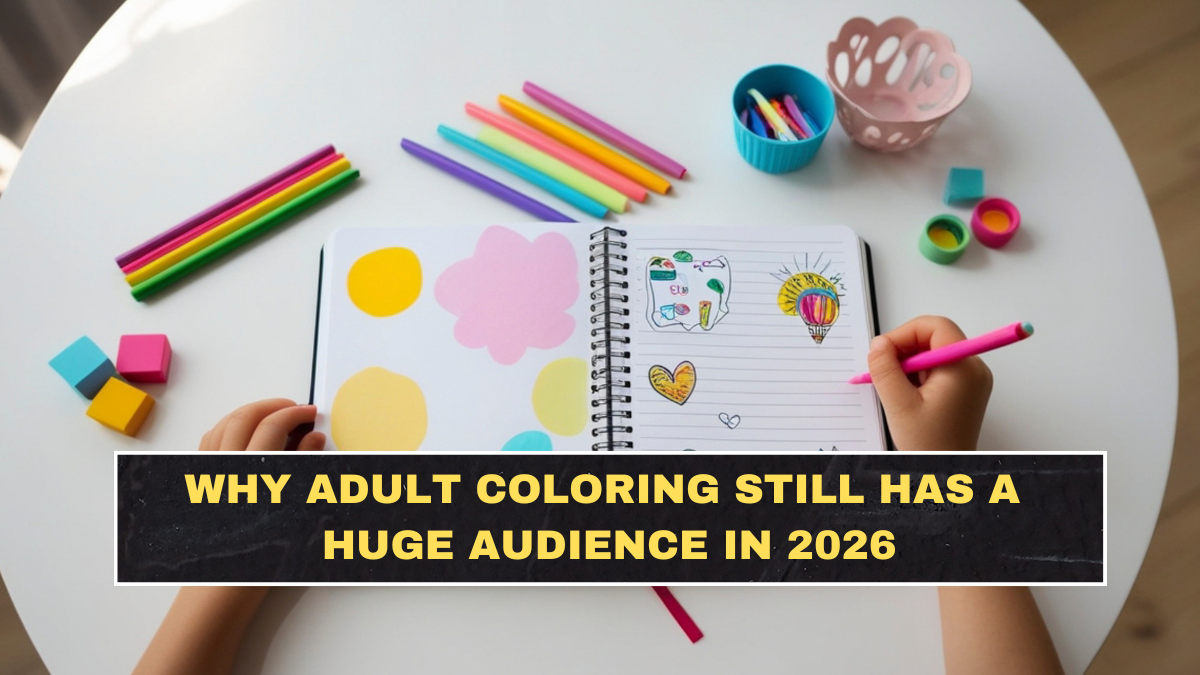
Adult coloring still has a huge audience in 2026 for a simple reason: it asks very little from people while still giving them something back. Most adults are not looking for another demanding hobby that needs gear, lessons, or a personality change. They want something easy to begin, hard to mess up, and calming enough to break the screen-scroll cycle. That fits the wider 2026 move toward analog, tactile hobbies. Recent reporting on the rise of “analogue” routines and so-called “grandma hobbies” shows growing interest in offline activities like sketching, knitting, puzzles, and other hands-on pastimes as people push back against constant digital overload.
Another reason adult coloring holds up is that it sits in a rare middle ground. It feels creative without demanding artistic skill. It feels restful without being completely passive. And it is cheap compared with many home hobbies. That makes it easier to keep than hobbies people start with big ambitions and then abandon. In that sense, adult coloring is not surviving because it is exciting. It is surviving because it is practical for ordinary stressed people. The continued presence of adult coloring titles in major bestseller lists supports that ongoing consumer demand.
Why does adult coloring still appeal in a screen-heavy world?
Because it gives people a low-friction way to do something with their hands that is not attached to notifications, performance, or endless content. The broader 2026 analog-hobby shift is not really about nostalgia alone. It is about attention. The Guardian’s January 2026 reporting on “analogue bags” described a wider attempt to replace doomscrolling with offline, tactile activities, while AP’s April 2026 feature on “grandma hobbies” framed the same shift as a search for slower, more grounding forms of leisure. Adult coloring fits that pattern almost perfectly because it is easy to pick up for ten or fifteen minutes without needing a full setup.
There is also no major skill barrier. That matters more than people admit. A lot of adults want a hobby that feels creative but do not want the frustration that comes with learning to draw, paint, or make something from scratch. Coloring gives the structure for them. The page is already there, the lines are already there, and the task is clear. That lack of pressure is one of the reasons the hobby keeps bringing people back rather than burning them out quickly. This is an inference supported by current analog-hobby trend reporting and the continued popularity of beginner-friendly coloring titles in bestseller rankings.
Does adult coloring actually help with stress?
It can, but people should stop exaggerating it. Adult coloring is not therapy by itself, and treating it like a cure-all is sloppy. But there is evidence that coloring-style activities can support relaxation, anxiety reduction, and mood regulation in some contexts. A 2026 Frontiers in Public Health study found digital mandala coloring reduced anxiety in university students, with better interaction design helping people reach a deeper flow state. Older expert summaries, including Psychology Today and UW Medicine, also describe coloring as a mindfulness-friendly activity that can help some people feel calmer, even if it is not a substitute for actual mental health treatment.
That distinction matters. The hobby works best when people use it for what it is: a simple calming activity, not a miracle intervention. The repetitive hand movement, narrow focus, and visual completion can all help settle attention for some people, especially when stress is high and concentration is scattered. But if someone needs clinical care, coloring pages are not going to solve that. They may still help as part of a broader routine, but pretending the hobby is deeper than it is only makes the advice worse.
| Reason adult coloring still works | Why it matters | Who it suits best |
|---|---|---|
| Low skill barrier | No artistic background needed | Beginners and casual hobby users |
| Screen-free focus | Helps interrupt phone-heavy routines | People tired of doomscrolling |
| Repetitive motion | Can feel calming and structured | Stressed or mentally tired adults |
| Low startup cost | Easy to begin with basic supplies | Budget-conscious hobby seekers |
| Flexible time commitment | Can be done in short sessions | Busy adults |
Why has the audience stayed big instead of fading out?
Because adult coloring ended up solving a real use case rather than just riding a one-season trend. A lot of hobbies look interesting online but fail in real life because they need too much time, money, or motivation. Coloring avoids most of that. It can be done alone, in short bursts, at home, without a steep learning curve. That makes it unusually durable. The AP’s 2026 reporting on the popularity of traditional hands-on hobbies supports the broader idea that simple tactile activities are not disappearing. They are being reabsorbed into everyday leisure because people need more realistic ways to unplug.
There is also still a commercial audience behind it. Major marketplaces continue surfacing adult coloring books in bestseller and trend contexts, and multiple market-research summaries point to continued category growth into the next decade, even if exact market-size estimates vary by source. Those market reports are not perfect, but taken together they support the basic conclusion that adult coloring remains commercially active rather than dead.
What kind of adult coloring is attracting people now?
The strongest pull in 2026 seems to come from cozy, stress-relief, and easy-entry formats rather than highly intimidating art-book formats. Bestseller lists and current social content keep emphasizing “bold and easy,” simple relaxation-focused pages, animals, landscapes, and comfort-themed designs over overly technical pages that feel like homework. That lines up with the wider wellness and analog-leisure trend: people are not chasing perfection here. They are chasing relief and manageable creativity.
This is also why adult coloring keeps overlapping with other low-pressure hobbies like journaling, knitting, and puzzles. It belongs to the same category of activity: structured enough to focus the mind, gentle enough to feel restorative, and flexible enough to fit around real life. That broader pattern is visible in current reporting on analog routines and offline hobby revival.
Who is adult coloring actually good for?
Mostly adults who want a screen-free, low-pressure hobby that can start immediately. It is especially suited to people who say they want to relax but usually end up defaulting to passive scrolling. It also works well for people who want creativity without the frustration of starting from a blank page. That does not make it the best hobby for everyone. Some people will find it too repetitive or too limited. But for adults who need a hobby with almost no setup friction, it is one of the most realistic options available. That conclusion is supported by current trend reporting on offline hobbies and by evidence that coloring-based activities can support calmer, more focused states for some users.
Conclusion
Adult coloring still has a huge audience in 2026 because it fits the moment better than a lot of trendier hobbies do. It is cheap, accessible, screen-free, and easy to continue without turning into a project. Current reporting on analog hobbies shows a broader desire for tactile, slower leisure, while coloring-related research suggests the activity can support relaxation and focused attention for some people. It is not profound, and it does not need to be. Its strength is that it is one of the few hobbies adults can start tonight without making excuses.
FAQs
Is adult coloring still popular in 2026?
Yes. Current bestseller activity, social trend signals, and broader reporting on analog hobbies all suggest adult coloring still has a meaningful audience in 2026.
Does adult coloring help with anxiety?
It can help some people feel calmer, but it is not a replacement for treatment. A 2026 study on digital mandala coloring found anxiety benefits in students, while expert commentary also supports possible mindfulness and stress-relief effects.
Why do adults like coloring books so much?
Because they offer a creative, structured, low-skill, and screen-free activity that fits short sessions and does not require artistic training.
Is adult coloring considered therapy?
No. It may support relaxation or mindfulness, but expert sources caution that it is not the same as therapy.