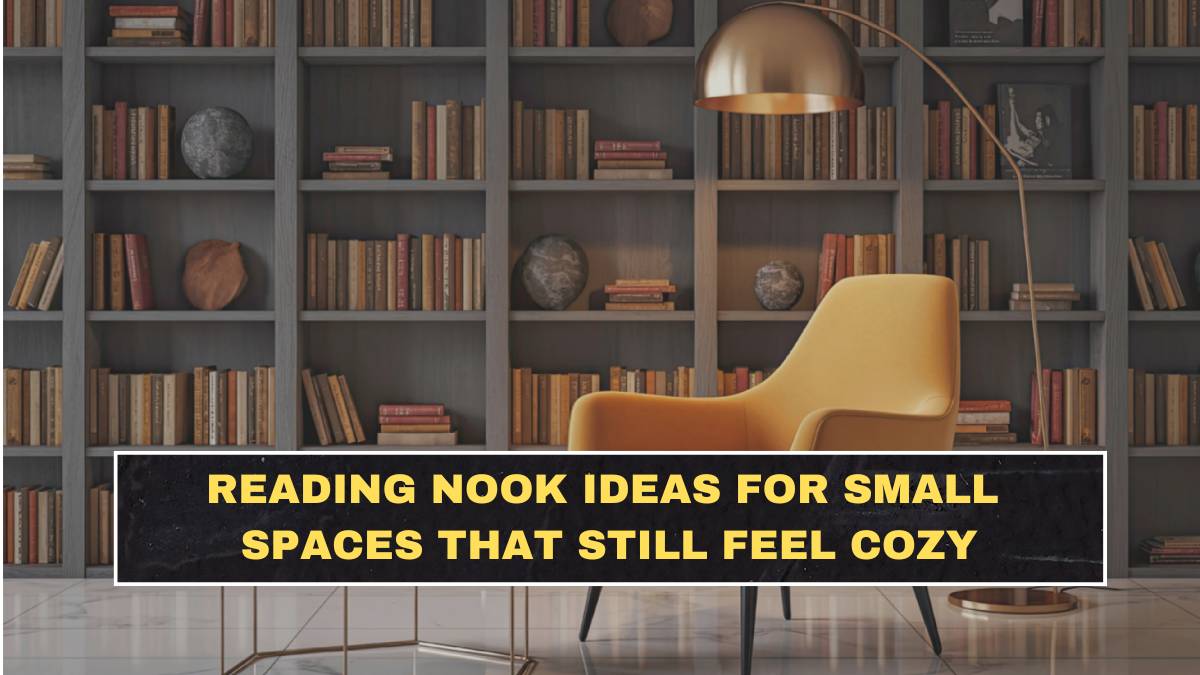
A good reading nook does not need a whole extra room. It needs one thing most homes waste constantly: an underused corner with a clear purpose. That is why reading nooks still perform so well as a home topic. They sit right at the intersection of comfort, function, and visual appeal. Current 2026 design coverage keeps moving in that direction too. Homes & Gardens says designers are adding more “intimate nooks” to living rooms, while House Beautiful reports that 2026 interiors are leaning into “micro-zones,” meaning smaller purpose-driven pockets inside existing rooms instead of big open, undefined layouts.
That shift matters because a reading nook is basically the perfect micro-zone. It gives a small home a sense of retreat without needing major renovation. The mistake people make is overcomplicating it. They think a reading nook needs built-ins, a giant chair, or a Pinterest-perfect alcove. It does not. In a small home, a reading nook works when it gives you three things: a defined seat, decent light, and enough softness to feel separate from the rest of the room. The Spruce’s small-space reading nook advice and The Spruce’s 2026 empty-corner guidance both support this simpler approach, pointing to a chair, ottoman, soft textures, and one or two well-chosen accents rather than a full decorative production.

Why do reading nooks work so well in small spaces?
Because they make one corner do more than one job. A small home usually cannot afford “dead” space, so corners, alcoves, window edges, and awkward gaps need to earn their keep. House Beautiful’s 2026 micro-zoning coverage explains that smaller functional zones help open layouts feel more purposeful without adding walls, and reading nooks are one of the clearest examples of that. Instead of treating a corner as empty leftover space, you turn it into somewhere you actually want to sit.
There is also a psychological reason this works. Cozy corners feel calmer because they are bounded. Even in a larger room, a nook feels more sheltered than sitting in the middle of open space. Homes & Gardens’ recent reporting on “intimate nooks” and the quiet comeback of once-“useless” rooms reflects that same idea: people want smaller, softer-purpose spaces that feel human rather than endlessly multifunctional and exposed.
What furniture works best in a small reading nook?
Compact seating wins. That is the blunt answer. A giant oversized chair might look cozy in theory, but in a small room it usually kills the space. Homes & Gardens’ 2026 piece on the return of the slipper chair highlights exactly why smaller-scale seating is having a moment again: it keeps sightlines open and fits tight rooms better than bulkier accent seating. That makes a slim armchair, slipper chair, small lounge chair, or even a bench with cushions a much smarter choice for a reading nook than something oversized just because it looks plush online.
Multifunctional pieces also matter more in small homes. Better Homes & Gardens’ small-space furniture guidance emphasizes pieces like storage benches, ottomans, and slim built-ins because they add function without making the room feel crowded. In practical terms, that means your reading nook seat should ideally do more than one job if space is tight. A bench with storage below, an ottoman that holds blankets, or a narrow side table with shelf space will usually outperform a purely decorative setup.
| Reading nook element | Why it matters in a small space | Best small-space version |
|---|---|---|
| Seating | Defines the nook immediately | Slipper chair, compact armchair, storage bench |
| Lighting | Makes the spot usable, not just decorative | Floor lamp, wall light, clip lamp |
| Soft layer | Adds comfort and visual warmth | Throw, cushion, small rug |
| Book storage | Keeps the nook functional | Basket, slim shelf, side table stack |
| Boundary cue | Helps the nook feel intentional | Rug, plant, side table, wall art |
Where should you place a reading nook in a small home?
The best spots are usually by a window, in an empty bedroom corner, under the stairs, at the end of a hallway, or beside existing shelving. These ideas are not random. Houzz’s older but still practical reading-nook examples include under-stair spaces, window zones, and narrow leftover corners, while The Spruce’s home-library advice specifically says that in a small space, a home library can simply become a reading nook with a chair and a basket for books.
Window-adjacent spots are often the easiest win because natural light already gives the nook a purpose. But not every home has that option, so do not be precious about it. A bedroom corner, living-room edge, or even a landing can work if the lighting is handled properly. The real requirement is not a “storybook” location. It is a place where sitting for twenty minutes feels natural instead of in the way.
How do you make a small reading nook feel cozy without cluttering it?
Use fewer, softer things. That is the move. A throw, one cushion, one lamp, and maybe a small rug or footstool usually do more than piling on decor. The Spruce’s 2026 corner-styling advice recommends a chair or ottoman, a tall plant, and one sculptural or softening element rather than stuffing the area with too many accessories. Better Homes & Gardens’ library-style feature similarly emphasizes lighting, texture, and a few personality-driven details over clutter.
Lighting deserves special attention here. Homes & Gardens’ recent celebrity nook coverage included designer guidance that warm ambient and accent lighting help create the layered, inviting atmosphere that makes a reading nook actually feel like a retreat. That means the nook should not rely only on harsh overhead light. One warm lamp can do more for comfort than a pile of decorative objects.
What mistakes make small reading nooks feel worse instead of better?
The biggest mistake is using furniture that is too large. The second is trying to turn the nook into a full mini-room with too much styling. The third is forgetting that the nook has to function first. If the chair is uncomfortable, the lighting is poor, or there is nowhere to set down a book or drink, the nook is not cozy. It is just a staged corner.
Another common mistake is forcing the books to look too decorative. House Beautiful’s recent design advice on styling books argues against making books look overly clinical or artificial, which is a useful reminder here. A reading nook should feel lived-in, not showroom-stiff.
Conclusion
The best reading nook ideas for small spaces work because they use space more intelligently, not because they add more stuff. Current 2026 design direction is clearly moving toward intimate corners and micro-zones, which makes a reading nook one of the most realistic upgrades a small home can copy. A compact seat, good lighting, one or two soft layers, and a clear sense of purpose are enough. Stop waiting for the perfect alcove. Most homes already have the space. They are just using it badly.
FAQs
What is the best chair for a small reading nook?
A compact armchair or slipper chair usually works best because it adds comfort without overwhelming the room. Homes & Gardens notes slipper chairs are especially useful in smaller spaces because they preserve openness and sightlines.
Can you make a reading nook without a separate room?
Yes. Current design guidance around micro-zones and intimate nooks is specifically about carving out smaller purpose-driven areas inside existing rooms rather than needing separate spaces.
Where should a reading nook go in a small home?
Window corners, bedroom corners, under-stair areas, and other underused edges of a room are usually the best options. Houzz and The Spruce both support these kinds of placements.
What makes a reading nook feel cozy?
Comfortable seating, warm layered lighting, and a few soft textures usually matter more than lots of decor. The Spruce and Homes & Gardens both point toward this simpler approach.