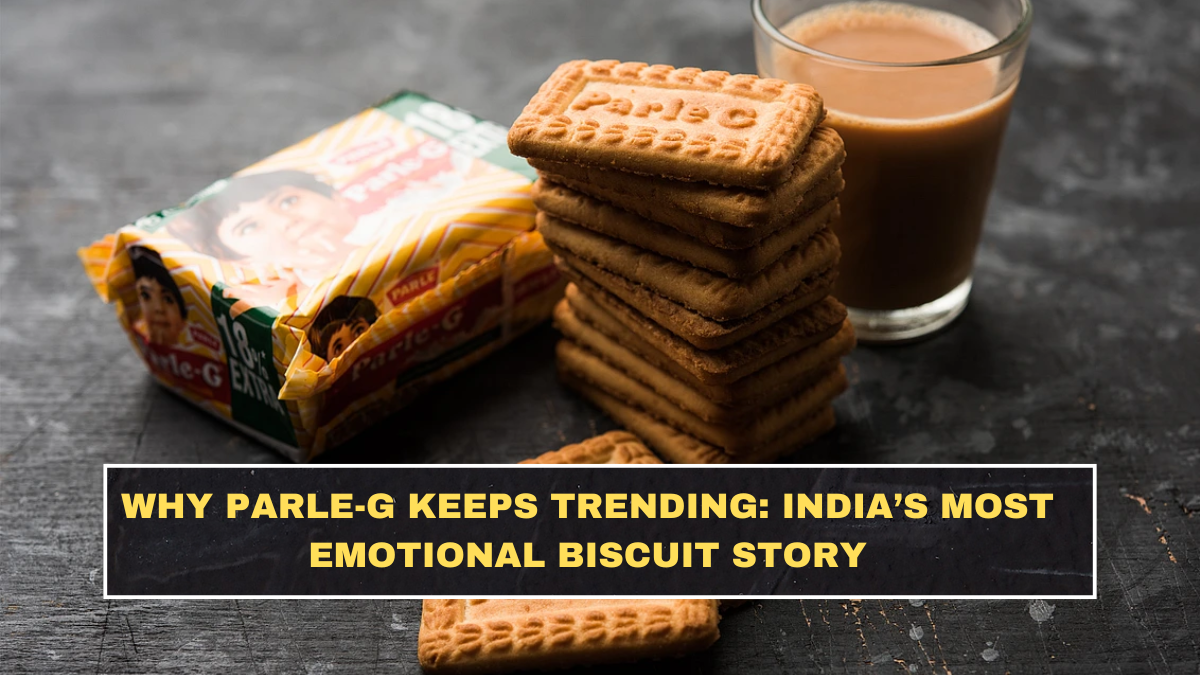
Parle-G keeps trending because it is not just a biscuit in India; it is a memory product. Every few months, a post, reel, price comparison, old advertisement, factory story or nostalgia thread brings the brand back into public conversation. The latest trend again proves that Indians do not treat Parle-G like a normal packaged snack. They treat it like childhood, chai, school tiffin, train journeys and middle-class comfort packed into one yellow wrapper.
The brand has stayed relevant because it has something most modern snacks are still trying to manufacture: emotional ownership. People feel Parle-G belongs to them. NDTV Food recently described Parle-G as a beloved part of India’s chai culture, while older reports have noted how the biscuit became a trending topic when it recorded huge sales during the Covid lockdown period. That history explains why the brand has viral power even without flashy campaigns.
What Makes Parle-G So Emotional For Indians?
Parle-G’s emotional value comes from repetition across generations. Children ate it with milk, students carried it in tiffin boxes, workers had it with tea, and families bought it because it was affordable. It became a product that crossed income groups without losing its identity. That is rare in Indian FMCG.
Most brands try to become premium as they grow. Parle-G did the opposite. It stayed simple, familiar and mass-market. That consistency became its strength. People trust the yellow packet because it has not tried too hard to become cool. In a market obsessed with new flavours, imported packaging and premium cookies, Parle-G wins by reminding people of something older and safer.
| Reason Parle-G Trends | Simple Explanation |
|---|---|
| Nostalgia | It reminds people of childhood, school and chai time |
| Affordability | Low-price packs made it accessible across income groups |
| Familiar packaging | The yellow wrapper and girl illustration are instantly recognisable |
| Mass reach | It is available in small shops, cities, villages and railway stalls |
| Viral contrast | Price comparisons abroad make Indians react emotionally |
| Crisis memory | It became symbolic during lockdown and food-relief moments |
| Cultural habit | Chai and Parle-G is almost a national snack combination |
How Old Is Parle-G And Why Does Its History Matter?
Parle Products began as a company in Mumbai’s Vile Parle area in 1929, and its biscuit-making journey started in 1939. The product was earlier known as Parle Gluco before becoming Parle-G, with the “G” originally linked to glucose and later popularised through the “G for Genius” positioning. This history matters because the brand grew alongside modern India’s own consumer culture.
After independence, Parle positioned its glucose biscuit as an Indian alternative to British brands. That gave the product a deeper identity than just taste. Over time, it became associated with affordability, energy and Indian household reliability. Many newer brands sell biscuits, but Parle-G sells continuity. That is why even minor news about the brand can trigger national nostalgia.
Why Does The ₹5 Price Point Matter So Much?
The ₹5 pack is one of the biggest reasons Parle-G became a mass-market legend. For years, the small pack made the biscuit accessible to children, workers, travellers, rural buyers and budget-conscious families. Even when inflation rose, Parle-G protected the low entry price by adjusting grammage instead of completely abandoning the familiar price point.
Economic Times reported that cost and GST pressures affected Parle-G, and the company had reduced grammage over time to keep attractive low-price packs alive. This is the hard business reality behind the nostalgia. People love the ₹5 packet, but companies cannot ignore wheat, sugar, packaging, transport, tax and labour costs. Keeping a low price point is strategy, not charity.
Why Do Foreign Price Comparisons Make Parle-G Viral?
Parle-G often goes viral when Indians see how much the same biscuit costs abroad. A product that feels cheap and ordinary in India suddenly appears expensive in the UK, US or conflict-hit regions. That contrast makes people react because it shows how emotional value and scarcity can change the meaning of a simple packet.
In 2025, a viral Gaza video showed a Parle-G packet reportedly selling for around ₹2,300 amid wartime scarcity, while the same snack costs only a few rupees in India. That story hit people emotionally because the biscuit became more than food. It became a symbol of childhood comfort, shortage, crisis and care.
How Did Parle-G Become A Lockdown Symbol?
During the Covid lockdown, Parle-G became a comfort and survival product for millions. Migrant workers, relief groups and families bought it because it was affordable, easy to distribute, did not need cooking and gave quick energy. That moment reminded India why low-cost FMCG products matter in real life.
NDTV reported in 2020 that Parle-G trended after record sales during the lockdown period. This was not just a sales story. It showed that in a crisis, people return to products they trust. Premium cookies may look better on Instagram, but a cheap glucose biscuit is what many people actually depend on during hard times.
Why Has Parle-G Survived Premium Snack Competition?
Parle-G survived because it never forgot its job. It is not trying to be a luxury cookie. It is not trying to become a protein bar. It is not trying to impress five-star café customers. Its job is simple: taste familiar, stay affordable and be available everywhere. That clarity is a serious business advantage.
Many brands lose identity when they chase trends. Parle-G has changed slowly, but the core visual memory remains intact. Reports on nostalgic foods have noted that Parle-G’s packaging continues to act as a symbol of consistency even as small changes happened in sweetness, size and packaging over time. That visual continuity helps the brand remain instantly recognisable.
What Can New Brands Learn From Parle-G?
New brands should learn that emotional branding is not built by shouting “nostalgia” in ads. It is built by decades of reliability, fair pricing, wide distribution and repeat use. Parle-G became emotional because people actually used it in everyday life. It earned memory through habit.
The uncomfortable truth for modern D2C brands is simple: packaging and influencer campaigns can create awareness, but they cannot fake generational trust. Parle-G’s strength is not just marketing. It is availability, affordability, familiarity and cultural timing. That is why one old biscuit can still beat many trendier snacks in public memory.
Conclusion?
Parle-G keeps trending because it sits at the perfect intersection of nostalgia, affordability, habit and Indian identity. It reminds people of childhood, chai breaks, school tiffins, railway journeys, family kitchens and crisis-time comfort. Very few FMCG brands have that kind of emotional depth.
The blunt truth is that Parle-G is not unbeatable because it is the best biscuit in a technical sense. It is unbeatable because it owns a part of India’s memory. Modern snacks can copy flavours and packaging trends, but they cannot easily copy decades of trust. That is why Parle-G keeps returning to social media, again and again, without needing to beg for attention.
FAQs
Why Is Parle-G Trending On Social Media?
Parle-G trends often because of nostalgia posts, price comparisons, old advertisements, viral reels and emotional stories connected to childhood and Indian chai culture. People do not treat it like a normal biscuit because it has been part of Indian households for generations.
When Was Parle-G First Introduced?
Parle Products began making biscuits in 1939, and Parle-G was earlier known as Parle Gluco. The brand later became Parle-G, with the “G” linked to glucose and later popularised through the “G for Genius” slogan.
Why Is Parle-G So Cheap In India?
Parle-G has historically used low-price packs to stay accessible to mass consumers. To manage rising costs while keeping familiar price points, the company has adjusted pack sizes and grammage over time instead of simply making the product unaffordable for budget buyers.
Why Is Parle-G So Popular With Chai?
Parle-G is popular with chai because its simple glucose taste, crisp texture and affordability make it easy to pair with tea. For many Indians, chai and Parle-G is not just a snack combination; it is a daily routine and emotional memory.