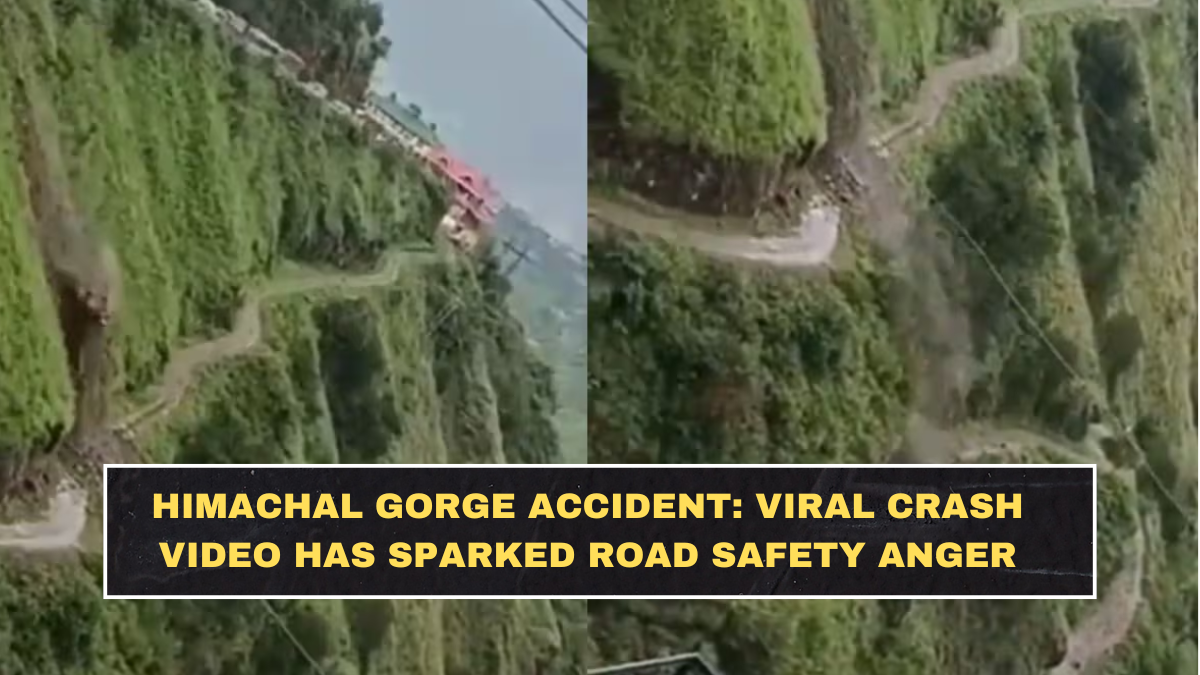
A shocking accident video from Himachal Pradesh’s Una district has gone viral after a car lost control on a hilly road near Chintpurni and plunged into a deep gorge. Reports said two people died after the vehicle fell off the road and caught fire, turning the crash into a painful reminder of how dangerous mountain driving can become within seconds.
The accident reportedly happened on the Bharwain-Hoshiarpur road, a stretch known for sharp turns and steep gradients. India Today reported that CCTV footage and preliminary police inquiry suggested a tyre burst may have triggered the crash, while NDTV Auto said the incident also raised questions about the absence of guardrails at a dangerous turn.
What Exactly Happened In The Accident?
According to reports, the car was moving on a curved stretch when it suddenly went out of control, flew off the road and fell into a gorge. The impact was severe, and the vehicle reportedly caught fire after falling, leaving the occupants trapped. Times of India reported that two men were charred to death after the car plunged into a 150-foot-deep gorge in Una.
Different reports have described the depth of the gorge differently, with some saying around 150 feet and others reporting roughly 200 feet. That difference does not change the core issue: the car left the road at a high-risk curve and there appeared to be little physical protection stopping it from falling. In mountain terrain, that missing barrier can be the difference between a survivable crash and a fatal plunge.
| Key Detail | Reported Information |
|---|---|
| Location | Near Chintpurni, Una district, Himachal Pradesh |
| Road stretch | Bharwain-Hoshiarpur road |
| Vehicle | Car reported as Swift/Dzire in different reports |
| Main suspected trigger | Tyre burst and loss of control |
| Fatalities | Two people died |
| Gorge depth | Reported between 150 and 200 feet |
| Major concern | Missing or inadequate guardrails |
| Bigger issue | Mountain-road safety and speed control |
Why Are People Angry About Guardrails?
People are angry because the viral footage appears to show a road edge where a vehicle could leave the carriageway and fall directly into a deep gorge. In normal road-safety thinking, sharp curves and steep drops should have proper crash barriers, guardrails, warning signs and speed-calming measures. Without them, one mechanical failure or driver mistake becomes far more deadly.
NDTV Auto specifically highlighted the absence of guardrails in its report on the crash. That detail is important because road deaths are not always only about driver error. Poor infrastructure can make driver error much more lethal. A tyre burst may start the accident, but missing safety barriers can decide whether people live or die.
Was Speed Also A Factor In The Crash?
Several reports described the car as speeding before the crash. Free Press Journal reported that the vehicle had earlier been fined for overspeeding, while preliminary accounts suggested speed and a suspected tyre burst contributed to the accident.
This is where the lesson becomes uncomfortable. Many drivers treat hill roads like normal highways once the road looks clear. That is reckless. Mountain roads punish overconfidence brutally because turns are sharper, shoulders are weaker, visibility is lower, and recovery space is almost zero. If a tyre bursts at high speed on a plain road, the driver may still recover. On a cliff-side curve, the margin disappears.
Why Are Tyre Bursts So Dangerous In Hill Areas?
A tyre burst can suddenly pull the vehicle to one side, reduce steering control and make braking unstable. On a flat road, a trained and calm driver may still manage the vehicle if speed is moderate. But on hill roads, the same tyre burst can become fatal because the road may have curves, slopes, loose edges and steep drops.
This is why tyre maintenance is not optional for mountain travel. Worn tyres, wrong air pressure, overloading, old tyres and heat build-up can all increase risk. Drivers planning trips to Himachal, Uttarakhand or other hill states should check tyre condition before the journey, not after the car starts wobbling on a downhill curve.
What Should Drivers Learn From This Viral Video?
The first lesson is simple: slow down before curves, not after entering them. Many drivers brake late, turn aggressively and assume the vehicle will hold the road. That is poor driving. On hill roads, speed must be reduced before the bend because sudden braking during a curve can destabilise the vehicle.
The second lesson is vehicle fitness. Tyres, brakes, lights, steering response and coolant levels should be checked before hill travel. People spend money on hotels, reels and snacks but ignore tyre condition. That is childish. A ₹500 tyre inspection can matter more than a luxury room when the road has no forgiveness.
Why Does Himachal Need Stronger Road-Safety Action?
Himachal Pradesh attracts pilgrims, tourists and local commuters across difficult terrain. Roads near temples and tourist routes often see drivers unfamiliar with hill conditions. That increases the need for better signage, speed warnings, reflective markers, crash barriers and emergency response points near high-risk stretches.
This accident also shows why authorities must audit dangerous curves after viral crashes, not just issue statements. If a location has a steep drop and regular traffic, it needs engineering protection. Blaming drivers alone is lazy governance. Road safety is a shared responsibility between drivers, road builders, police, transport departments and local authorities.
What Should Tourists Do Before Driving In Himachal?
Tourists should avoid night driving on unfamiliar hill routes, keep speed low, avoid overtaking near curves and never overload the vehicle. They should also check weather alerts because rain, fog, landslides and wet roads can increase risk sharply. If a driver is tired, inexperienced or nervous on slopes, hiring a local driver is often the smarter option.
Families should also stop treating viral hill-drive videos as adventure inspiration. Mountain roads are beautiful, but they are not playgrounds. One wrong turn, one worn tyre or one missing guardrail can end a trip permanently. That is not fearmongering; that is the reality of hill driving.
Conclusion?
The Himachal gorge accident near Chintpurni is tragic because two lives were lost in a crash that appears to involve speed, a suspected tyre burst, a dangerous curve and inadequate roadside protection. The viral video has shocked viewers because it shows how quickly a normal drive can turn fatal on mountain roads.
The blunt truth is that this accident should not become just another viral clip. Drivers need discipline, vehicles need proper maintenance, and authorities need to fix high-risk stretches with guardrails, signage and speed-control measures. If nothing changes after such a clear warning, the next tragedy will not be surprising; it will be predictable.
FAQs
Where Did The Himachal Gorge Accident Happen?
The accident happened near Chintpurni in Una district of Himachal Pradesh, reportedly on the Bharwain-Hoshiarpur road. The road stretch is known for sharp turns and downhill gradients, which make high-speed driving especially risky.
How Many People Died In The Himachal Accident?
Reports said two people died after the car plunged into a deep gorge and caught fire. Times of India reported that two men were charred to death after the vehicle fell into a gorge in Una district.
What Caused The Himachal Car Accident?
Preliminary reports suggest a suspected tyre burst and loss of control may have caused the accident. Some reports also mentioned speeding, while road-safety concerns have focused on the absence or inadequacy of guardrails near the curve.
Why Are Guardrails Important On Hill Roads?
Guardrails are important because they can stop or slow a vehicle from falling into a gorge after a skid, tyre burst or steering loss. They cannot prevent every crash, but on dangerous hill curves, they can reduce the chance of a fatal plunge.