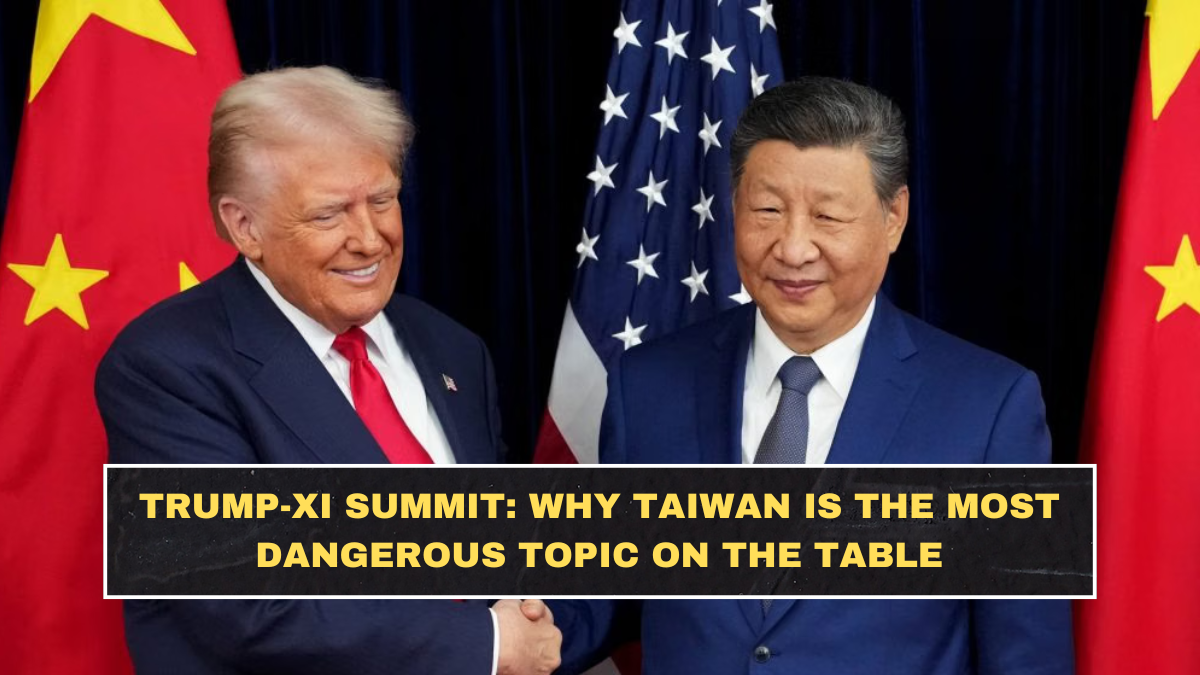
Taiwan is expected to be one of the most sensitive issues at the upcoming Trump-Xi summit because Beijing wants stronger US language against “Taiwan independence.” Reuters reported on April 29, 2026, that Taiwan is now at the top of Beijing’s agenda for the summit, marking a shift from earlier talks where the issue was often handled more quietly.
This matters because Taiwan is not just a diplomatic phrase in US-China relations. It is a self-governed island, a major semiconductor hub, and one of the most dangerous flashpoints in Asia. If Trump gives Beijing even a small wording change on Taiwan, China may treat it as a strategic victory. Taiwan, meanwhile, fears being treated as a bargaining chip in a wider US-China deal.
What Does China Want From Trump On Taiwan?
China wants the United States to move from its traditional position of not supporting Taiwan independence toward stronger language that openly opposes it. That may sound like a small diplomatic change, but in Taiwan policy, wording is everything. Beijing wants language it can use to show that Washington is moving closer to China’s position.
The US officially maintains unofficial relations with Taiwan while recognizing Beijing as China’s government. But it also supports Taiwan’s self-defense under the Taiwan Relations Act. This careful balance is designed to avoid provoking Beijing while preventing Taiwan from being abandoned. Any shift in wording could disturb that balance and create panic in Taipei.
| Issue | Why It Matters? |
|---|---|
| Taiwan independence language | China wants stronger US opposition to it |
| US policy ambiguity | Keeps peace by avoiding clear promises or rejection |
| Taiwan security | Taipei fears being traded for economic concessions |
| Semiconductors | Taiwan is critical to advanced chip supply chains |
| Military risk | China keeps pressure through drills and gray-zone tactics |
Why Is Taiwan Worried About Being Used As A Bargaining Chip?
Taiwan is worried because Trump is known for transactional diplomacy, where security, trade and political issues can become part of one negotiation package. Reuters reported that Taiwanese officials are closely watching the summit because they fear Trump may adjust language on Taiwan in exchange for Chinese economic concessions.
That fear is not irrational. Taiwan’s biggest nightmare is not only an immediate invasion. It is a slow diplomatic downgrade where Washington keeps saying it supports peace but quietly gives Beijing more room to pressure the island. If Taiwan feels US backing is weakening, investors, voters and regional allies may all start questioning the island’s security future.
What Is Beijing’s Position On Taiwan?
Beijing claims Taiwan as part of China and says reunification is a historic mission. China has repeatedly promoted the idea that Taiwan would benefit economically from union with the mainland. Reuters reported that China again argued on April 29, 2026, that union would bring Taiwan major economic opportunities, while Taipei strongly rejected the claim.
Taiwan’s government says only its people have the right to decide their future. President Lai Ching-te has warned against what he sees as “unification packaged as peace,” especially while China continues military and gray-zone pressure around the island. That is why Beijing’s peaceful language does not calm Taipei. Taiwan looks at China’s actions, not only its speeches.
Why Is Taiwan So Important To The World Economy?
Taiwan matters because it is deeply tied to the global semiconductor supply chain. Advanced chips are essential for smartphones, artificial intelligence, cloud computing, defense systems, electric vehicles and industrial equipment. A crisis around Taiwan would not only affect Asian security. It could hit factories, tech companies and consumers worldwide.
This is one reason the Trump-Xi discussion is so dangerous. Taiwan is both a security issue and an economic issue. If tensions rise, markets may start pricing in chip disruption, shipping risk and regional military escalation. The island’s importance means a diplomatic phrase at the summit can create real-world financial consequences.
Could Trump Change US Policy On Taiwan?
The US has denied that it is changing its Taiwan policy, according to Reuters. Washington continues to say it supports Taiwan’s self-defense while maintaining its one-China policy framework. But the concern is not only about formal policy. The concern is whether Trump may use softer or stronger language in a way that Beijing can present as a victory.
This is where diplomacy becomes dangerous. A policy may remain technically unchanged, but a single phrase can change perceptions. If Beijing believes Washington is becoming less committed to Taiwan, China may increase pressure. If Taiwan believes it is being abandoned, domestic politics could harden. If US allies see confusion, regional trust can weaken.
Why Is “Taiwan Independence” Such A Sensitive Phrase?
“Taiwan independence” is sensitive because Taiwan already operates like a sovereign state in many practical ways, but it does not have broad formal recognition. Reuters explains that Taiwan has its own government, military, passport and currency, but only a small number of countries officially recognize it because of China’s pressure.
Beijing reacts strongly to formal independence because it sees that as a red line. Some in Taiwan support a formal “Republic of Taiwan,” but that remains politically and constitutionally difficult. President Lai argues Taiwan is already independent as the Republic of China, which Beijing also rejects. This is why the issue is so explosive: both sides define reality differently.
What Could Go Wrong After The Summit?
The worst outcome would be a statement that creates confusion. If Trump appears to move closer to Beijing’s wording, Taiwan may feel exposed. If Trump strongly backs Taiwan, China may respond with military drills, sanctions, or more pressure around the Taiwan Strait. Either way, the summit could trigger a reaction if the language is poorly handled.
A better outcome would be boring but stable: no major wording shift, no surprise concession, and a clear message that differences must be handled peacefully. That may not create dramatic headlines, but it would be the safest result. In Taiwan policy, boring is often better than bold.
What Is The Bottom Line?
Taiwan is the most dangerous topic at the Trump-Xi summit because it combines national identity, military risk, chip supply chains and great-power rivalry. Beijing wants stronger US language against Taiwan independence. Taiwan fears becoming a bargaining chip. Washington is trying to avoid a policy shift while keeping talks with China alive.
The blunt truth is that one careless sentence could cause more damage than a failed trade deal. Taiwan is not a side issue. It is the point where US-China competition can turn from economic rivalry into a security crisis.
FAQs
Why Is Taiwan Important In The Trump-Xi Summit?
Taiwan is important because Beijing wants stronger US language against Taiwan independence, while Taiwan fears Washington may make concessions to China during broader talks.
Does The US Recognize Taiwan As A Country?
The US does not have formal diplomatic relations with Taiwan, but it maintains unofficial ties and supports Taiwan’s ability to defend itself under the Taiwan Relations Act.
What Does China Want From The Summit?
China wants Trump to take a clearer position opposing Taiwan independence, which Beijing could use as a diplomatic win.
Why Is Taiwan Worried About Trump?
Taiwan is worried because Trump’s transactional style could lead to Taiwan policy being linked to trade, technology or economic concessions from China.
Could The Summit Trigger A Taiwan Crisis?
Yes, if the summit produces unclear or provocative language. Even without a formal policy change, perception alone can raise military and market tension.