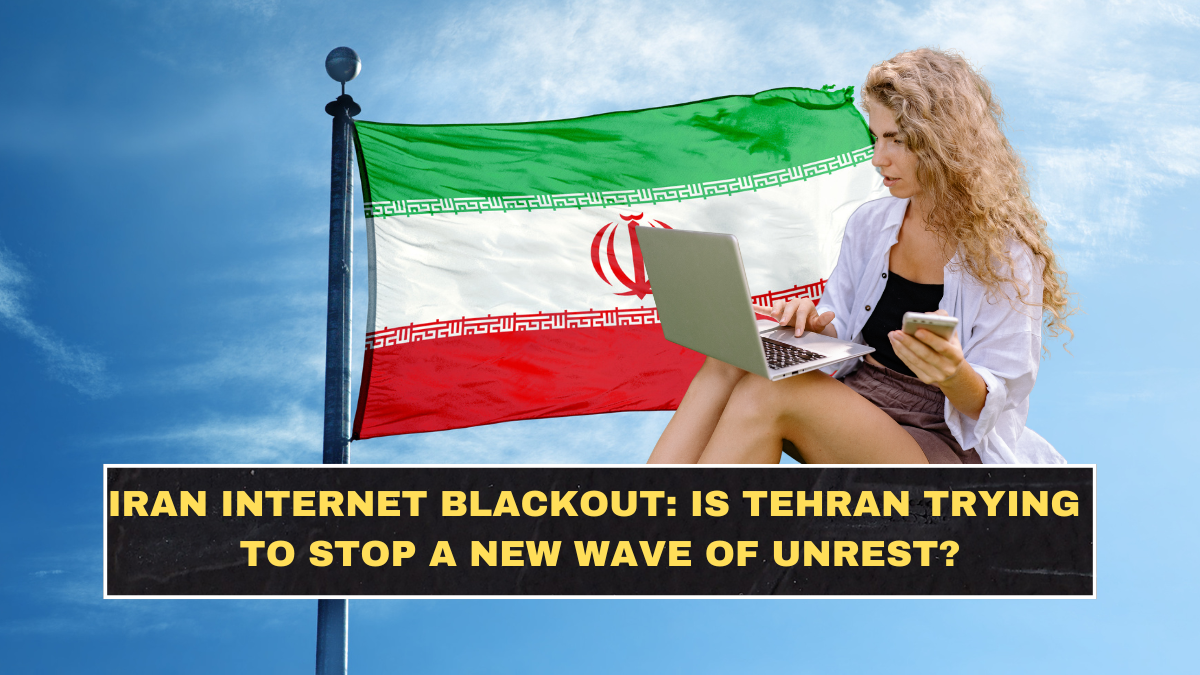
Iran’s internet blackout is creating fear because it is happening during a deep economic and political crisis. Internet restrictions are not only about blocking Instagram, WhatsApp, or foreign news. In Iran’s case, they also affect online businesses, payments, communication, family contact, remote work, and access to independent information during war. That makes the blackout both a censorship tool and an economic shock.
Reuters reported that Iran blocked internet access after anti-government protests spread across the country in January, with unrest linked to rising prices, economic distress, sanctions, and political restrictions. The shutdown then became a major business crisis, with uncertainty over when normal access would return. That timeline matters because a short outage is disruptive; a prolonged blackout can break livelihoods.
What Is Tehran Trying To Control?
Tehran appears to be trying to control three things at once: information, protest coordination, and public anger. During unrest, the internet helps people share videos, organise demonstrations, contact journalists, expose crackdowns, and communicate with family abroad. Cutting access makes it harder for protests to spread quickly and harder for the outside world to see what is happening in real time.
But this is a double-edged sword. A blackout may slow protest coordination, but it also punishes normal citizens and businesses. If people are already angry about inflation, shortages, job losses, and war pressure, cutting the internet can make them even angrier. The government may think it is reducing risk, but it may also be creating a new reason for public frustration.
| Blackout Impact | What It Means For Ordinary Iranians |
|---|---|
| Social media blocked | Less access to independent updates and protest videos |
| Online sales disrupted | Small businesses lose customers and revenue |
| Payment systems affected | Digital transactions become harder |
| Family contact reduced | Iranians abroad struggle to reach relatives |
| VPN pressure | People face more difficulty bypassing censorship |
| Protest visibility reduced | Crackdowns become harder to document |
How Much Economic Damage Is The Shutdown Causing?
The economic damage is serious because Iran’s digital economy is no longer small. Online shops, delivery services, freelancers, tech startups, advertisers, payment platforms, and service businesses all depend on internet access. When the internet is restricted for weeks, it does not only inconvenience users. It destroys income.
Iran International reported that Iran’s Chamber of Commerce estimated direct daily losses at $30 million to $40 million, rising to $70 million to $80 million when indirect damage is included. The report also said Communications Minister Sattar Hashemi warned that the disruption threatens the livelihoods of around 10 million people. Those numbers show why the blackout is no longer only a rights issue. It is an economic survival issue.
Why Are Businesses Suffering So Badly?
Businesses are suffering because modern commerce depends on stable connectivity. A shop that sells through Instagram loses customers. A freelancer loses clients. A delivery company loses coordination. A software team loses communication tools. A payment platform loses transaction volume. Even companies that are not political become collateral damage.
Reuters reported earlier that Iranian businesses were suffering a new blow as the blackout lingered, with normal access blocked after protests spread. The article also noted that unrest had already become deadly, with reported death tolls contested by official and rights-group sources. That shows the business crisis is happening inside a much larger social and political breakdown.
Is The Blackout Linked To Fear Of New Protests?
Yes, that is the most convincing explanation. Iran’s leadership knows that economic pain can trigger unrest. AP reported that Iran’s economy has been battered by US and Israeli strikes, blockade pressure, damaged factories, soaring prices, and job losses. The report said at least 1 million jobs had been lost, with up to 12 million more at risk if the crisis worsens.
That is exactly the kind of pressure that frightens authoritarian governments. When people lose jobs, prices rise, factories close, and families cannot afford basics, protest risk increases. Internet access then becomes politically dangerous because it allows anger to spread. So the blackout looks less like a technical emergency and more like a preventive security move.
Why Is Iran’s Economy Under So Much Pressure?
Iran’s economy is under pressure from multiple directions at once. The war has damaged industrial infrastructure. The US-led blockade has restricted imports and oil exports. Supply chains are strained. Food prices have risen. Oil storage is becoming a problem because exports have dropped. Businesses are losing sales because the internet is restricted. This is not one crisis. It is several crises feeding each other.
The Wall Street Journal reported that Iran’s crude and condensate loadings fell sharply after the blockade, leaving Tehran with rising storage pressure and unsold oil. AP also reported that prices of basic goods such as chicken, beef, and dairy have soared due to supply-chain disruption. For ordinary Iranians, that means the crisis is not abstract geopolitics. It is food, work, savings, rent, and daily survival.
Could The Blackout Backfire On Tehran?
Yes, and this is the blind spot Tehran may be underestimating. Internet shutdowns can stop people from organising quickly, but they also destroy trust. When people cannot reach family, run businesses, receive payments, or check reliable information, they may blame the state even more. A blackout can silence a protest temporarily while making the anger behind it deeper.
Chatham House warned that Iran’s internet shutdown signals a broader move toward digital isolation, not just a temporary crisis response. That is important because long-term digital isolation can damage innovation, investment, education, trade, and public trust. It may help the state control information, but it weakens the country’s future.
Why Does This Matter Outside Iran?
This matters outside Iran because internet shutdowns are becoming a tool of modern crisis control. When a state can cut off millions of people during protests or war, it affects human rights, business continuity, journalism, banking, diplomacy, and family communication across borders. Iranians abroad may not be able to reach relatives, verify safety, or send help.
There is also a global digital-infrastructure risk. Reuters reported that the Iran war has raised concern over undersea internet cables near the Strait of Hormuz, where major fibre-optic systems carry critical communications traffic. No cables have been damaged in the current conflict, but the warning shows how digital infrastructure and military conflict are now tightly linked.
What Happens If The Shutdown Continues?
If the shutdown continues, Iran’s economy will likely suffer deeper damage. Small businesses may close permanently. Startups may lose clients. Workers may lose income. Families may become more isolated. Public anger may grow, especially if the government restores access only to favoured groups or state-linked sectors.
The regime may gain short-term control, but the long-term cost is heavy. A country cannot build a modern economy while cutting its people off from the global internet. Tehran may believe it is preventing unrest, but it is also weakening the very economy it needs to keep society stable.
Conclusion
Iran’s internet blackout is not just a technology story. It is a warning sign of a state under pressure from war, economic damage, inflation, job losses, and fear of public unrest. The government may be trying to stop protests from spreading, but the shutdown is also hurting businesses, workers, families, and Iran’s long-term economic future.
The blunt truth is this: shutting down the internet does not solve anger. It hides it, delays it, and often deepens it. If Iran’s economy keeps weakening and people remain digitally trapped, Tehran may stop videos from spreading, but it may not stop the next wave of unrest.
FAQs
Why did Iran restrict internet access?
Iran restricted internet access after anti-government protests spread nationwide and unrest intensified. Authorities appear to be trying to limit protest coordination, control information, and reduce outside visibility during a serious political and economic crisis.
How much is Iran’s internet blackout costing the economy?
Iran International reported Chamber of Commerce estimates of $30 million to $40 million in direct daily losses, rising to $70 million to $80 million when indirect damage is included. The disruption reportedly threatens livelihoods linked to millions of internet-dependent jobs.
Are Iranian businesses affected by the blackout?
Yes. Online shops, freelancers, startups, advertisers, delivery services, and digital payment users are all affected. Reuters reported that Iranian businesses suffered a major blow as the blackout lingered after protests spread.
Can an internet blackout stop protests?
It can slow protest coordination and reduce outside visibility, but it does not remove the reasons people are angry. If inflation, job losses, shortages, and political repression continue, a blackout may delay unrest while making public frustration worse.