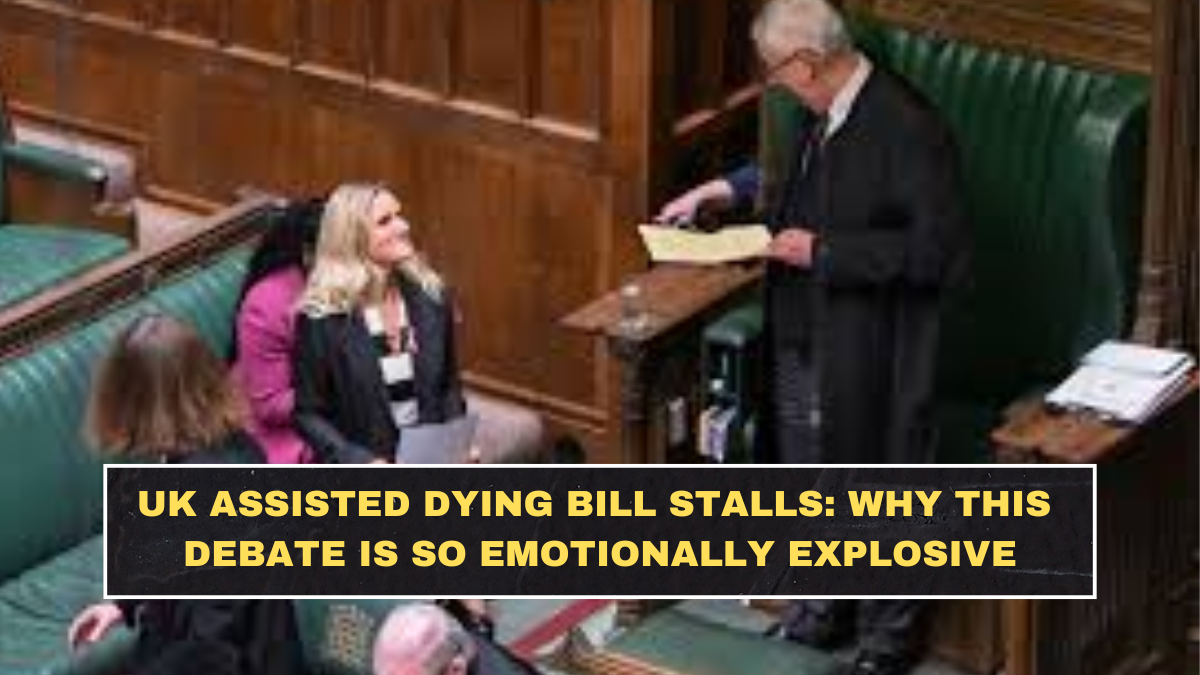
The UK’s assisted dying bill has stalled after running out of time in the House of Lords, despite previously passing through the House of Commons. The Terminally Ill Adults (End of Life) Bill would have allowed some terminally ill adults in England and Wales to request help to end their lives, but only under strict conditions. Supporters say the bill was blocked by procedural delay. Opponents say it was unsafe and needed deeper scrutiny.
The official UK Parliament page describes the bill as legislation to allow terminally ill adults, subject to safeguards and protections, to request and be provided with assistance to end their own life. The bill originated in the House of Commons in the 2024–26 session and had reached the Lords, but the parliamentary timetable became the practical barrier.

What Would The Bill Have Allowed?
The bill would not have legalised assisted dying for everyone. It was narrowly designed for adults who were terminally ill, mentally competent, and expected to die within a limited timeframe. The Guardian reported that the bill would have applied to terminally ill adults with six months or less to live, requiring scrutiny from multiple doctors and an expert panel before any assisted death could proceed.
This detail matters because many people misunderstand the debate. The proposal was not about allowing anyone with depression, disability, grief, or general suffering to request assisted death. It was aimed specifically at terminally ill adults near the end of life. But even with those limits, critics argued that vulnerable people could still feel pressure to choose death because of family burden, poverty, disability, poor care, or fear of being dependent.
| Key Part Of The Bill | Simple Explanation |
|---|---|
| Who it applied to | Terminally ill adults in England and Wales |
| Timeframe | Expected to have six months or less to live |
| Mental capacity | Person would need to be mentally competent |
| Safeguards | Doctors and an expert panel would review requests |
| Main objection | Risk of coercion and weak protection for vulnerable people |
Why Are Supporters So Angry?
Supporters are angry because they believe the bill had democratic backing and was blocked by delay tactics rather than defeated in a clean vote. The Guardian reported that the bill failed in the Lords after more than 1,200 amendments were tabled, most from a small number of peers. MPs including Kim Leadbeater, who sponsored the bill, vowed to bring it back, calling the Lords block undemocratic.
Their argument is simple: terminally ill people should not be forced to endure unbearable suffering if they are mentally competent and repeatedly choose an assisted death. Supporters also argue that some people already travel to Switzerland to end their lives, which creates an unfair system where only those with money, physical ability, and family support can access that option.
Why Are Opponents Calling The Bill Unsafe?
Opponents say the bill is unsafe because the risk of coercion cannot be fully removed. They worry that elderly, disabled, poor, isolated, or seriously ill people may feel they are a burden and choose death for the wrong reasons. ITV reported that opponents branded the bill “unsafe and unworkable,” citing concerns about coercion, weak safeguards, and risks to disabled people.
This concern is not imaginary. In end-of-life care, people can be influenced by family pressure, financial stress, loneliness, poor access to pain relief, or lack of proper palliative support. A person may say “I want to die,” but the deeper question is whether they genuinely want death or simply want better care, less pain, more dignity, and less fear.
Why Is The Debate So Emotionally Divisive?
The debate is emotionally explosive because both sides believe they are protecting vulnerable people. Supporters believe the current law forces dying people to suffer against their will. Opponents believe legalising assisted dying could quietly pressure vulnerable people toward death. This is why the debate becomes so intense: both arguments are built around compassion, but they reach opposite conclusions.
It is lazy to pretend one side is simply cruel. Many supporters have watched loved ones suffer badly at the end of life. Many opponents have seen disabled or elderly people treated as burdens. The real conflict is not compassion versus cruelty. It is autonomy versus protection, and that is one of the hardest ethical fights in modern law.
Why Do Safeguards Matter So Much?
Safeguards matter because assisted dying is irreversible. If a benefits decision, medical treatment, or housing case goes wrong, it may be corrected later. Assisted death cannot be reversed. That is why critics focus heavily on how requests would be assessed, who would detect coercion, what doctors must check, and whether the NHS is prepared to manage such a sensitive system.
Legal analysis from CMS noted that both the Westminster and Scottish assisted dying proposals faced deep concerns around coercion, safeguards for vulnerable groups, and palliative-care provision. It also noted that Westminster’s bill had become trapped by procedural obstacles in the Lords after intense amendment pressure.
Why Is Palliative Care Part Of This Debate?
Palliative care is central because people should not choose assisted dying simply because proper end-of-life care is unavailable. If hospice care, pain management, mental-health support, and social care are weak, then “choice” becomes questionable. A person may choose death because the system failed to offer a dignified alternative.
This is one of the strongest arguments from opponents. Legalising assisted dying in a healthcare system already under pressure could create a dangerous imbalance. If the state can offer a quicker assisted death but cannot guarantee high-quality palliative care, critics will argue the law has failed morally even if it looks procedurally strict.
Could The Bill Come Back?
Yes, the bill could come back in a future parliamentary session. Supporters have already promised to revive it, and public debate is not going away. The Guardian reported that MPs have vowed to bring the bill back after the Lords block, arguing that public and parliamentary support remains strong.
But a revived bill will face the same hard questions. How will coercion be detected? Who signs off the request? What protections exist for disabled people? What role will doctors play? How will conscience objections work? How will palliative care be improved first? Unless supporters answer these questions more convincingly, opponents will attack the next bill in the same way.
Conclusion
The UK assisted dying bill stalled because the country is deeply divided over where compassion should lead. Supporters see the bill as a humane choice for terminally ill adults facing unbearable suffering. Opponents see it as a dangerous law that could expose vulnerable people to pressure, fear, and subtle coercion.
The blunt truth is that both sides have serious arguments. Assisted dying cannot be treated like a simple freedom issue, but it also cannot be dismissed as automatically unsafe. If the UK brings this law back, it needs stronger safeguards, clearer scrutiny, better palliative care, and more honesty about the risks. Anything less will collapse again.
FAQs
What was the UK assisted dying bill about?
The bill aimed to allow terminally ill adults in England and Wales to request help to end their own life, subject to safeguards and protections. It was limited to people who met strict eligibility requirements and were expected to have a short time left to live.
Why did the assisted dying bill fail?
The bill failed because it ran out of parliamentary time in the House of Lords after facing a very large number of amendments. Supporters called this obstruction, while opponents argued the bill needed deeper scrutiny because of safety concerns.
Why are disabled-rights campaigners worried?
Some disabled-rights campaigners worry that legalising assisted dying could make vulnerable people feel pressured to die because of poor care, family burden, financial stress, loneliness, or lack of support. Critics say safeguards must be extremely strong to prevent this risk.
Could assisted dying still become legal in the UK?
Yes, supporters may bring back a new bill in a future parliamentary session. However, any new proposal will face the same difficult questions about coercion, safeguards, doctors’ roles, palliative care, and protection for vulnerable people.