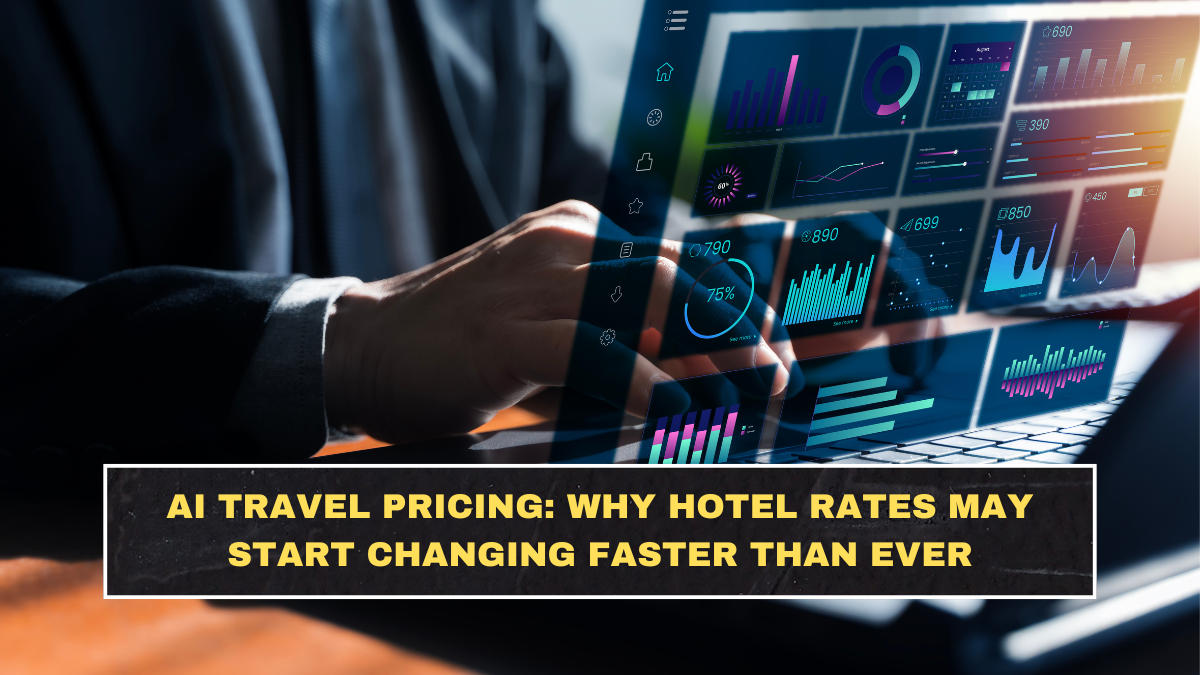
AI travel pricing means using artificial intelligence, algorithms, and real-time data to change prices for hotels, flights, packages, and travel services based on demand. In hotels, this is usually called dynamic pricing or revenue management. Instead of keeping one fixed room rate, hotels adjust prices depending on occupancy, season, competitor rates, events, booking trends, and traveller demand.
RoomPriceGenie explains dynamic pricing as a strategy where room rates change in real time based on demand, occupancy, competition, and market trends. The simple logic is that a hotel should not charge the same price on a low-demand Tuesday and a festival weekend when rooms are almost sold out.
This is not completely new. Airlines and hotels have used dynamic pricing for years. What is changing now is speed and precision. AI can process more data faster than a human revenue manager, which means hotel prices may update more frequently and react faster to demand shifts.
Why Are Hotel Rates Changing Faster Now?
Hotel rates are changing faster because travel demand has become less predictable. People book shorter stays, make last-minute decisions, compare prices across many platforms, and travel around events, concerts, sports matches, weddings, festivals, and work trips. Hotels need pricing systems that react quickly instead of waiting for manual updates.
Lighthouse reported that one-night hotel stays have increased globally, with their share of searches on online travel agencies and metasearch sites rising from 28% in Q1 2023 to 37% in Q4 2025. It also noted that booking windows are shrinking, which means travellers are often deciding closer to their travel dates.
| Pricing Signal | How AI Uses It | How Travellers Feel It |
|---|---|---|
| Occupancy level | Raises rates when rooms fill quickly | Prices jump near sold-out dates |
| Local events | Detects concerts, exams, festivals, matches | Hotels become expensive suddenly |
| Competitor rates | Compares nearby hotel prices | Rates adjust across platforms |
| Booking window | Tracks last-minute demand | Late bookers may pay more |
| Search demand | Spots rising interest in a destination | Prices rise before full sell-out |
How Does AI Predict Travel Demand?
AI predicts travel demand by reading patterns from booking data, search activity, past occupancy, competitor prices, flight movement, local events, weather, holidays, and customer behaviour. A human manager may notice a few of these signals, but AI can combine many signals at once and update recommendations quickly.
BCG says AI-first hotels can use artificial intelligence for marketing, commercial growth, demand forecasting, and real-time dynamic pricing. It also highlights AI use in guest experience, staffing, procurement, inventory, and maintenance, showing that pricing is only one part of the bigger AI shift in hotels.
For hotels, the goal is simple: sell the right room to the right customer at the right price at the right time. For travellers, the result can feel less friendly. The room you saw at ₹5,000 in the morning may become ₹6,500 by evening if demand rises or cheaper rooms sell out.
Is AI Pricing Good Or Bad For Travellers?
AI pricing can be good or bad depending on the situation. It can help travellers find lower prices during weak demand, off-season periods, weekdays, and low-occupancy dates. If a hotel has many empty rooms, AI may recommend discounts or targeted offers to attract bookings.
But during high-demand periods, AI pricing can make rates rise faster. Long weekends, concerts, cricket matches, weddings, school holidays, and business events can trigger sharp increases. FCM Consulting’s 2026 corporate travel trends noted that hotel rates remain volatile because of dynamic pricing and capacity constraints in key cities.
This is where travellers need to stop being casual. If you are booking for a peak event or popular holiday date, waiting may punish you. AI systems do not care that you were “planning to book later.” They respond to demand, and demand usually pushes prices up when inventory becomes limited.
What Is The Difference Between Dynamic Pricing And Surveillance Pricing?
Dynamic pricing changes rates based on market signals like demand, occupancy, season, competitor pricing, and availability. Surveillance pricing is more controversial because it may use personal data such as browsing behaviour, location, purchase history, or willingness-to-pay signals to set individual prices.
This distinction is becoming a political issue. Reuters reported in March 2026 that a US House committee asked major travel and platform companies, including Uber, Lyft, Expedia, Booking.com, and Instacart, to disclose how they use AI and consumer data in pricing. The concern was whether AI systems could use private information to personalise prices in ways consumers do not understand.
Travellers should care because normal demand-based pricing is expected in travel. But personalised pricing based on private behaviour raises fairness and privacy questions. If two people see different prices because one is booking during peak demand, that is normal. If they see different prices because an algorithm thinks one person is desperate enough to pay more, that becomes a trust problem.
How Can Travellers Avoid Overpaying?
Travellers can reduce overpaying by comparing prices across platforms, checking direct hotel websites, using price tracking, booking early for peak dates, and staying flexible with dates or locations. Google recently expanded hotel price tracking so users can track specific hotel prices by name and get alerts when prices change for selected dates.
The smartest habit is to treat hotel booking like a moving market, not a fixed price board. Search in advance, compare several dates, check refundable rates, and monitor whether prices are rising or falling. For high-demand trips, lock the booking early if the cancellation policy is flexible. For off-season trips, waiting may sometimes help.
Also, do not assume one platform is always cheapest. Online travel agencies, hotel websites, loyalty apps, credit card portals, and corporate rates can all show different prices. AI pricing rewards informed travellers and punishes lazy ones.
Conclusion?
AI travel pricing is changing hotel rates by making them faster, more responsive, and more data-driven. Hotels can now use demand signals, competitor rates, booking behaviour, events, and occupancy data to update prices more intelligently than before.
For travellers, the impact is direct. Prices may rise faster during popular dates, but deals may also appear during weaker demand. The smart response is not panic. It is better planning, price tracking, flexible dates, and faster decisions when demand is clearly rising. AI will not make travel pricing simpler; it will make it more dynamic.
FAQs
What Is AI Travel Pricing?
AI travel pricing is the use of artificial intelligence and data systems to adjust hotel, flight, and travel prices based on demand, availability, competition, season, and booking behaviour.
Why Do Hotel Prices Change So Quickly?
Hotel prices change quickly because hotels use dynamic pricing systems that react to occupancy, demand, events, competitor rates, and booking patterns. AI makes these updates faster and more precise.
Can AI Make Hotel Rates More Expensive?
Yes, AI can make hotel rates rise faster during high-demand periods such as festivals, concerts, sports events, holidays, and business conferences. But it can also help create discounts when demand is weak.
How Can Travellers Get Better Hotel Prices?
Travellers can compare platforms, track prices, book early for peak dates, use refundable rates, check direct hotel websites, and stay flexible with travel dates or nearby locations.