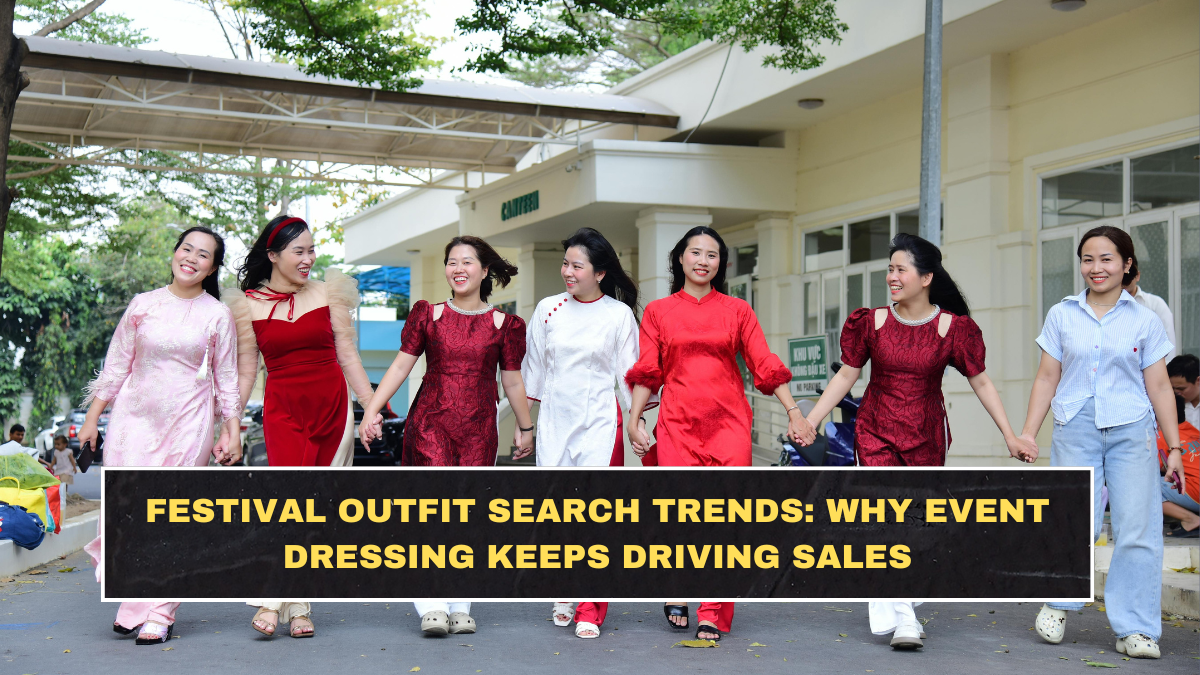
Festival outfit search trends keep growing because people do not shop for events the same way they shop for daily life. Everyday buying is usually about usefulness. Event dressing is about identity, attention, mood, and photos. That is why festival searches stay strong even when broader fashion spending feels cautious. In 2026 coverage, Vogue and Glamour both show how festival-linked aesthetics still shape summer dressing, from boho pieces and denim shorts to sandals, scarves, and statement styling.
The bigger point is that festival fashion is rarely only about the festival. It spills into wider seasonal shopping. Glamour’s 2025 festival trend report tied music-festival dressing to larger fashion obsessions such as updated boho and westernwear, while 2026 fashion coverage keeps showing the same pattern: event looks influence what gets bought for concerts, holidays, rooftop parties, and travel dressing too.
Why do festival outfits drive so much search activity?
Because festivals give people a reason to dress more boldly than normal. They create a permission structure. Someone who would never wear fringe, micro shorts, metallic details, headscarves, or exaggerated accessories on an ordinary day may still search for those looks before a concert or festival weekend. That event-specific behavior is exactly why trend cycles move faster around social occasions than around basic wardrobe needs. Vogue’s recent coverage still treats boho and festival-adjacent styling as part of the summer fashion conversation, even when celebrities push against the expected look.
There is also a social-media reason. Event dressing is built for visibility. People are not only asking, “What should I wear?” They are asking, “What will look current in photos, stand out in a crowd, and still feel like me?” That is why search interest clusters around styling ideas, not just products. Glamour’s 2026 content on denim shorts and boho dresses is basically serving this exact demand: people want help translating trend pieces into specific event outfits.
What are people actually searching for in 2026 festival fashion?
They are searching for expressive pieces with flexible styling value. Current 2026 fashion coverage points to boho dresses, denim shorts, retro sandals, headscarves, statement jewelry, and nostalgic summer pieces as part of the broader event-dressing mood. Who What Wear’s 2026 “Riviera Summer” reporting also shows a return to more intentional, dressed-up seasonal style, which overlaps with festival search behavior because shoppers increasingly want outfits that feel special rather than generic.
This matters because buyers are no longer searching only for “festival outfits.” They are searching by item, vibe, and occasion. A person may search for jean shorts, boho dress styling, gladiator sandals, or retro accessories without ever typing the word festival. That is how event dressing drives sales beyond the literal event category. This is an inference based on current 2026 style coverage emphasizing styling-led searches across individual items rather than only themed outfit lists.
Why do trend cycles move faster around social occasions?
Because social occasions compress decision-making. A buyer may postpone replacing basics for months, but a concert, wedding weekend, or festival creates a deadline. That deadline speeds up trend adoption. It also encourages riskier purchases because the buyer is shopping for a moment, not for long-term practicality.
That is why event dressing often revives looks faster than everyday fashion does. Vogue’s recent anti-boho summer piece only works as an article because boho is still the obvious expected reference point for festival-season style. In other words, even rejection of the trend proves the trend still has cultural force.
Which festival outfit categories are strongest right now?
Here is the practical breakdown:
| Category | Why people search it | What it signals | Main risk |
|---|---|---|---|
| Boho dresses | Easy one-piece event styling | Effortless but expressive | Can look costume-like if overdone |
| Denim shorts | Familiar base for festival looks | Casual, youthful, versatile | Often styled too predictably |
| Statement sandals | Practical and photo-friendly | Fashion awareness without full costume | Comfort gets ignored |
| Scarves and hair accessories | Cheap way to update a look | Trend fluency and personality | Can feel forced fast |
| Jewelry and add-ons | Helps basics look event-ready | Individual styling rather than full trend buy-in | Easy to over-accessorize |
That table shows the real buying logic. Most shoppers do not rebuild their whole wardrobe for one event. They buy a few visible pieces that can transform basics into something more expressive.
Is festival fashion really about youth buying behavior?
Largely, yes, but not only. Younger shoppers tend to adopt event-driven trends faster because they are more comfortable with temporary aesthetics, faster styling changes, and socially visible dressing. But older consumers also participate when the look can be translated into broader summer dressing. That is why 2026 trend coverage often shows pieces that work both at festivals and beyond, like sandals, scarves, retro swimwear, and dressed-up casual separates.
The smarter insight is that festival shopping is not only about age. It is about willingness to buy for emotion rather than pure utility. Event dressing gives retailers a reason to sell aspiration in a more urgent way.
Where does this trend go wrong?
It goes wrong when people confuse expressive with random. Many festival outfits fail because buyers stack too many trend signals into one look. A boho dress, cowboy boots, giant belt, fringe bag, layered jewelry, hat, and glitter makeup can stop looking stylish and start looking like panic. Glamour’s 2026 styling coverage works better when it shows one trend piece worn multiple ways, because that reflects how real people avoid looking ridiculous.
The other problem is overbuying. Event dressing drives sales because it encourages urgency, but that urgency also leads to low-repeat purchases. The smart buyer looks for pieces that survive beyond the event. The dumb buyer shops for one weekend and ends up with clothes that never leave the wardrobe again.
Why does event dressing still matter for fashion sales?
Because it triggers faster buying than basics do. Seasonal event dressing turns passive interest into immediate shopping. It gives people a reason to search, compare, and spend now, not later. The pattern across recent 2026 style coverage is clear: summer fashion is being framed less around minimal basics and more around mood, nostalgia, occasion, and visible styling choices.
That is why festival outfit searches matter. They are not just about festivals. They are one of the clearest signals of how occasion-based fashion keeps pushing trend-led sales.
Conclusion
Festival outfit search trends are strong because event dressing gives people permission to shop emotionally, dress more boldly, and move faster than they do with everyday clothes. Search behavior around boho pieces, denim shorts, sandals, scarves, and styling-led looks shows that festivals still shape wider seasonal fashion demand. The real lesson is simple: people may claim they want practical wardrobes, but when a social occasion appears, expression starts winning over practicality very quickly.
FAQs
Why do festival outfits generate so much search interest?
Because festivals create a reason to dress more expressively than usual, which pushes people toward styling ideas, trend pieces, and event-specific outfit planning. This is supported by current 2026 fashion coverage centered on styling festival-adjacent items.
What festival fashion trends are strongest in 2026?
Boho dresses, denim shorts, statement sandals, scarves, retro accessories, and more intentional summer dressing are among the clearest themes in current 2026 coverage.
Does festival fashion influence wider shopping trends?
Yes. Festival dressing often spills into broader summer and event shopping because buyers search by vibe, item, and occasion rather than only by the word “festival.” This is an inference from current trend coverage across seasonal fashion items.
What is the biggest mistake in festival dressing?
Usually overstyling. Too many obvious trend elements in one outfit make the look feel forced instead of expressive. Glamour’s current styling coverage points more toward controlled, reusable styling than costume dressing.