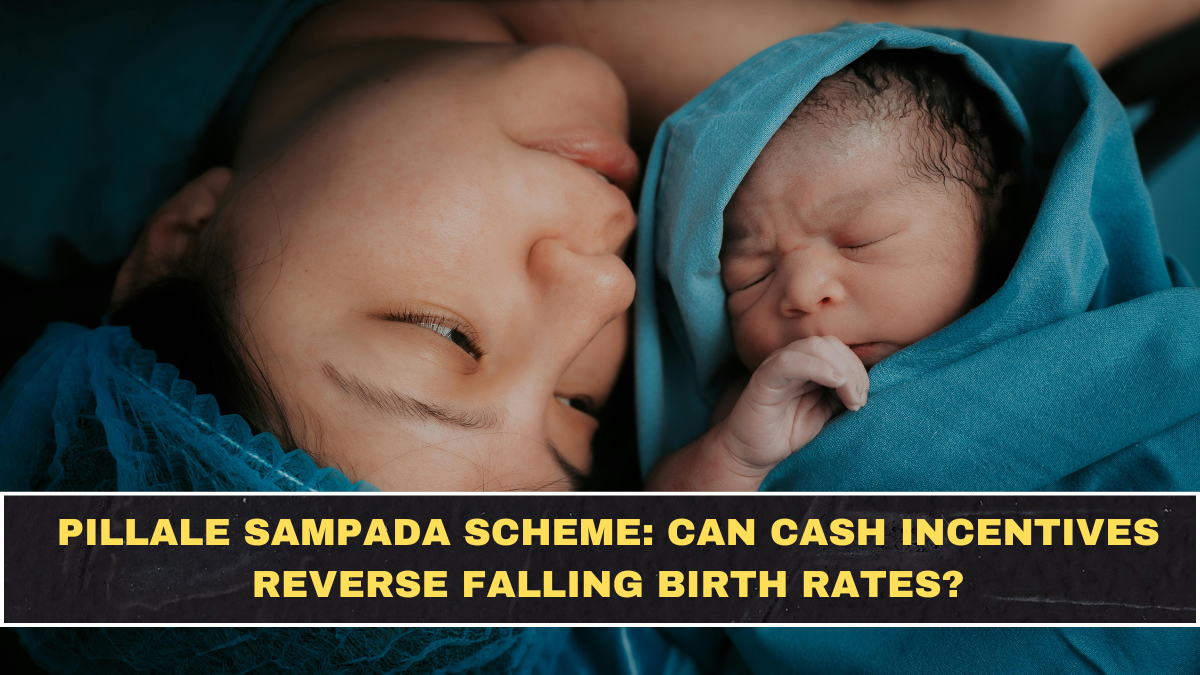
Pillale Sampada, meaning “children as wealth,” is Andhra Pradesh’s new population-growth push aimed at addressing falling fertility and future demographic imbalance. The state government has announced cash incentives of ₹30,000 for the birth of a third child and ₹40,000 for a fourth child, making the scheme one of the most debated family-policy moves in India right now.
The idea sounds simple, but the issue is not simple at all. Andhra Pradesh is not just trying to increase births; it is responding to fears about ageing, shrinking family size and future workforce pressure. The real question is whether a one-time cash incentive can change long-term family decisions in a meaningful way.
Why Is Andhra Worried Now?
Officials have linked the scheme to Andhra Pradesh’s falling Total Fertility Rate, with reports saying the state’s TFR has declined to around 1.50, below India’s national average of about 1.9. A lower fertility rate means fewer children are being born per woman, which can eventually create an ageing population and a smaller future workforce.
| Scheme Detail | Current Update |
|---|---|
| Scheme Name | Pillale Sampada |
| Meaning | Children as Wealth |
| Third Child Incentive | ₹30,000 |
| Fourth Child Incentive | ₹40,000 |
| Main Aim | Address falling fertility and demographic imbalance |
| Key Concern | Eligibility rules and long-term impact |
This is not only an Andhra issue. Reuters reported that India’s total fertility rate fell to 2.0 during 2019–2021 from 3.4 in 1992–1993, mainly due to rising contraceptive use and female education. That shift has pushed some policymakers to think beyond population control and start discussing population balance.
Can Money Change Family Decisions?
A cash incentive can attract attention, but it may not be enough to change serious family-planning decisions. Raising a child costs far more than ₹30,000 or ₹40,000 when parents include hospital expenses, nutrition, schooling, coaching, healthcare and future career support. Anyone pretending this amount alone can reverse fertility decline is overselling the policy.
Families usually decide to have more children when they feel financially secure, socially supported and confident about the future. If the government wants Pillale Sampada to work, it must think beyond one-time payments. Childcare support, healthcare access, school quality, women’s safety and stable employment will matter much more in the long run.
What Are The Biggest Questions?
The scheme has created interest, but many practical details still need official clarity. Families should not assume automatic eligibility until the government releases complete guidelines. A policy announcement is not the same as a fully operational scheme with application rules, payment method and verification process.
Key questions still matter:
- Who will be eligible for the incentive?
- Will income limits apply to families?
- Will the money go directly to the mother’s account?
- What documents will be required?
- Will health checkups and birth registration be linked?
- How will misuse or fake claims be prevented?
These questions are not small technical details. They decide whether the scheme becomes a serious welfare policy or just a headline-making announcement. Poor implementation can turn even a bold policy into confusion, delay and political noise.
Why Are Critics Concerned?
Critics may question whether a state should encourage larger families when many households already struggle with education costs, job insecurity and healthcare expenses. Reuters also noted that India still faces major economic concerns, including youth unemployment, even as some political voices push for larger families due to fertility decline.
This is the uncomfortable part Andhra cannot avoid. More children can strengthen future demographics only if those children receive good nutrition, education, healthcare and employment opportunities. Without that support, higher births may increase family pressure instead of creating future wealth.
What Should The Govt Add?
If Andhra wants Pillale Sampada to become a serious population strategy, it should connect the cash incentive with broader child and mother welfare. A one-time amount may help at birth, but families need support for years after that. Otherwise, the scheme may help with publicity more than real population planning.
Useful additions could include maternal healthcare, nutrition support, school-linked benefits, childcare help, health insurance and strong safeguards for women. The mother’s welfare must stay central because population policy often becomes unfair when women carry the physical, emotional and financial burden without enough support.
Conclusion?
Pillale Sampada is a bold population-growth scheme that shows Andhra Pradesh is worried about falling fertility and future demographic imbalance. The ₹30,000 incentive for a third child and ₹40,000 for a fourth child has made the policy instantly newsworthy, but the real impact will depend on detailed guidelines and implementation.
The honest takeaway is simple: cash can start a conversation, but it cannot solve fertility decline alone. If Andhra combines this scheme with healthcare, childcare, education, women-focused safeguards and job creation, it may become meaningful. If not, it risks becoming a flashy announcement with limited real-world impact.
FAQs?
What Is Pillale Sampada Scheme?
Pillale Sampada is Andhra Pradesh’s population-growth initiative aimed at addressing falling fertility. The name means “children as wealth,” and the scheme includes announced incentives for third and fourth child births.
How Much Money Will Families Get?
The announced incentive is ₹30,000 for the birth of a third child and ₹40,000 for the birth of a fourth child. Families should wait for complete official guidelines before assuming eligibility.
Why Is Andhra Pradesh Encouraging More Children?
The state is concerned about declining fertility and future demographic imbalance. Reports say Andhra Pradesh’s fertility rate has fallen below the national average, raising concerns about ageing and workforce sustainability.
Can Cash Incentives Increase Birth Rates?
Cash incentives may help some families, but they are unlikely to reverse fertility decline alone. Long-term support such as healthcare, childcare, education, jobs and women-friendly policies will matter more.