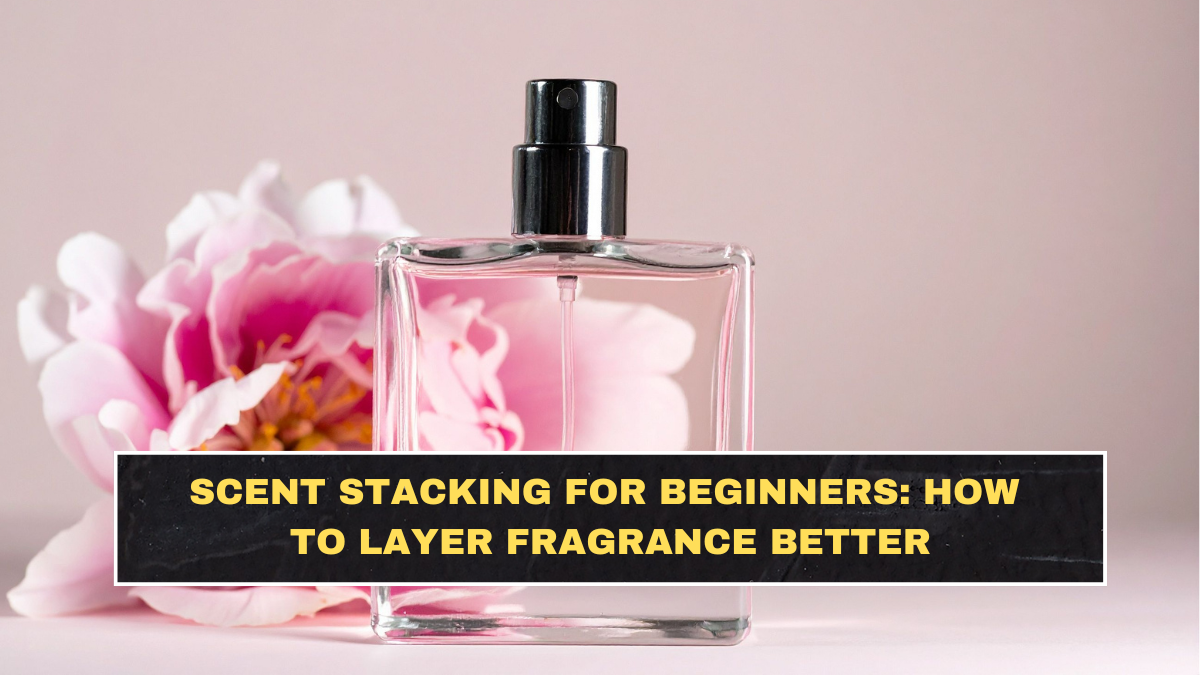
Scent stacking is getting popular because people are getting bored with the old idea of one rigid “signature scent.” Current fragrance coverage from Vogue and Marie Claire points to a 2026 shift toward layering, scent wardrobes, and building fragrance as more of a personal ritual than a single fixed perfume choice. That makes sense. Buying one expensive bottle and expecting it to fit every mood, season, and occasion is not very realistic anymore. People want more control over softness, longevity, and personality without rebuilding their whole perfume collection.
The problem is that beginners often layer badly. They throw two strong perfumes together, create a headache cloud, and then decide layering is overrated. It is not overrated. It is just easier to ruin than people expect. Recent Vogue and Byrdie guidance both make the same practical point: layering works best when you think about texture, intensity, and scent family rather than just spraying random bottles together.
Why is scent stacking trending now?
Because fragrance is becoming more personalized and more modular. Vogue’s 2026 fragrance trends coverage says layering and “building” scent through body products, hair mists, and soft enhancements has become a bigger part of how people wear fragrance now. Marie Claire’s 2026 trend coverage also describes the decline of the single signature scent in favor of scent wardrobes and mood-based fragrance choices.
That shift matters because it makes fragrance feel less all-or-nothing. You do not need to commit to one loud perfume identity every day. You can build lighter combinations for work, warmer combinations for evenings, or softer combinations for summer. The trend is not really about more perfume. It is about better control.
What is the easiest way to understand scent stacking?
Think in layers, not chaos. A good beginner setup usually has a soft base, a main scent, and sometimes one accent. Vogue’s layering guide points to products like scented body moisturizers, body mists, hair perfumes, body oils, perfume oils, and eau de parfums as the main categories people use when layering. Byrdie also recommends applying scented lotions underneath oils and alcohol-based perfumes to help scent last longer and feel more blended.
The easiest version is not “perfume on perfume on perfume.” It is body lotion or mist first, then a perfume on top. That already counts. Beginners usually do better with one soft supporting layer and one main fragrance instead of trying to mix three strong perfumes like they are chemists.
Which combinations are easiest for beginners?
| Layering combo | Why it works | Best use case |
|---|---|---|
| Unscented lotion + perfume | Lets the perfume stay clear and last better | Safest everyday option |
| Matching body mist + perfume | Builds intensity without confusion | Day-to-night wear |
| Vanilla base + floral perfume | Softens sharper florals | Easy feminine layering |
| Musk base + citrus perfume | Makes fresh scents feel warmer | Clean everyday scent |
| Body oil + woody perfume | Adds depth and longevity | Evening or cooler weather |
This table matters because beginners need structure, not abstract fragrance poetry. Vogue’s layering guide supports using body moisturizers, body oils, mists, and perfumes in combination, while Vogue’s perfume-wearing tips say layering tends to work better when scents stay within compatible olfactive families. Byrdie adds an important warning too: stacking multiple dark, complex perfumes can become overpowering fast.
Which scent families are easiest to layer well?
Musk, vanilla, soft woods, citrus, and light florals are usually the easiest starting points because they play well with other notes. Vogue’s layering advice specifically recommends working with compatible families rather than forcing unrelated scents together. The bigger 2026 fragrance trend coverage also points toward more textured, layered scent profiles built from woods, softer gourmands, tea notes, and emotionally expressive blends.
A simple rule works here: start with one “safe” base note and one more visible scent. Musk under citrus works. Vanilla under rose often works. Soft sandalwood under fruity perfume often works. Two smoky ouds or two dense gourmands on top of each other is where beginners usually start embarrassing themselves.
How should fragrance products be layered in order?
Start with the heaviest or skin-close base first, then add the more noticeable scent. In practice, that usually means lotion or body oil first, then body mist if you use one, then perfume. Vogue’s layering guide lays out these product categories in a way that supports exactly that kind of build. Byrdie’s expert guidance also says lotions under oils and alcohol-based perfumes can improve wear and blend.
This order matters because layering should feel intentional, not like you spilled the whole vanity on yourself. If the base is too loud, it will distort the perfume. If the top scent is too strong, it will flatten everything underneath. That is why the safest beginner base is often either unscented or only lightly scented.
What mistakes make scent stacking smell messy?
The biggest mistake is combining two strong, fully developed perfumes that both want all the attention. Byrdie warns against layering dark, complex scents together because the result can get overwhelming. Another mistake is ignoring intensity. A strong oud, boozy gourmand, or spicy amber does not need much help. If you stack it with something equally dominant, the result is not sophisticated. It is noisy.
A third mistake is spraying everywhere too fast. Layering is not an excuse to double your normal fragrance volume. Fragrance is supposed to pull people in a little, not announce you from the elevator. If the combo only works when you use a huge amount, it is not a good combo.
How can beginners make layering feel more personal without overspending?
Use what you already have first. A body mist, a lotion, and one perfume are enough to start. Current 2026 coverage from Vogue emphasizes the growth of softer, buildable formats like body products and hair mists, which is exactly why layering feels more accessible now than it used to. You do not need a niche perfume wardrobe to experiment. You need one anchor scent and one or two softer support products.
This is also where scent wardrobes make more sense than blind shopping. Marie Claire’s 2026 fragrance-trend coverage frames fragrance more as a set of moods and uses rather than one fixed signature. That is a much smarter way to buy. Build around what you already like instead of collecting random bottles you saw online once.
What should people with sensitive skin watch out for?
Fragrance can irritate some people, especially if skin is already sensitive or eczema-prone. The American Academy of Dermatology says people with sensitive skin should use mild fragrance-free products, and it also notes that perfume and fragranced products can act as triggers in some eczema-related conditions. That means layering directly on skin is not always smart for everyone.
If your skin reacts easily, test first, use fewer fragranced base products, and do not assume “unscented” means fragrance-free. AAD specifically notes that fragrance-free labeling is the safer signal for people trying to avoid irritation. Style is not the priority if your skin is already angry.
What is the smartest beginner scent-stacking routine?
Pick one clean base and one main perfume. Use a light lotion or body mist first, then one measured perfume layer. Stay within related scent families. Test at home before wearing it out. And stop before the combo becomes louder than the person wearing it. That is the discipline beginners usually need more than more products.
Conclusion
Scent stacking works when it adds dimension, not confusion. In 2026, layering is clearly part of the fragrance shift away from one fixed signature scent and toward more personal, mood-based wearing. But beginners should not mistake that freedom for chaos. Start with one soft base, one main scent, and compatible note families. Use less than you think. And if your skin is sensitive, treat fragrance like a possible irritant, not just an accessory. Good layering should smell intentional. Bad layering just smells like indecision.
FAQs
What is scent stacking?
Scent stacking is layering different fragrance products, such as lotions, body mists, oils, or perfumes, to create a more personalized scent. Vogue’s recent fragrance coverage describes this as building a fragrance experience rather than relying on one single scent.
What is the easiest scent combination for beginners?
One of the easiest is an unscented or lightly scented lotion under a single perfume, or a matching body mist under the same perfume family. That keeps the result cleaner and less risky.
Can you layer two perfumes together?
Yes, but it works best when the scents are compatible and not both heavy or complex. Vogue and Byrdie both warn that mixing strong, competing perfumes can get overpowering.
Is fragrance layering bad for sensitive skin?
It can be irritating for some people. The American Academy of Dermatology advises people with sensitive skin to choose fragrance-free products and notes that perfume can be a trigger for some skin conditions.