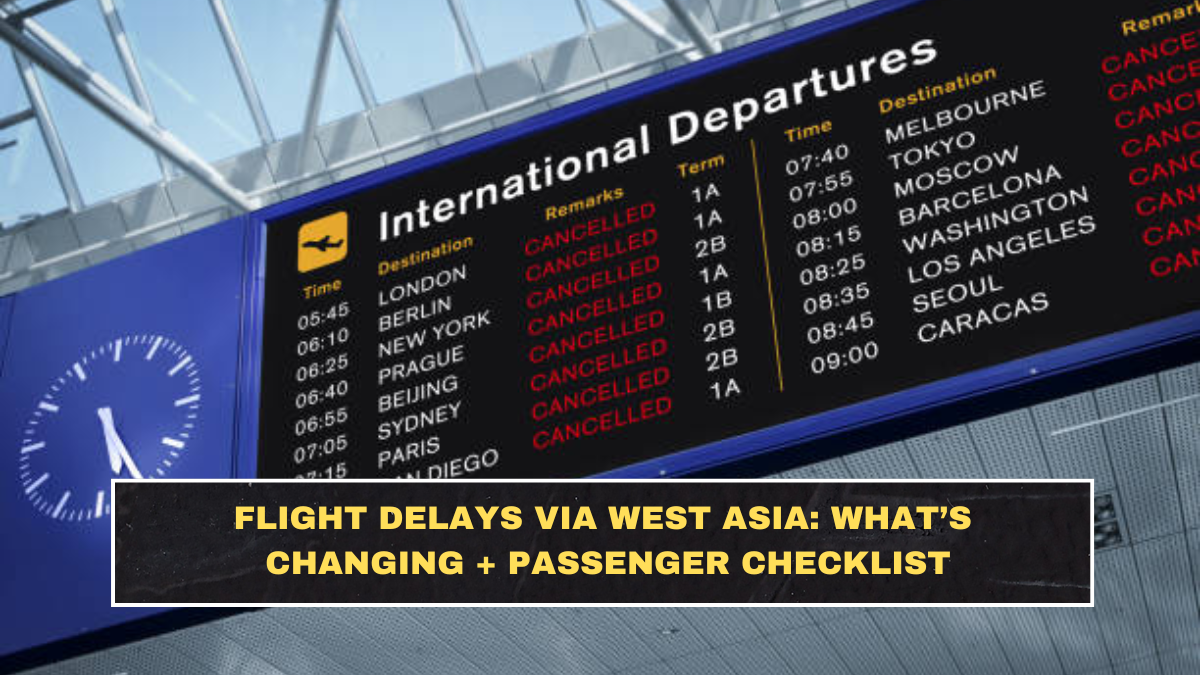
Airspace disruptions across parts of West Asia occasionally force airlines to change flight routes, causing delays, longer travel times, or schedule adjustments for passengers traveling between India, Europe, and North America.
Several international airlines operating from India—including Air India and IndiGo—depend heavily on Middle Eastern air corridors for long-haul routes. When tensions, security alerts, or airspace restrictions arise in the region, flights may need to take longer alternative routes.
These changes can increase fuel usage, extend flight time, and affect airport scheduling.
Why West Asia Airspace Matters for Indian Flights
India sits geographically between Europe, Southeast Asia, and Australia. Many long-haul flight paths naturally pass through West Asian airspace because it offers the most direct and fuel-efficient route.
Important aviation hubs in the region include:
-
Dubai
-
Doha
-
Abu Dhabi
-
Riyadh
Airlines often use these corridors for connecting flights and transit passengers.
Major Effects of Airspace Disruptions
When airlines avoid certain airspace zones, several operational changes may occur.
| Impact | What It Means for Passengers |
|---|---|
| Flight rerouting | Aircraft may take longer alternative paths |
| Longer travel time | Journeys may extend by 30–90 minutes |
| Increased fuel costs | Airlines may adjust fares over time |
| Airport congestion | Delays in arrival or departure schedules |
Even small routing changes can create a chain reaction across airline networks.
Why Airlines Reroute Flights
Airlines prioritize passenger safety above all operational considerations. If aviation authorities or international regulators issue warnings or restrictions, airlines quickly adapt flight paths.
Common reasons for rerouting include:
-
Geopolitical tensions
-
Military activity in airspace corridors
-
Temporary airport closures
-
Air traffic congestion or safety advisories
Civil aviation authorities coordinate closely with airlines to ensure safe alternative routes.
How Flight Reroutes Affect Travel Time
When airlines avoid specific regions, aircraft may fly around restricted zones. This can slightly increase total flight distance.
For example, flights traveling from India to Europe may normally pass through parts of the Middle East. If restrictions occur, airlines may reroute aircraft through Central Asia or alternate Gulf corridors.
These adjustments can add extra flying time and occasionally cause scheduling delays at destination airports.
Passenger Checklist Before Traveling
If you have an international flight scheduled during airspace disruptions, preparing in advance can reduce stress.
| Passenger Action | Why It Helps |
|---|---|
| Check flight status before leaving | Airlines may update schedules |
| Arrive at the airport early | Security and boarding times may shift |
| Monitor airline notifications | SMS and app alerts provide updates |
| Keep transit plans flexible | Delays may affect connecting flights |
Following airline updates ensures passengers stay informed about any changes.
Airlines Monitoring Airspace Safety
Global aviation safety agencies and national regulators continuously monitor airspace conditions. Airlines adjust flight operations based on guidance from authorities such as the International Civil Aviation Organization.
Airlines also rely on advanced flight planning systems that allow pilots and operations teams to quickly modify routes when necessary.
These systems help maintain safety while minimizing disruption to passengers.
Will Ticket Prices Increase?
Airspace disruptions can increase operational costs because rerouted flights consume more fuel and require additional planning.
However, ticket prices do not usually rise immediately. Airlines often absorb short-term costs before adjusting fares based on long-term market conditions.
Travel demand, fuel prices, and airline competition also influence ticket pricing.
Conclusion
West Asia airspace disruptions can occasionally affect international flights from India, but airlines have well-established systems for managing such situations safely. Rerouting flights helps avoid restricted zones while maintaining passenger safety.
For travelers, the most important step is to stay updated with airline notifications and check flight status before departure. While delays or slightly longer flight times may occur, aviation authorities and airlines work closely to keep international travel operating smoothly.
FAQs
Why are some flights being rerouted over West Asia?
Airlines sometimes reroute flights due to security advisories, geopolitical tensions, or airspace restrictions in certain regions.
Do airspace disruptions cause major flight delays?
In most cases, delays are limited to slightly longer flight routes or minor schedule changes rather than full cancellations.
How can passengers check if their flight is affected?
Passengers should check airline websites, mobile apps, or airport status boards for real-time updates.
Are connecting flights affected by reroutes?
Yes. If a flight arrives late due to rerouting, connecting flights may be impacted, so passengers should monitor airline notifications.
Who decides whether airspace is safe for flights?
Aviation authorities, governments, and international organizations such as the International Civil Aviation Organization coordinate airspace safety decisions.