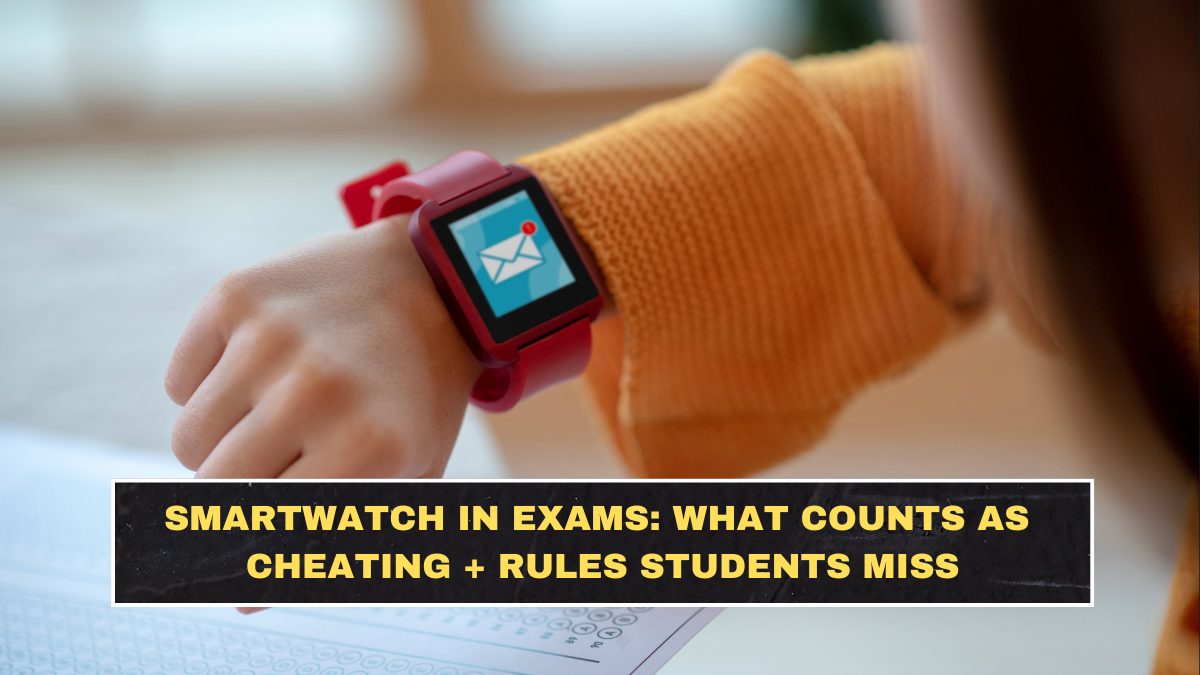
Smartwatches and other wearable devices have become common in everyday life, but their presence in examination halls has raised concerns among education authorities. Because smartwatches can access internet features, messaging apps, and stored information, many exam boards treat them the same way as mobile phones.
In recent years, several exam authorities in India and other countries have tightened rules regarding electronic devices inside exam halls. Students sometimes carry smartwatches unintentionally, not realizing that even inactive devices can violate examination guidelines.
Understanding what counts as unfair means and which items are prohibited can help students avoid accidental rule violations during competitive exams and board examinations.
Why Exam Authorities Restrict Smartwatches
Exam authorities impose restrictions on electronic devices to prevent cheating and ensure fairness during examinations.
| Reason for Restriction | Explanation |
|---|---|
| Internet connectivity | Smartwatches can access online information |
| Messaging features | Potential communication during exams |
| Stored notes | Information may be saved in the device |
| Camera and audio | Possible recording or sharing of exam content |
Because of these features, many exam boards include smartwatches in the list of prohibited items.
Common Devices Prohibited in Exam Halls
Most examination authorities publish a list of electronic items that are not allowed inside the exam hall.
| Device | Status in Exam Hall |
|---|---|
| Mobile phones | Strictly prohibited |
| Smartwatches | Usually prohibited |
| Bluetooth devices | Not allowed |
| Earbuds / headphones | Prohibited |
| Digital calculators (in some exams) | Allowed only if specified |
Students should always check the official exam instructions before entering the examination center.
Typical Exam Rules Related to Electronic Devices
Different exams may have slightly different guidelines, but most competitive examinations follow similar rules regarding electronic devices.
| Rule | Explanation |
|---|---|
| No electronic gadgets | Phones, smartwatches, and Bluetooth devices banned |
| Security checks | Candidates may undergo screening |
| Device confiscation | Items may be seized if found |
| Disqualification risk | Using devices can lead to exam cancellation |
These rules are designed to maintain fairness and prevent malpractice.
Real Cases That Led to Rule Changes
In several exam systems worldwide, authorities introduced stricter rules after cases where technology was used for unfair advantage.
| Incident Type | Resulting Action |
|---|---|
| Smartwatch messaging | Ban on wearable devices |
| Bluetooth cheating cases | Increased security checks |
| Hidden devices | Metal detector screening |
| Digital note storage | Stronger gadget restrictions |
Such incidents have led exam authorities to tighten examination policies.
What Students Should Do Before Entering the Exam Hall
To avoid problems during exams, students should check their belongings carefully before entering the examination center.
Important preparation steps include:
-
Leave smartwatches and phones at home if possible
-
Carry only permitted stationery items
-
Read the admit card instructions carefully
-
Follow the security guidelines at the exam center
Taking these precautions can help prevent accidental rule violations.
Consequences of Using Electronic Devices in Exams
Using prohibited electronic devices during exams can lead to serious consequences.
| Violation | Possible Consequence |
|---|---|
| Carrying banned device | Warning or confiscation |
| Attempting to use device | Exam cancellation |
| Confirmed cheating | Disqualification from exam |
| Repeated violation | Ban from future exams |
Because of these penalties, students should strictly follow exam guidelines.
How Exam Authorities Detect Electronic Devices
Modern exam centers often use technology and monitoring systems to prevent cheating.
| Detection Method | Purpose |
|---|---|
| Metal detectors | Identify electronic devices |
| CCTV monitoring | Observe exam halls |
| Invigilator supervision | Detect suspicious activity |
| Random checks | Ensure rule compliance |
These measures help maintain fairness in competitive exams.
Conclusion
Smartwatches may seem like harmless accessories, but in exam environments they are often treated as prohibited electronic devices due to their connectivity and data capabilities. Many exam authorities now enforce strict rules to prevent technology-based cheating.
Students should carefully review exam instructions, avoid carrying electronic devices, and follow security guidelines to ensure they can focus on the exam without unnecessary complications.
FAQs
Are smartwatches allowed in exam halls?
In most exams, smartwatches are not allowed because they have communication and internet capabilities.
Why do exam authorities ban electronic devices?
Electronic devices can be used to access information or communicate during exams, which could lead to unfair advantages.
What happens if a smartwatch is found during an exam?
The device may be confiscated, and depending on the situation, the candidate could face warnings or exam disqualification.
Can students carry simple digital watches?
Some exams allow basic watches without smart features, but students should check official guidelines before the exam.
How do exam centers detect prohibited devices?
Exam centers may use metal detectors, CCTV monitoring, and invigilator supervision to ensure exam rules are followed.