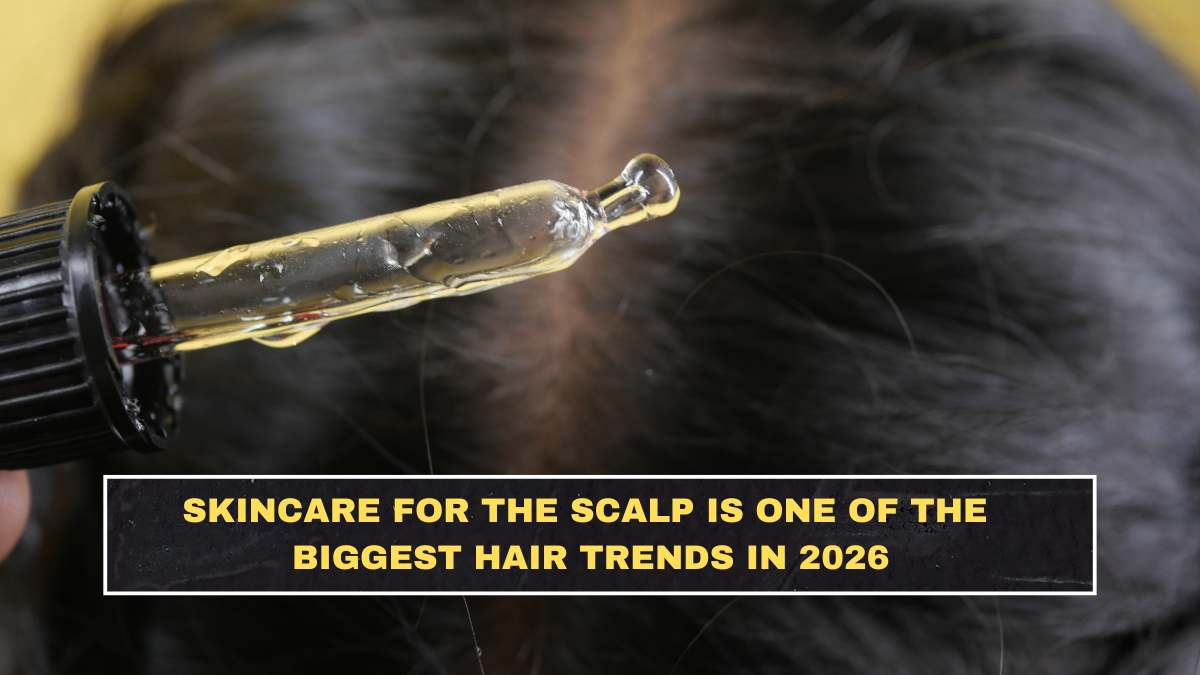
Scalp care is trending because the beauty industry has finally admitted something obvious: healthy hair starts with the scalp, not just the strands. Recent 2026 trend coverage from Vogue says ingredient-led hair care is pushing scalp health to the center of the category, while other 2026 beauty commentary describes “hair skinification” as one of the defining shifts in hair care right now.
This shift is not just branding. The scalp is skin, and it has many of the same issues people already understand from facial skincare: oil imbalance, buildup, irritation, barrier disruption, inflammation, and microbiome imbalance. A 2025 review on the hair follicle microbiome says the scalp microbiome plays a role in hair and scalp health, immune responses, and conditions such as dandruff and seborrheic dermatitis. A 2026 microbiome paper also notes that healthy scalp microbiota help maintain the scalp’s physicochemical barrier.
What does “skincare for the scalp” actually mean?
It means treating the scalp like living tissue that needs targeted care, not just scrubbing it whenever hair looks greasy. The American Academy of Dermatology says everyday scalp care matters and that the right care can help prevent certain types of hair loss while improving overall hair health. AAD also advises applying shampoo to the scalp itself rather than the full hair length, because the real cleaning target is scalp oil, dead skin, and buildup.
In practice, scalp skincare usually means gentler cleansing, paying attention to dandruff or itch rather than ignoring it, and using targeted products when there is a real problem. That may include dandruff shampoos, exfoliating ingredients, soothing treatments, or scalp serums. The mistake is assuming every scalp now needs a 10-step ritual. Most do not. The trend becomes useful only when it solves an actual issue instead of turning the scalp into another excuse to overspend.
Why are people starting to care more about scalp health now?
Because more consumers are connecting scalp condition with visible hair quality. A weak scalp barrier, inflammation, heavy buildup, or chronic dandruff can affect comfort and how hair looks and behaves. The expert consensus covered in the Journal of Drugs in Dermatology says scalp barrier condition influences hair health and should be considered more carefully in treatment and product development.
There is also a simple consumer-education shift happening. People now read ingredient labels more closely, and they are more familiar with ideas like barrier repair, microbiome balance, and irritation control. Once those ideas became normal in facial skincare, it was inevitable that brands would bring them to the scalp too. That is why the trend feels bigger in 2026: it matches how consumers already think about skin.
Which scalp problems are pushing this trend most?
The biggest drivers are dandruff, itch, dryness, oiliness, buildup, and thinning-related anxiety. AAD’s dandruff guidance makes clear that dandruff is common and treatable, but it also depends on using the right shampoo type and applying it properly to the scalp. Recent dermatologist-backed product coverage also points to ingredients like ketoconazole, salicylic acid, selenium sulfide, and zinc pyrithione as core tools for managing flakes and irritation.
This matters because a lot of people have spent years treating scalp discomfort like a cosmetic nuisance instead of a skin issue. Once brands started reframing scalp problems in skincare language, consumers paid more attention. That part of the trend is legitimate. If your scalp is flaky, irritated, greasy, or chronically uncomfortable, targeted scalp care is not hype. It is overdue.
What does a smarter scalp-care routine actually look like?
| Scalp need | What usually helps | What people get wrong |
|---|---|---|
| Oily or buildup-prone scalp | Shampoo focused on scalp cleansing | Washing only hair lengths instead of the scalp |
| Flaky or dandruff-prone scalp | Medicated anti-dandruff shampoo used correctly | Treating dandruff like simple dryness |
| Sensitive or dry scalp | Gentle cleansing and less harsh product use | Over-exfoliating or using too many actives |
| General scalp health | Consistent basic care and attention to irritation | Buying trendy serums with no clear purpose |
This is the real framework. AAD says dandruff shampoos need to be used according to instructions, and wash frequency can differ based on hair type and scalp oiliness. That means scalp care should be practical, not trendy for the sake of it.
Is scalp care really different from regular hair care?
Yes, because scalp care is about the skin environment, while regular hair care often focuses on the fiber itself. Hair masks, conditioners, and shine sprays mainly target strands. Scalp care targets oil, flakes, inflammation, microbiome balance, and barrier condition. The 2025 microbiome review and the 2026 microbiota paper both reinforce that the scalp is a biological environment with its own balance to protect.
This is exactly why the skincare comparison became so popular. Consumers already understand that skin can be oily, sensitive, inflamed, or compromised. The scalp is not different just because it sits under hair. The problem is that some brands now take that true idea and stretch it into nonsense, implying everyone needs acids, serums, and specialist routines. That is where the trend becomes marketing theater.
Who should take the scalp-care trend seriously?
People with dandruff, chronic itch, excess oil, sensitivity, buildup, or visible scalp discomfort should take it seriously. People worried about hair thinning may also benefit from paying more attention to scalp condition, even though scalp care is not a miracle cure for all hair loss. AAD explicitly says scalp care matters for healthy hair and can help prevent certain hair problems.
But people with no scalp issues should not let brands invent a problem for them. This is where buyers get manipulated. A healthy scalp does not automatically need exfoliating toners, overnight serums, and prestige treatments. Many people still need the boring basics: appropriate shampooing, paying attention to irritation, and treating actual dandruff correctly instead of guessing.
Why is this trend likely to keep growing?
Because it sits at the intersection of two durable beauty movements: ingredient awareness and treatment-first beauty. Vogue’s 2026 trend coverage makes clear that consumers are moving away from purely cosmetic hair fixes and toward products tied to structure, scalp, and ingredient logic. As long as buyers keep demanding evidence-based beauty language, scalp care will keep growing with it.
The category also benefits from having a real problem to solve. Dandruff, irritation, oil imbalance, and discomfort are not invented issues. That gives scalp care more staying power than many beauty fads. The trend will survive where it stays practical and die where it becomes another overbuilt routine with weak results.
Conclusion
Skincare for the scalp is one of the biggest hair trends in 2026 because it is built on a real idea: the scalp is skin, and healthy hair depends partly on a healthy scalp environment. Current research around the scalp barrier and microbiome, along with dermatologist guidance on dandruff and everyday scalp care, supports the category more than many beauty trends deserve.
The smarter takeaway is not that everyone now needs a scalp shelf full of products. It is that scalp issues should be treated more intelligently. If the trend helps people stop ignoring flakes, irritation, or buildup, it is useful. If it just turns basic scalp hygiene into luxury clutter, then it is the usual beauty-industry nonsense wearing a science label.
FAQs
Is scalp care really different from hair care?
Yes. Hair care mostly focuses on the strand, while scalp care focuses on the skin underneath, including oil, flakes, irritation, and barrier health.
Can scalp care help with dandruff?
Yes. AAD says dandruff can often be managed with the right dandruff shampoo used correctly, and different hair types may need different wash patterns.
Does everyone need scalp serums and treatments?
No. Many people do not. The trend is most useful for people with real scalp issues such as flakes, irritation, excess oil, or sensitivity. Basic appropriate cleansing is still enough for many scalps.
Why is scalp care growing so fast in 2026?
Because consumers are applying skincare logic to hair health, and current beauty coverage shows scalp-first routines becoming a central part of ingredient-led hair care.
Click here to know more