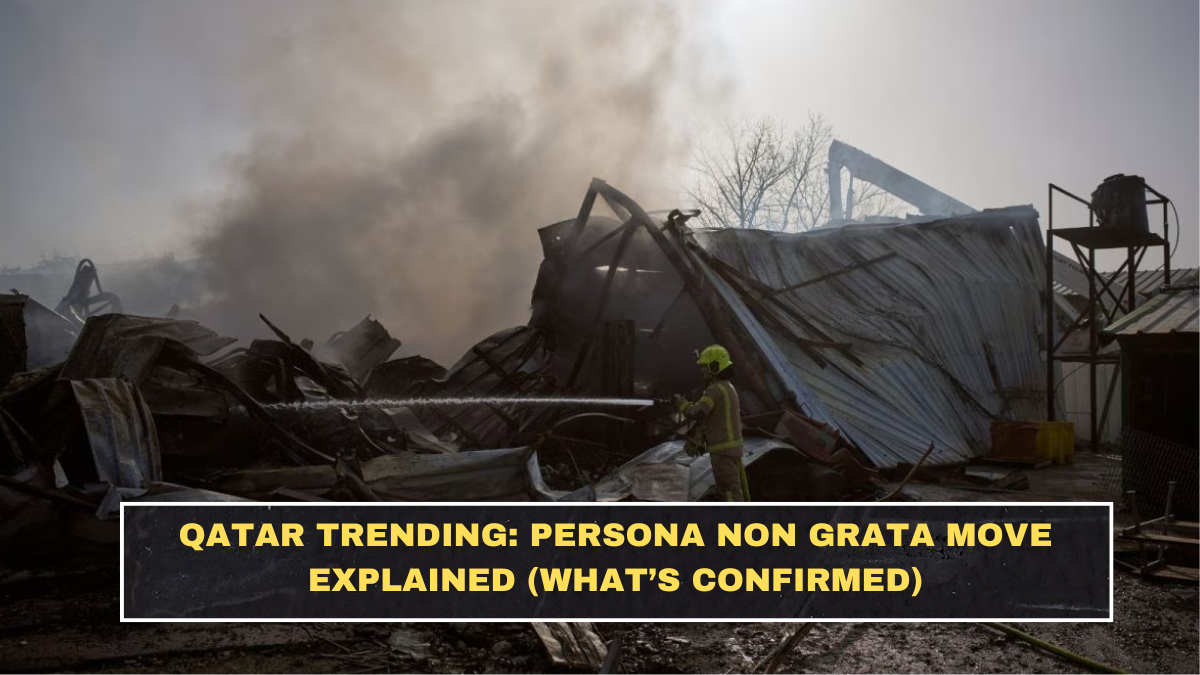
Qatar is trending due to reports referencing the use of the term “persona non grata” in a diplomatic context. The spike in searches is not because of confirmed large-scale escalation, but because the term itself carries strong legal and diplomatic implications under international law.
The trend is being driven by news coverage and social media discussions attempting to interpret what this move means for regional relations. However, much of the online conversation is ahead of confirmed facts, which is why clarity is critical here.

What “Persona Non Grata” Means (Verified Definition)
The term “persona non grata” is formally defined under the Vienna Convention on Diplomatic Relations (1961), which governs diplomatic conduct globally.
According to Article 9 of the convention:
-
A host country can declare any foreign diplomat persona non grata at any time
-
The sending country must recall the diplomat or terminate their functions
-
No detailed justification is legally required
This is a standard diplomatic tool, not an unusual or rare mechanism. Countries use it periodically in response to disputes or concerns.
What Is Actually Confirmed So Far
Here’s the part most people get wrong—there is limited officially confirmed information about the specific trigger behind Qatar trending in this context.
What is fact-based and verifiable:
-
The term “persona non grata” has been used in credible reporting
-
The concept itself follows established international diplomatic law
-
No detailed official explanation or bilateral escalation has been fully confirmed publicly
What is not confirmed:
-
The exact identity or role of individuals involved (in many reports)
-
Any confirmed retaliatory action from another country
-
Any direct economic, military, or travel-related consequences
If you are seeing dramatic claims about crisis or conflict escalation, those are not backed by verified official statements as of now.
How Often Is Persona Non Grata Used? (Context Data)
This is not a one-off situation. Diplomatic expulsions happen regularly across countries.
| Context Example | What Typically Happens | Frequency Insight |
|---|---|---|
| US–Russia relations | Diplomat expulsions during tensions | Multiple instances in past decade |
| UK–Russia (2018 case) | Mass expulsion after Salisbury incident | Coordinated international response |
| EU countries (various cases) | Routine expulsions over espionage concerns | Occasional but recurring |
| Middle East region | Diplomatic signaling during disputes | Less frequent but significant |
This data shows that declaring someone persona non grata is a diplomatic signal—not automatically a crisis.
Regional Impact: What Can Be Realistically Expected
Based on historical diplomatic patterns, a persona non grata move can lead to:
-
Short-term strain in bilateral relations
-
Reciprocal actions (other country may expel diplomats)
-
Increased diplomatic caution
However, escalation into economic or military conflict is not automatic and depends on follow-up actions, which are not confirmed in this case.
Why This Matters Globally (Including India)
Even limited diplomatic tensions in the Middle East attract global attention because the region plays a central role in:
-
Energy supply chains (oil and gas exports)
-
Trade routes
-
Strategic alliances
India, being a major energy importer, tracks such developments closely. However, there is no verified impact on oil supply or Indian interests linked directly to this specific situation at this stage.
What You Should Track Next (Evidence-Based Signals)
Instead of reacting to speculation, focus on these verifiable indicators:
-
Official statements from Qatar’s Ministry of Foreign Affairs
-
Statements from the concerned country’s government
-
Confirmed diplomatic actions (reciprocal expulsions, sanctions)
-
Any impact on trade, travel advisories, or energy markets
These are measurable developments—not assumptions.
Conclusion
Qatar is trending because of a diplomatically significant term being used, not because of a confirmed geopolitical crisis.
The only verified facts right now relate to the use of “persona non grata” under established international law. There is no confirmed large-scale escalation, economic disruption, or conflict tied directly to this development.
Most online narratives are ahead of verified information. If you’re basing your understanding on social media speculation, you’re likely getting an incomplete or misleading picture.
FAQs
What does persona non grata mean in simple terms?
It means a foreign diplomat is no longer welcome in a country and must leave, as per international diplomatic law.
Is Qatar in a diplomatic crisis right now?
There is no confirmed large-scale crisis. The situation is limited to reported diplomatic action without verified escalation.
Does this affect oil prices or India directly?
As of now, there is no confirmed impact on oil supply, prices, or Indian interests linked to this development.
Why is this trending globally?
Because the term “persona non grata” signals serious diplomatic action, which naturally attracts global attention.
Click here to know more.