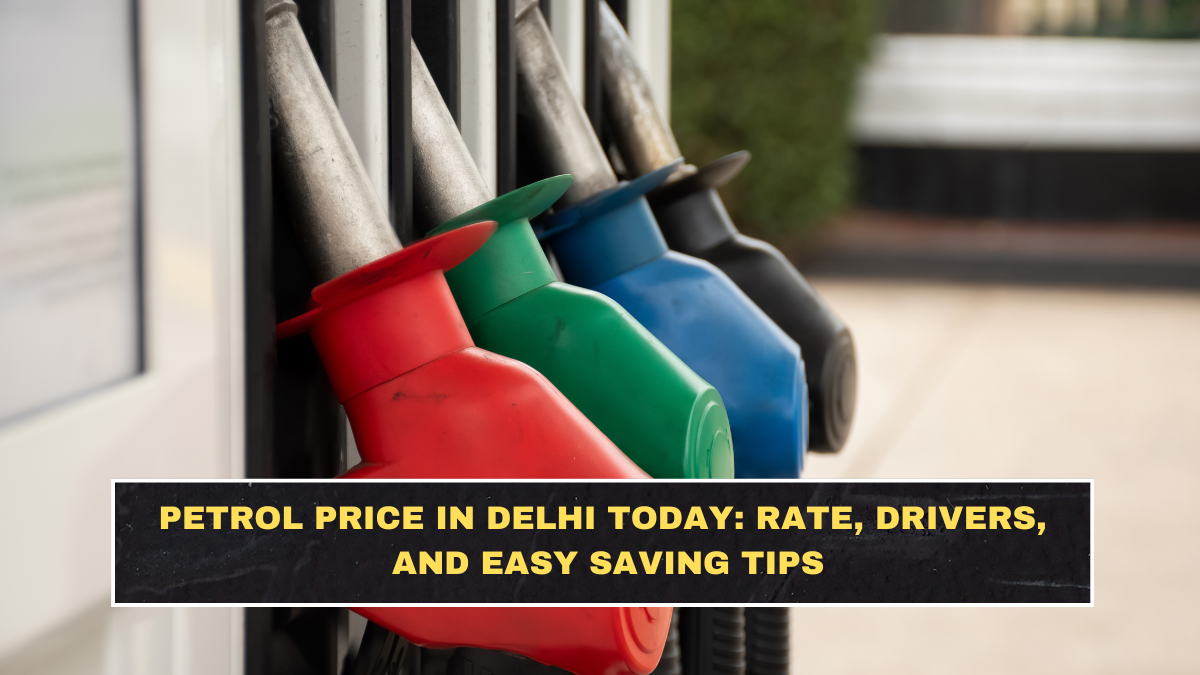
Petrol prices in Delhi are updated regularly based on global crude oil movements, exchange rates, and domestic tax policies. Fuel prices across India follow a dynamic pricing system, meaning rates can change depending on international energy markets and currency fluctuations.
Retail fuel pricing in India is largely handled by government-owned oil companies such as Indian Oil Corporation, Bharat Petroleum Corporation Limited, and Hindustan Petroleum Corporation Limited.
Because Delhi is a major metropolitan market and a reference location for fuel pricing, changes in the capital are often closely watched by consumers and analysts.
Components of Petrol Price in Delhi
Petrol prices are not determined solely by crude oil prices. The final retail price includes several components such as taxes, refining costs, and dealer commissions.
| Price Component | What It Includes | Impact on Final Price |
|---|---|---|
| Crude oil cost | Global oil benchmark price | Base component |
| Refining cost | Processing crude into petrol | Added by refineries |
| Central excise duty | Tax levied by the central government | Major price component |
| State VAT | State-level tax | Varies by state |
| Dealer commission | Petrol pump operational margin | Small share of price |
Because taxes form a significant portion of the retail price, petrol rates may vary across different Indian states.
Why Petrol Prices Move Up or Down
Several economic and global factors affect petrol prices in Delhi.
Crude oil market changes
India imports most of its crude oil. When global oil prices rise, fuel costs increase domestically.
Exchange rate fluctuations
Oil imports are paid for in US dollars. If the rupee weakens against the dollar, fuel becomes more expensive.
Government tax policies
Changes in central or state taxes can directly influence retail fuel prices.
Transportation and logistics costs
Fuel distribution expenses from refineries to petrol pumps also contribute to pricing.
Average Petrol Price Trends in Delhi
| Year | Approximate Average Price (₹/litre) |
|---|---|
| 2020 | ₹70 – ₹75 |
| 2021 | ₹90 – ₹100 |
| 2022 | ₹95 – ₹105 |
| 2023–2024 | Around ₹95 – ₹100 |
These ranges reflect how global oil markets and tax adjustments have influenced petrol prices over time.
How Rising Fuel Prices Affect Daily Life
Higher petrol prices can influence multiple sectors of the economy.
-
Transportation costs increase
-
Delivery and logistics expenses rise
-
Food prices may increase due to higher transport costs
-
Public transport fares may adjust over time
Because fuel is a key input for many industries, petrol prices often have a broader inflationary effect.
Easy Ways to Reduce Petrol Spending
Even though fuel prices are largely determined by market forces, drivers can reduce their petrol consumption through simple practices.
| Tip | Benefit |
|---|---|
| Maintain proper tyre pressure | Improves fuel efficiency |
| Avoid aggressive acceleration | Reduces fuel consumption |
| Plan routes in advance | Avoid unnecessary driving |
| Use carpooling when possible | Splits fuel cost |
Small behavioral changes can help drivers reduce fuel expenses over time.
Why Delhi Petrol Price Is Often Used as Reference
Delhi is frequently used as a reference point for fuel price discussions because it hosts many government institutions and major fuel distribution centers.
Additionally, pricing trends in Delhi help analysts understand broader fuel price movements across India, though local tax differences still create variations between states.
Conclusion
Petrol prices in Delhi are influenced by a combination of global crude oil markets, currency exchange rates, and government tax policies. Because India imports a large share of its crude oil, international market trends play a major role in determining domestic fuel costs.
Consumers can stay informed about price changes through updates from oil companies such as Indian Oil Corporation, Bharat Petroleum Corporation Limited, and Hindustan Petroleum Corporation Limited.
While global factors cannot be controlled by individual drivers, adopting fuel-efficient driving habits can help reduce overall petrol spending.
FAQs
Why do petrol prices change in Delhi?
Petrol prices change due to fluctuations in global crude oil prices, exchange rates, taxes, and operational costs.
Are petrol prices the same across India?
No. Prices vary between states because each state government applies different VAT rates.
Who sets petrol prices in India?
Retail prices are influenced by oil marketing companies and government tax policies, while global oil prices determine the base cost.
Why are petrol taxes important in price calculation?
Taxes form a significant share of the retail price, which is why petrol prices vary across different states.
How can drivers save fuel while driving?
Maintaining vehicle efficiency, avoiding sudden acceleration, and planning routes can help reduce fuel consumption.