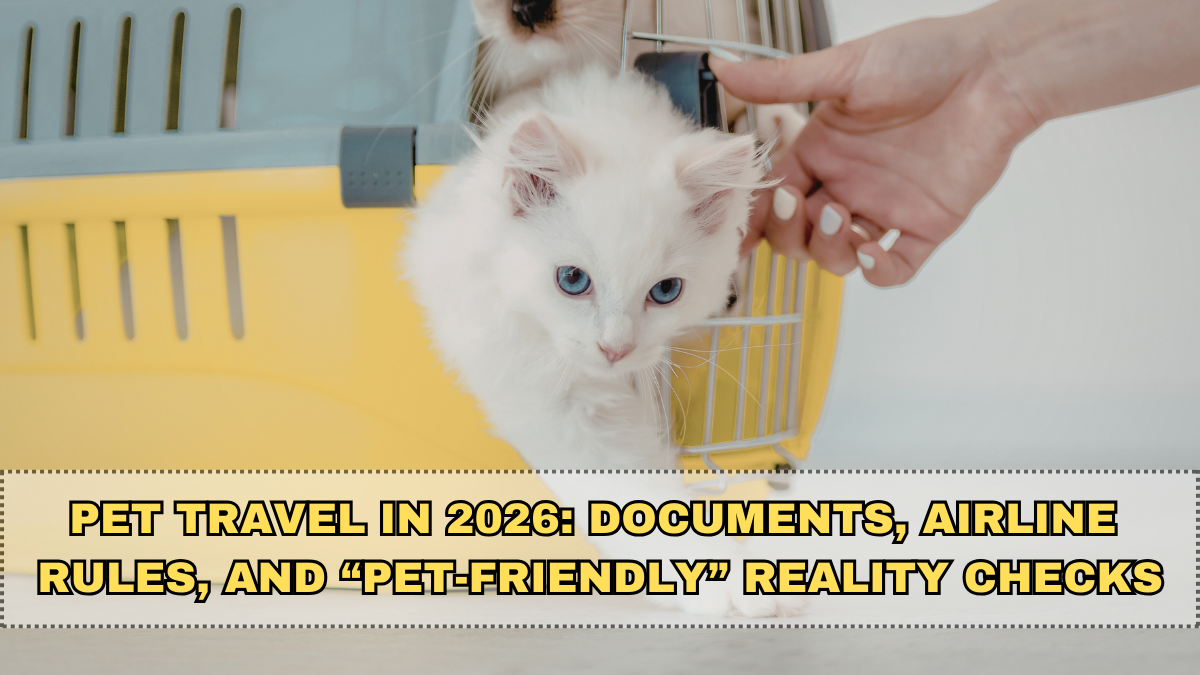
Traveling with pets is no longer niche—but it’s still poorly understood. The spike in relocations, longer stays, and lifestyle travel has pushed pet travel rules 2026 into the mainstream. Unfortunately, most problems don’t come from airlines or hotels; they come from assumptions. “Pet-friendly” doesn’t mean what people think it means, and missing one document can derail an entire trip.
This guide lays out the real rules—documents you actually need, how airlines’ pet policy differs by carrier and route, what “pet-friendly hotels” really allow, and the mistakes that cost time and money.
Why Pet Travel Got Stricter in 2026
Pet travel expanded—and so did oversight.
What changed:
• Higher pet volumes on flights and trains
• Welfare and safety scrutiny
• Standardization of health documentation
• Clearer liability rules for carriers and hotels
The result: fewer gray areas, more enforcement.
The Core Documents You Must Have (Non-Negotiable)
Forget marketing pages—these documents decide whether your pet boards.
Mandatory in most cases:
• Vaccination record (rabies is critical)
• Health certificate from a licensed vet
• Microchip details (where required)
• Owner ID matching booking details
International or long stays may require additional certificates. Missing even one can mean denial at check-in.
Domestic vs International Pet Travel: Know the Difference
Rules diverge sharply here.
Domestic travel:
• Fewer documents
• Shorter validity windows
• Carrier-specific forms
International travel:
• Country-specific import rules
• Quarantine risk
• Advance approvals and timelines
Plan international trips weeks earlier than domestic ones.
Airlines’ Pet Policy: What They Don’t Highlight
Every airline markets “pet travel,” but policies vary widely.
Key differences you must check:
• In-cabin vs cargo eligibility
• Breed and size restrictions
• Seasonal temperature limits
• Route-specific bans
Never assume policy consistency across routes—even with the same airline.
In-Cabin vs Cargo: The Real Trade-Off
There’s no universal “better” option.
In-cabin works if:
• Pet fits size/weight limits
• Flight duration is short
• Cabin slots are available
Cargo is used when:
• Pet exceeds cabin limits
• Route mandates it
• Temperature and aircraft allow it
Cargo isn’t automatically unsafe—but preparation matters.
Breed Restrictions: The Quiet Deal-Breaker
This catches owners off guard.
Common restrictions:
• Snub-nosed breeds (breathing risk)
• Aggressive breed lists
• Heat-sensitive animals
These restrictions change by airline and season. Always verify close to travel dates.
Booking Strategy That Actually Works
Don’t book everything at once.
Correct order:
-
Check airline pet policy for route and dates
-
Reserve pet slot (limited availability)
-
Book human tickets
-
Confirm hotel acceptance in writing
Reversing this order is how trips collapse.
“Pet-Friendly Hotels”: Reality vs Label
This is where expectations break.
What “pet-friendly” often means:
• Pets allowed—not welcomed
• Size/weight limits
• Extra fees or deposits
• Restricted areas
Always confirm:
• Pet fee structure
• Cleaning charges
• Allowed areas
• Number of pets
Filters lie. Policies matter.
Short Stays vs Long Stays: Different Rules
Hotels treat these differently.
Short stays:
• Higher fees
• Tighter restrictions
Long stays:
• Better acceptance
• Negotiable fees
• Clearer rules
If traveling for weeks, serviced apartments often work better.
Train and Road Travel: Easier, Not Automatic
Non-air travel isn’t rule-free.
Trains may require:
• Advance booking
• Specific compartments
• Health certificates
Road travel needs:
• Safety restraints
• Hydration planning
• State-specific checks
Ease doesn’t mean exemption.
Pet Comfort and Safety: What Actually Matters
Ignore gimmicks. Focus on basics.
Priorities:
• Familiar carrier
• Hydration plan
• Minimal sedation (vet-guided only)
• Calm routines
Over-handling causes more stress than travel itself.
Insurance and Liability: Often Ignored, Sometimes Costly
Some policies exclude pet incidents.
Check if:
• Pet travel is covered
• Medical emergencies abroad are included
• Carrier liability limits apply
This matters more on long or international trips.
Common Pet Travel Mistakes That Cause Denials
These are avoidable—and expensive.
Avoid:
• Assuming “pet-friendly” means unconditional
• Missing document validity windows
• Ignoring breed/season rules
• Booking before confirming pet slots
• Last-minute vet visits
Preparation beats persuasion.
Timeline Checklist (Use This)
A realistic prep timeline:
• 3–4 weeks: research policies, vet consult
• 2 weeks: confirm documents, book pet slot
• 1 week: reconfirm airline and hotel
• 48 hours: final health check
Rushing increases rejection risk.
What to Do If Plans Change
Flexibility matters.
Smart moves:
• Choose refundable fares when possible
• Understand pet fee refund rules
• Keep digital and physical copies of docs
Pets add complexity—buffer for it.
Conclusion
Pet travel rules 2026 are clearer—but less forgiving. With the right documents, realistic understanding of airlines’ pet policy, and honest checks on pet-friendly hotels, traveling with pets can be smooth. Most failures come from assumptions, not rules.
Plan early, confirm everything, and treat “pet-friendly” as a starting point—not a guarantee.
FAQs
What documents are mandatory for pet travel in 2026?
Vaccination records, a vet health certificate, and owner ID; more for international travel.
Do all airlines allow pets in cabin?
No. Policies vary by route, aircraft, size, and season.
Are cargo holds safe for pets?
They can be, when airline policies, temperature limits, and preparation are followed.
What does “pet-friendly hotel” actually mean?
Pets are allowed with conditions—fees, limits, and restricted areas often apply.
How early should I plan pet travel?
Start at least 3–4 weeks in advance to avoid denials and last-minute stress.