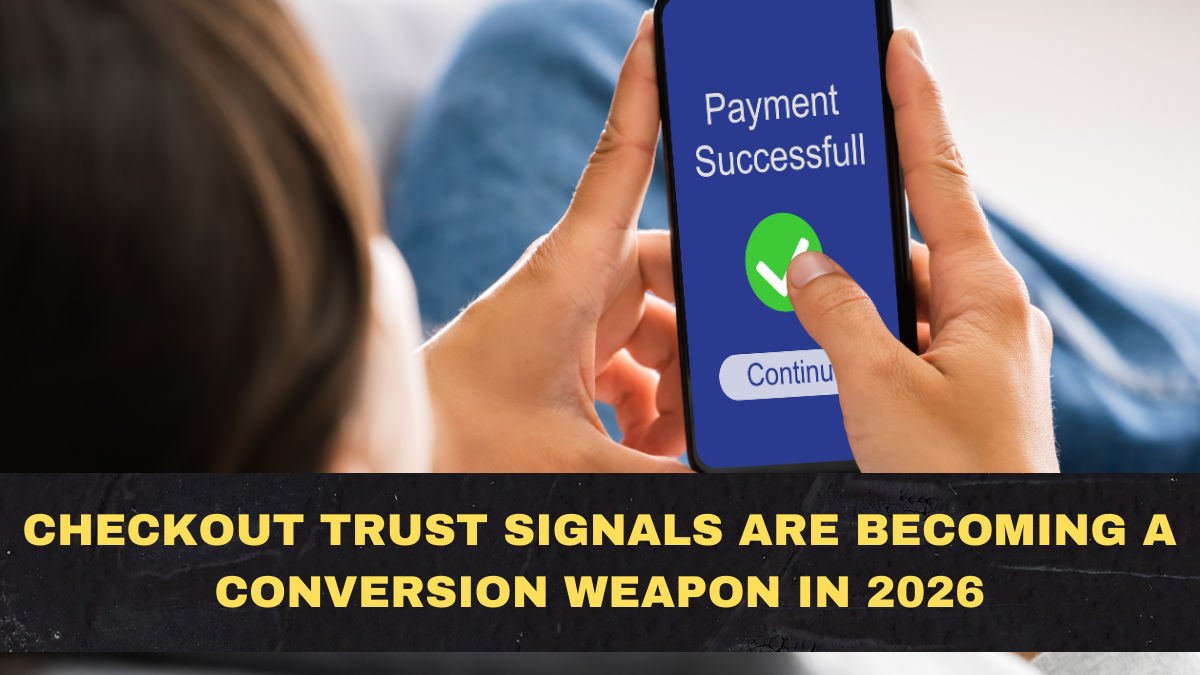
Payment trust signals are quietly becoming one of the most powerful conversion drivers in e-commerce in 2026. For years, checkout optimization focused on speed, layout, and fewer form fields. Security was assumed to be invisible infrastructure — important, but not something customers consciously evaluated.
That assumption is gone.
Today’s buyers arrive at checkout anxious:
• About fraud
• About fake stores
• About stolen cards
• About hidden charges
• About data misuse
Before clicking “Pay,” users now subconsciously scan for signs of safety. In 2026, conversion does not fail because of price or UX alone. It fails because trust is missing.
The best brands are no longer hiding security in the background. They are turning it into a conversion feature.
Why Checkout Has Become the Highest-Trust Moment in Commerce
Checkout is where risk concentrates.
At this moment:
• Card details are shared
• Personal data is exposed
• Money leaves accounts
• Fraud becomes possible
• Disputes become real
Users make a rapid judgment:
“Is this place safe enough to trust with my money?”
If doubt appears:
• Carts are abandoned
• Payments are canceled
• Brands are blacklisted mentally
• Users never return
In 2026, checkout is no longer just a payment step.
It is a trust test.
What Payment Trust Signals Actually Are
Payment trust signals are visible indicators that:
• The merchant is legitimate
• The transaction is protected
• The identity is verified
• Fraud systems are active
• Data is encrypted
They appear as:
• Security badges
• Identity verification marks
• Bank and network logos
• Tokenization indicators
• Fraud protection notices
• Buyer protection labels
These signals do not stop fraud directly.
They stop something more dangerous:
Buyer hesitation.
Why Checkout Trust Badges Now Influence Buying Decisions
Checkout trust badges are no longer decoration.
Modern buyers actively look for:
• Payment network logos
• Bank authentication marks
• Secure checkout labels
• Buyer protection seals
• Verified merchant indicators
When badges are missing, users assume:
• Fake store risk
• Scam probability
• Data theft danger
• No recourse after fraud
Well-placed badges now deliver:
• 5–15% higher conversion rates
• Lower cart abandonment
• Higher payment completion
• Reduced last-second exits
Trust badges have become conversion multipliers.
How Identity Proof Is Becoming a Visible Trust Layer
In 2026, identity proof is moving into the checkout experience.
Examples include:
• “Verified merchant” labels
• Business identity confirmation
• Platform-verified sellers
• Bank-linked merchant badges
• Government-registered seller indicators
These reassure buyers that:
• The seller is real
• The business is registered
• The payment route is legitimate
• Recourse exists if something fails
For marketplaces and cross-border sellers, identity proof now matters more than:
• Design
• Branding
• Pricing
Without identity proof, many buyers simply do not complete payment.
Why Tokenization Is Becoming a Visible Selling Point
Tokenization used to be invisible security.
In 2026, brands now advertise:
• “Card data never stored”
• “Tokenized checkout”
• “Bank-grade encryption”
• “No card details saved”
This matters because users fear:
• Database breaches
• Merchant hacks
• Card reuse
• Credential theft
When users see tokenization signals, they feel:
• Safer entering details
• More willing to save cards
• More confident about recurring payments
Tokenization becomes not just protection —
but trust marketing.
How Fraud Scoring Signals Reduce Last-Second Drop-Off
Many abandoned carts happen after the “Pay” button appears.
At this moment users worry:
• “What if this is fraud?”
• “Will my card be misused?”
• “What if I never get the product?”
Modern checkouts now show:
• Fraud protection indicators
• Transaction monitoring notices
• Bank-verified routing
• Buyer dispute protection
• Secure authentication prompts
These signals reduce:
• Payment anxiety
• Last-second exits
• Manual card verification drop-offs
Fraud protection now doubles as conversion protection.
Why Transparency Signals Matter More Than Security Alone
Security without explanation no longer builds trust.
Users want clarity:
• What data is collected
• How payments are protected
• Who processes the transaction
• What recourse exists
Winning checkouts now show:
• Clear refund policies
• Dispute handling promises
• Payment processor identities
• Settlement transparency
• Support access links
Transparency signals reduce:
• Post-payment regret
• Chargebacks
• Support disputes
• Negative reviews
Trust is built by:
• Visibility
• Explanation
• Accountability
Not just encryption.
How Design Placement Determines Trust Effectiveness
Trust signals only work if placed correctly.
High-impact placement includes:
• Near card input fields
• Beside “Pay” button
• Next to CVV entry
• Under total amount
• During authentication screens
Poor placement:
• Footer badges
• Hidden policy links
• Overcrowded icons
• Distracting designs
Best practice now favors:
• Minimal badges
• Recognizable brands
• Clean layout
• Contextual placement
Too many badges reduce trust.
The right few increase it sharply.
Why Overusing Trust Signals Can Backfire
There is a danger zone.
Too many trust indicators create:
• Visual clutter
• Suspicion of insecurity
• Scam-like appearance
• Overcompensation signals
Users may think:
“Why are they trying so hard to prove this is safe?”
In 2026, the winning strategy is:
• Fewer signals
• Strong brands
• High credibility
• Clear meaning
Trust signals must feel natural, not defensive.
How Platforms and Networks Are Standardizing Trust Indicators
Payment networks now actively promote standardized trust marks.
New standards include:
• Verified merchant badges
• Network-level protection labels
• Identity-linked checkout marks
• Platform safety certifications
• Tokenization icons
This allows:
• Cross-site trust recognition
• Faster buyer confidence
• Consistent security language
• Lower learning friction
Over time, users learn:
• Which symbols mean safety
• Which flows indicate legitimacy
Trust becomes portable across the web.
Why Mobile Checkout Makes Trust Even More Critical
Mobile checkout amplifies risk perception.
Problems include:
• Smaller screens
• Faster decisions
• Less context
• Higher phishing risk
• App impersonation
On mobile, trust signals must be:
• Highly visible
• Recognizable instantly
• Minimal but powerful
• Clear before biometric prompts
Mobile conversion now depends more on:
• Trust than speed
• Recognition than design
Without trust, biometrics alone cannot save checkout.
How Trust Signals Affect Recurring and Saved Payments
Trust determines willingness to:
• Save cards
• Enable subscriptions
• Turn on one-click checkout
• Approve recurring billing
Signals that matter here include:
• Token storage notices
• Auto-debit protection
• Easy cancellation messaging
• Dispute guarantees
When users trust storage:
• Retention increases
• Repeat purchases grow
• Subscription churn drops
• Lifetime value rises
Trust becomes long-term revenue infrastructure.
What Checkout Trust Looks Like by Late 2026
The dominant model includes:
• Verified merchant identity
• Tokenized card indicators
• Network protection labels
• Fraud monitoring notices
• Buyer dispute guarantees
• Transparent policy links
Checkout becomes:
• Visibly secure
• Predictable
• Explainable
• Confidence-driven
Security stops hiding.
It becomes part of the buying experience.
Conclusion
Payment trust signals are becoming one of the strongest conversion weapons in digital commerce. In 2026, buyers do not abandon carts because checkout is slow. They abandon because checkout feels unsafe.
The brands that win are not the fastest.
They are the ones that make buyers feel:
“This transaction is protected.
This merchant is real.
This payment is safe.”
Because in the final second before clicking “Pay,”
conversion is not driven by price.
It is driven by trust.
FAQs
What are payment trust signals?
They are visual indicators at checkout that show security, identity verification, fraud protection, and buyer safety.
Do checkout trust badges really improve conversion?
Yes. Well-placed badges and protection signals can increase conversion rates by reducing payment anxiety.
What is identity proof at checkout?
It confirms that the merchant is verified, registered, and legitimate through platforms, banks, or networks.
Why is tokenization important for trust?
Because it assures users their card data is not stored or exposed, reducing fear of breaches.
Can too many trust badges hurt conversion?
Yes. Overuse creates clutter and suspicion. The best approach is minimal, recognizable, and contextual signals.
Click here to know more.