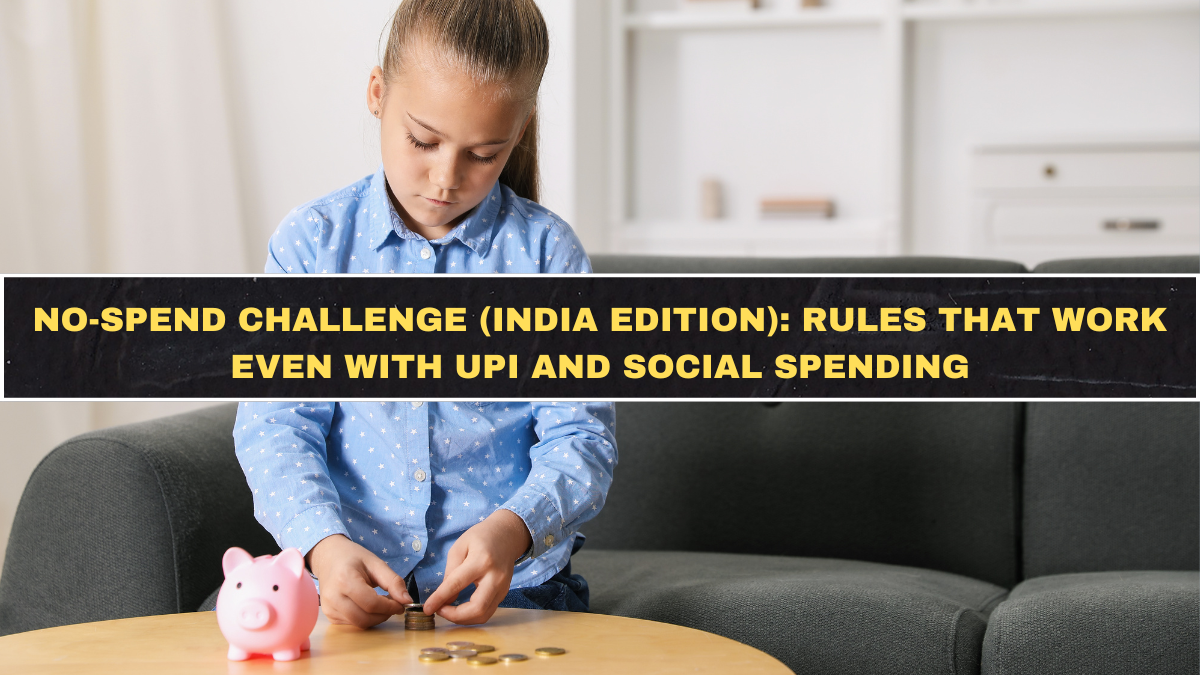
Saving money is difficult when spending has become effortless. With UPI payments, instant shopping apps, weekend outings, and frequent social events, money leaves your account without much thought.
A no-spend challenge helps reset spending habits by temporarily eliminating non-essential expenses. However, traditional no-spend plans often fail in India because they ignore social commitments, festivals, family functions, and digital payment habits.
This guide explains a realistic no-spend challenge adapted to Indian lifestyles, helping you save money without disrupting essential responsibilities.
What Is a No-Spend Challenge
A no-spend challenge is a structured plan where you stop spending on non-essential items for a fixed period. The goal is to control impulsive spending, increase savings, and improve financial discipline.
Essential expenses such as rent, groceries, utilities, and medical needs are allowed. Non-essential spending such as online shopping, eating out, and impulse purchases are restricted.
The challenge helps identify unnecessary expenses and build mindful spending habits.
Why No-Spend Challenges Fail for Most People
Many people quit within days because they follow unrealistic rules. Completely avoiding spending without planning creates frustration and inconvenience.
Common reasons for failure include:
-
Ignoring social and family obligations
-
Not planning groceries or essentials
-
Allowing unlimited digital payments
-
Setting overly strict restrictions
-
Lack of clear rules
A practical approach increases success.
How to Prepare Before Starting the Challenge
Preparation determines whether the challenge succeeds.
First, choose a realistic duration such as one week, two weeks, or one month. Next, define essential and non-essential expenses clearly. Inform family members about your plan to avoid social pressure.
Stock necessary household items in advance and plan meals to avoid emergency spending. Preparation reduces temptation and improves consistency.
Realistic No-Spend Rules for India
A practical no-spend challenge should adapt to local lifestyle and social situations.
Allow Essential Spending Only
Essential expenses include groceries, medicines, transportation for work, and utility payments. Everything else is temporarily restricted.
Create UPI Friction
UPI convenience increases impulsive spending. Reduce this by removing saved merchant accounts, lowering transaction limits, or disabling quick payments.
Set Weekend Spending Rules
Weekends often trigger overspending. Plan free activities such as home cooking, family time, or outdoor walks.
Plan for Social Events
Indian culture includes weddings, festivals, and gatherings. Instead of avoiding them completely, set a fixed spending limit.
Avoid Online Shopping Apps
Remove shopping apps temporarily to reduce temptation and impulse purchases.
Duration Options for a No-Spend Challenge
Different durations suit different financial goals.
-
7-Day Challenge — Builds awareness and tests discipline
-
14-Day Challenge — Helps reset spending habits
-
30-Day Challenge — Creates long-term behavioral change
Start small and increase duration gradually.
What to Do With Money You Don’t Spend
Savings from the challenge should be used wisely.
-
Build emergency fund
-
Pay off debt
-
Invest for financial goals
-
Save for planned purchases
Tracking saved amount motivates continued discipline.
Benefits of a No-Spend Challenge
A structured challenge offers several financial and psychological benefits.
-
Reduces impulsive spending
-
Improves saving habits
-
Builds financial awareness
-
Identifies unnecessary expenses
-
Strengthens money discipline
It also helps reset relationship with money.
Common Mistakes to Avoid
Avoid these errors to improve success.
-
Making unrealistic restrictions
-
Ignoring essential needs
-
Not tracking expenses
-
Compensating with overspending later
-
Treating challenge as punishment
Balance and planning ensure sustainability.
How to Maintain Results After the Challenge
The goal is long-term financial improvement.
Continue tracking expenses, maintain spending limits, and repeat the challenge periodically. Apply lessons learned to daily financial habits.
Regular practice strengthens discipline.
Conclusion
A no-spend challenge is a powerful tool for controlling expenses and improving financial discipline when implemented realistically. By adapting rules to Indian lifestyle, managing digital payment habits, and planning social commitments, you can reduce unnecessary spending without disrupting daily life.
Consistent practice helps build lasting financial awareness and supports long-term savings goals.
FAQs
What expenses are allowed in a no-spend challenge?
Essential expenses such as groceries, rent, utilities, medical needs, and work-related costs are typically allowed.
Can I use UPI during a no-spend challenge?
Yes, but only for essential expenses. Limiting quick payments helps reduce impulse spending.
How long should a no-spend challenge last?
You can start with a 7-day challenge and gradually extend to 14 or 30 days depending on comfort level.
Does a no-spend challenge help save money?
Yes. It helps identify unnecessary expenses and improves financial discipline, leading to higher savings.