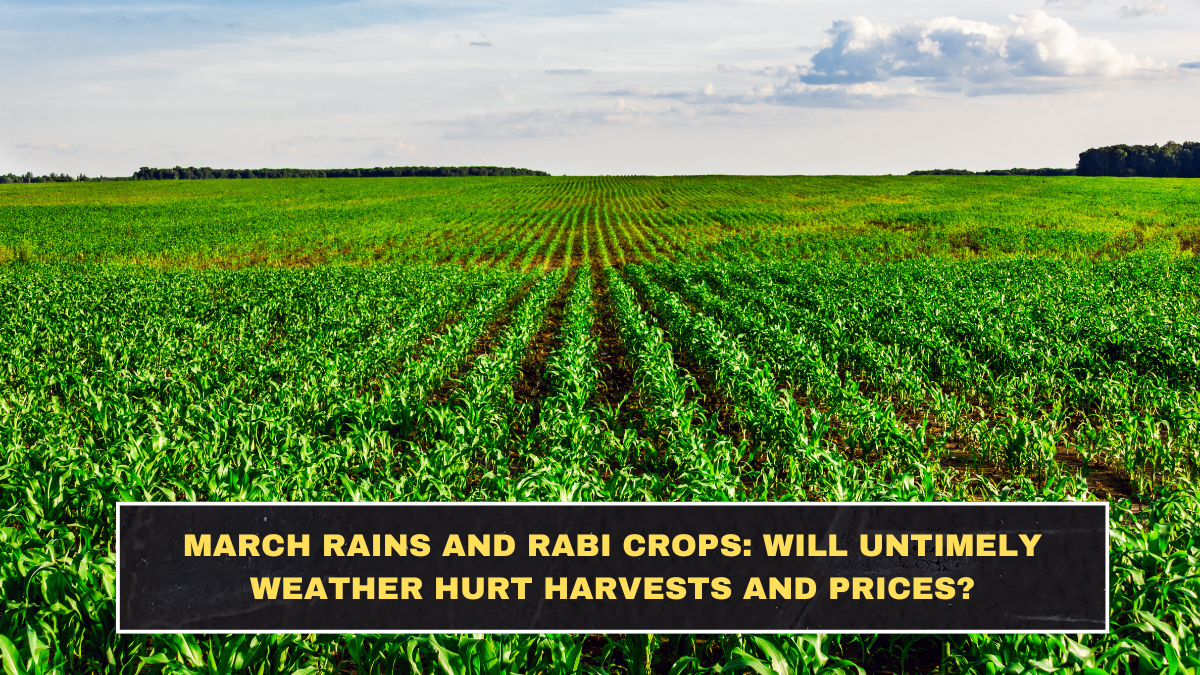
At first glance, rain sounds like good news for agriculture. But timing is everything. Right now, India is in the final stage of rabi crop harvesting, and unexpected rainfall during this period can cause serious damage instead of helping crops.
Farmers across states like Punjab, Haryana, Uttar Pradesh, and Rajasthan are worried because crops like wheat and mustard are almost ready to be harvested. When rain hits at this stage, it can flatten crops, increase moisture content, and reduce grain quality. This doesn’t just affect farmers — it directly impacts food supply and pricing.
Why Does This Matter Beyond Farmers?
If you think this is only a farmer problem, you’re missing the chain reaction. Agriculture is deeply linked to food inflation in India. When crops get damaged, supply reduces or quality drops, which eventually pushes prices higher in local markets.
For example, wheat is a staple food across India. Even a small percentage of crop loss can affect procurement levels and market rates. In previous years, similar untimely rains have caused price spikes in pulses, vegetables, and cereals within weeks.
What Exactly Is Causing These Untimely March Rains?
The primary reason behind these rains is a Western Disturbance, a weather system that originates in the Mediterranean region and moves towards India. These systems are common during winter, but their extension into March at higher intensity is what’s causing concern.
Data from meteorological observations shows that Western Disturbances have been more frequent and intense in recent years, leading to unpredictable rainfall patterns. This disrupts the normal crop cycle and increases the risk during harvest time.
Which Crops Are Most at Risk Right Now?
Different crops react differently to rainfall, but rabi crops are particularly sensitive during harvest.
Here’s a simple breakdown:
| Crop | Current Stage | Rain Impact Risk Level |
|---|---|---|
| Wheat | Harvest-ready | High (lodging, moisture damage) |
| Mustard | Harvest-ready | High (seed loss, oil quality drop) |
| Chana | Late maturity | Medium (pod damage) |
| Barley | Harvest-ready | Medium to High |
Wheat is the biggest concern because India produces over 110 million tonnes annually, and even a small percentage loss can affect national supply.
What’s Happening Right Now (Data-Based Situation)?
Recent weather reports indicate rainfall activity across North India during March, with some regions receiving 20–40 mm rainfall in short periods, which is considered significant for harvest time.
In addition:
- Wind speeds during storms have reached 40–60 km/h, increasing the risk of crops falling (lodging)
- Hailstorms have been reported in isolated regions, which can cause direct physical damage to crops
- Temperature fluctuations are slowing down drying of harvested crops
These combined factors increase both quantity loss and quality degradation, which affects market prices later.
What Should Farmers and Consumers Do Now?
Farmers are already trying to minimize damage by:
- Speeding up harvesting where possible
- Using machinery to reduce delay
- Covering harvested produce to prevent moisture damage
For consumers, the impact is indirect but real. You should expect:
- Slight increase in wheat-based product prices if damage spreads
- Possible fluctuations in edible oil prices due to mustard crop impact
Ignoring early signals is a mistake — food inflation often starts quietly before becoming visible.
What Are the Common Misunderstandings?
A major misunderstanding is that all rain is beneficial for crops. That is only true during early growth stages. Rain during harvest is often destructive.
Another mistake is assuming food prices react instantly. In reality, there is a delay. First comes crop damage, then supply adjustment, and only then do prices change in markets.
People also underestimate the role of weather variability. Climate patterns are becoming less predictable, which increases risk every year.
What Should You Watch Next?
The next 2–3 weeks are critical. Watch for:
- Continued Western Disturbance activity
- Government crop damage assessments
- Procurement data for wheat and other rabi crops
- Early signals of price increase in mandis
If rainfall continues during harvesting, the impact will be much larger.
Reality Check: Is This a One-Time Weather Issue?
No — and this is where most people are in denial.
Weather patterns in India are becoming more unpredictable due to broader climate shifts. Untimely rains, heatwaves, and hailstorms are increasing in frequency. This means crop risk is no longer occasional — it’s becoming a regular uncertainty.
If agriculture becomes unstable, food prices will also become more volatile.
Conclusion: What Does This Mean for You?
This is not just about rain — it’s about timing, risk, and impact. Untimely March rains are hitting crops at the worst possible moment, and that creates a chain reaction from farms to your kitchen.
The smart move is to stay aware of early signals instead of reacting when prices already rise. Because by the time it shows up in your grocery bill, the damage has already been done.
FAQs
What is a Western Disturbance?
It is a weather system originating from the Mediterranean region that brings rain and storms to North India.
Why is rain harmful during crop harvest?
Rain increases moisture, damages grain quality, and can flatten crops, making harvesting difficult.
Which crops are most affected by March rains?
Wheat and mustard are most affected as they are in the final harvest stage.
Will food prices increase due to this rain?
If crop damage is significant, it can lead to higher food prices in the coming weeks.
How much wheat does India produce annually?
India produces over 110 million tonnes of wheat, making it highly sensitive to weather disruptions.
Click here to know more.