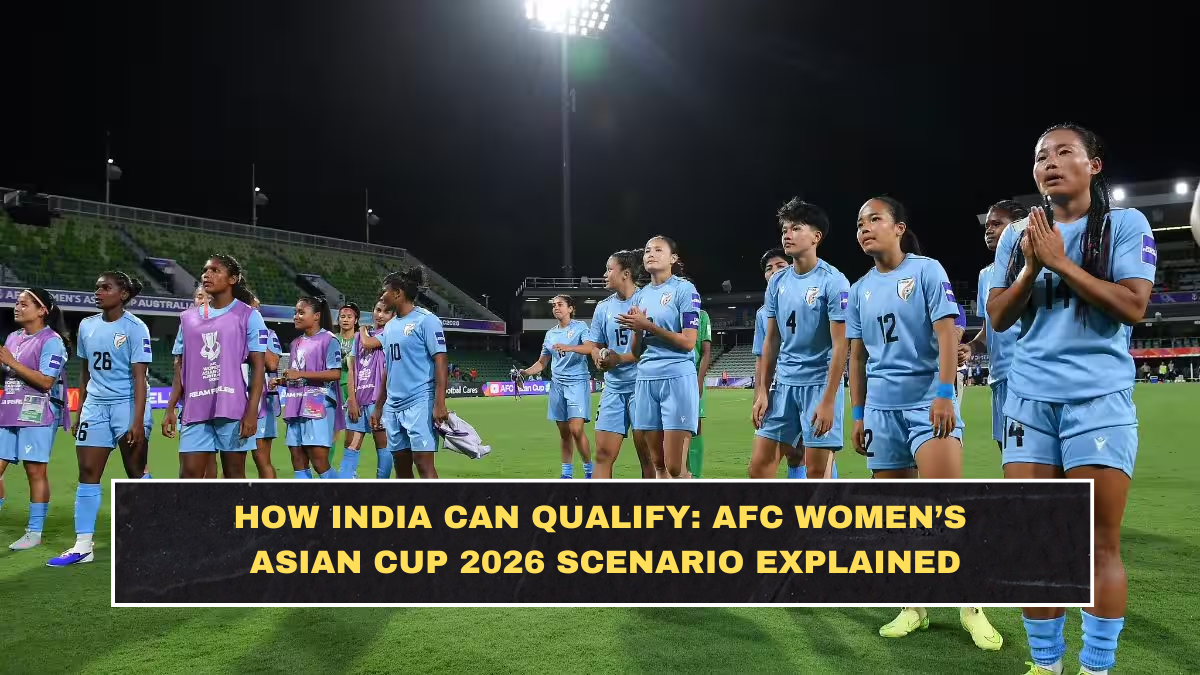
The AFC Women’s Asian Cup 2026 qualification campaign determines which national teams will participate in the final continental tournament. For the India women’s football team, the qualification stage is crucial because only a limited number of teams from each group advance.
Qualification in this tournament usually depends on points earned in group matches, goal difference, and head-to-head results. Because groups often contain only a few matches, every game plays a major role in determining the final standings.
Understanding the qualification rules helps fans follow how India’s chances change after each match.
How the AFC Women’s Asian Cup Qualification Format Works
The qualification stage is organized into groups where teams play against each other in a round-robin format. Points earned in these matches determine which teams advance.
| Rule | Explanation |
|---|---|
| Group stage format | Teams play others in the same group |
| Points system | 3 for win, 1 for draw, 0 for loss |
| Group winner | Usually qualifies for the final tournament |
| Tie-break rules | Goal difference and head-to-head results |
Because only the top teams advance, the margin between qualification and elimination can be very small.
Current Qualification Points System
Points accumulated during group matches determine the standings in each qualification group.
| Match Result | Points Awarded |
|---|---|
| Win | 3 points |
| Draw | 1 point |
| Loss | 0 points |
Teams aim to secure the maximum number of points early in the group stage to improve their chances of qualifying.
Possible Qualification Scenarios for India
India’s qualification chances depend on its results as well as outcomes in other matches within the group.
| Scenario | Outcome |
|---|---|
| India wins remaining matches | High probability of qualification |
| India draws key match | Qualification may depend on goal difference |
| India loses crucial match | Qualification chances become difficult |
| Teams tied on points | Goal difference becomes decisive |
This is why both performance and scoring margin can influence the final standings.
Importance of Goal Difference
When teams finish with the same number of points, goal difference often becomes the deciding factor in determining which team advances.
| Goal Difference Factor | Importance |
|---|---|
| Goals scored | Helps improve overall ranking |
| Goals conceded | Lower numbers strengthen position |
| Large victories | Boost goal difference |
| Defensive stability | Prevents negative goal margin |
Teams often aim to maintain a strong scoring margin throughout the qualification matches.
Key Matches That Could Decide Qualification
Certain fixtures in the group stage become especially important when teams compete for the top position.
| Match Type | Why It Matters |
|---|---|
| Matches against top rivals | Direct impact on standings |
| Opening group match | Sets early momentum |
| Final group game | Often decides qualification |
| High-scoring wins | Improves goal difference |
Results in these matches can dramatically influence the qualification table.
India’s Preparation for the Qualification Campaign
The Indian women’s team typically prepares for major tournaments through training camps and international exposure matches.
| Preparation Area | Focus |
|---|---|
| Tactical training | Improving team coordination |
| Fitness programs | Enhancing endurance and strength |
| Friendly matches | Gaining match experience |
| Youth development | Integrating new players |
These preparation strategies help teams perform better in high-pressure qualification matches.
Conclusion
India’s path to the AFC Women’s Asian Cup 2026 depends on consistent results during the qualification stage. By securing wins in key matches and maintaining a strong goal difference, the team can improve its chances of reaching the final tournament.
As the qualification campaign progresses, each match result will influence the group standings and determine how close India moves toward securing a place in the Asian Cup.
FAQs
How does a team qualify for the AFC Women’s Asian Cup?
Teams usually qualify by finishing at the top of their qualification group.
How are points awarded in the qualification stage?
Teams receive three points for a win, one point for a draw, and zero points for a loss.
What happens if teams have the same points?
Goal difference and head-to-head results are typically used as tie-breakers.
Why is goal difference important in qualification?
It helps determine rankings when teams finish with the same number of points.
How many teams qualify for the final tournament?
The number depends on the tournament format, but usually only the group winners advance from the qualification stage.