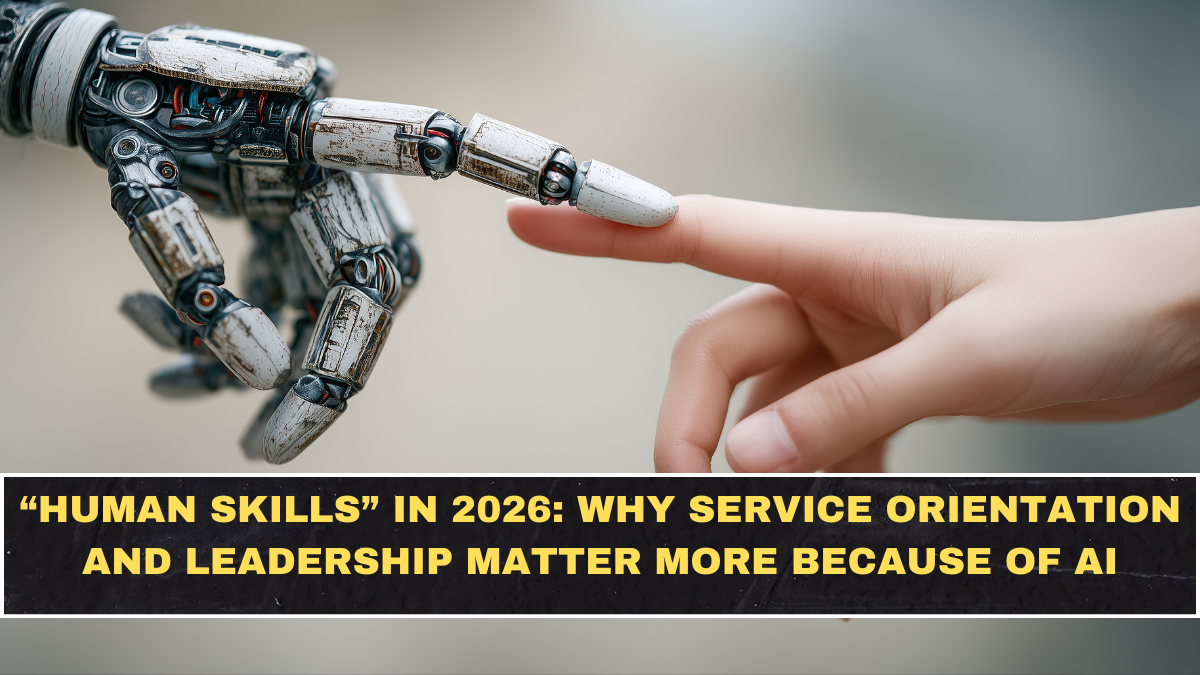
Service orientation has quietly become one of the most valuable career skills in 2026, precisely because AI has automated so many technical and transactional tasks. As systems handle execution faster and cheaper, organizations are paying closer attention to how work is framed, delivered, and experienced by humans. This shift has elevated “human skills” from soft nice-to-haves into core professional differentiators.
In India’s evolving job market, this change is especially visible across tech, services, and enterprise roles. Employees are no longer judged only on what they produce, but on how they enable others to succeed. Service orientation and leadership now determine who gets trusted, promoted, and retained as AI becomes part of everyday work.
Why AI Has Increased the Value of Human Skills
AI excels at pattern recognition and automation, but it lacks context, empathy, and judgment. When systems fail or behave unexpectedly, humans are responsible for resolution.
As a result, organizations value people who can interpret outcomes, manage expectations, and guide others through ambiguity. These are fundamentally human capabilities.
In 2026, the more automated a workplace becomes, the more valuable human-centered skills grow.
What Service Orientation Really Means Today
Service orientation is not about politeness or customer-facing roles alone. It reflects a mindset focused on enabling outcomes for others.
Professionals with strong service orientation anticipate needs, reduce friction, and take responsibility beyond their formal scope. They think in terms of impact, not tasks.
This mindset matters in internal teams just as much as in external-facing roles.
How Service Orientation Shows Up in Daily Work
In practice, service-oriented professionals communicate clearly, close loops, and follow through. They notice where processes break and help fix them.
They support teammates without being asked and consider downstream effects of decisions. This behavior builds trust quickly.
In AI-driven environments, such reliability becomes a stabilizing force.
Why Leadership Is No Longer About Authority
Leadership in 2026 is less about hierarchy and more about influence. Teams expect guidance, not control.
Leaders are valued for clarity, calm decision-making, and the ability to align people during uncertainty. AI systems amplify mistakes when leadership is weak.
As a result, leadership behaviors increasingly define seniority, even without formal titles.
Service Orientation as a Promotion Signal
Managers promote people they trust to represent the team’s values. Service orientation signals maturity and accountability.
Employees who consistently support others and protect outcomes are seen as low-risk choices for larger responsibility. This often matters more than raw output.
In India’s competitive workplaces, these signals quietly shape career trajectories.
Human Skills in AI-Augmented Teams
AI-augmented teams require coordination between humans and systems. Someone must decide when to rely on automation and when to intervene.
Service-oriented professionals excel here because they prioritize user experience and organizational goals. They understand that efficiency is meaningless without trust.
In 2026, this balance defines high-performing teams.
How Employers Evaluate Human Skills During Hiring
Employers rarely label these skills explicitly, but they test for them indirectly. Interview scenarios often involve conflict, ambiguity, or trade-offs.
Candidates are evaluated on listening ability, structured thinking, and how they frame responsibility. Technical brilliance without these traits raises concerns.
Human skills often determine final hiring decisions when technical competence is comparable.
Proving Service Orientation on Your Profile
Service orientation must be demonstrated, not claimed. Concrete examples matter more than adjectives.
Showing how you improved processes, supported cross-team outcomes, or handled difficult situations builds credibility. Language should focus on impact rather than effort.
In 2026, storytelling grounded in real behavior outperforms generic skill lists.
Developing These Skills Intentionally
Human skills improve with practice and reflection. Seeking feedback, mentoring others, and volunteering for coordination roles builds capacity.
Observing how decisions affect people helps develop judgment. These skills grow through responsibility, not courses alone.
Professionals who invest intentionally see long-term returns.
Common Misunderstandings About Human Skills
A common myth is that human skills are innate and cannot be learned. In reality, they are shaped by habits and awareness.
Another misunderstanding is that these skills slow progress. In fact, they often accelerate outcomes by reducing friction and rework.
In 2026, ignoring human skills limits career ceiling.
Conclusion: Human Skills Decide Who Thrives in an AI Workplace
Service orientation and leadership matter more in 2026 because AI has changed what work requires from humans. As automation handles execution, people are valued for judgment, empathy, and responsibility.
Professionals who develop these skills become anchors in their teams and organizations. They are trusted, promoted, and retained not because of hype, but because they make complex systems work for real people. In an AI-driven era, human skills quietly decide who truly thrives.
FAQs
What are “human skills” in the context of AI?
They include service orientation, communication, judgment, empathy, and leadership behaviors.
Are human skills more important than technical skills in 2026?
They complement technical skills and often decide growth when technical competence is equal.
Can service orientation be learned?
Yes. It develops through awareness, feedback, and responsibility over time.
How do employers assess human skills?
Through behavioral interviews, scenario questions, and observed collaboration.
Do these skills matter in technical roles?
Yes. Technical roles increasingly require coordination and decision-making.
Are human skills valued in India’s job market?
Very much so, especially as teams scale and AI adoption increases.