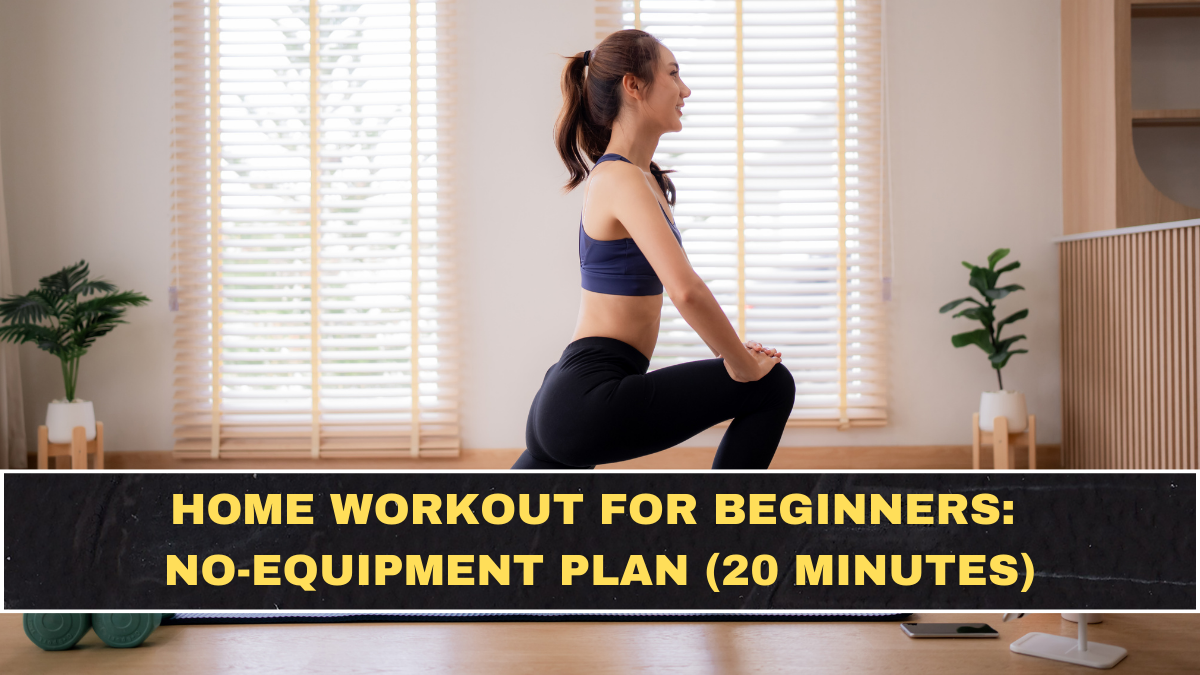
Starting a home workout routine feels overwhelming for many beginners, especially in 2026 when fitness content online is loud, extreme, and confusing. People often believe they need equipment, long sessions, or perfect discipline to see results. In reality, most beginners fail not because workouts are ineffective, but because plans are unrealistic and hard to sustain.
A beginner home workout should feel approachable, repeatable, and safe. The goal is not to exhaust yourself on day one but to build a habit your body can adapt to over time. When workouts fit easily into daily life, consistency improves naturally and results start appearing without mental pressure.
Why Home Workouts Are Ideal for Beginners
Home workouts remove the biggest barriers to fitness, including travel time, gym anxiety, and complex machines. This makes starting much easier, especially for people with busy schedules.
Exercising at home allows beginners to move at their own pace without comparison or embarrassment. This reduces dropouts and improves confidence.
In 2026, home workouts are one of the most effective ways for beginners to build a fitness foundation without unnecessary friction.
What Beginners Should Focus on First
Beginners should focus on learning movement patterns rather than chasing calorie burn. Strength, mobility, and balance matter more than intensity at the start.
Proper form protects joints and muscles while improving long-term progress. Rushing into advanced exercises often leads to soreness or injury.
In 2026, beginner fitness emphasizes quality of movement over quantity of repetitions.
The Ideal Workout Duration for Beginners
Long workouts are not necessary and often reduce motivation. Short, focused sessions are easier to repeat consistently.
A 20-minute workout is enough to activate muscles, improve heart health, and boost energy when done correctly. Short sessions also reduce recovery stress.
In 2026, time-efficient workouts outperform long sessions for beginners who want sustainable habits.
Simple Warm-Up to Prevent Injury
Warming up prepares muscles and joints for movement. Skipping it increases stiffness and injury risk.
Light movements like marching in place, arm circles, hip rotations, and gentle stretching raise body temperature gradually.
In 2026, warm-ups are considered essential even for short workouts, especially for beginners.
Beginner No-Equipment Workout Routine
This routine uses body weight and focuses on full-body movement. Exercises should be done slowly and with control.
Common beginner-friendly exercises include squats, wall push-ups, knee push-ups, glute bridges, standing lunges, and plank holds. These movements strengthen major muscle groups safely.
In 2026, bodyweight routines remain the safest and most effective starting point for beginners.
How to Structure the 20-Minute Session
A simple structure includes warm-up, main workout, and cool-down. This keeps the session balanced and reduces soreness.
The main workout can be performed in rounds, focusing on correct form rather than speed. Rest between exercises is encouraged.
In 2026, structured simplicity improves adherence more than complex workout plans.
Weekly Workout Schedule for Beginners
Beginners should start with three to four workout days per week. Daily workouts are not required initially.
Rest days allow muscles to recover and adapt, reducing fatigue and burnout. Light walking or stretching can be done on rest days.
In 2026, balanced weekly schedules outperform daily intense routines for beginners.
Common Beginner Workout Mistakes
Many beginners try to do too much too soon. This often leads to soreness, skipped sessions, or quitting entirely.
Ignoring rest, copying advanced routines, or pushing through pain are frequent mistakes. Discomfort is normal, pain is not.
In 2026, listening to the body is a key principle in beginner fitness success.
How to Stay Consistent Without Burnout
Consistency comes from making workouts easy to start. Setting fixed workout times helps reduce decision fatigue.
Tracking progress through energy levels, strength improvement, or routine completion is more motivating than weight alone.
In 2026, habit-building is considered more important than short-term transformation goals.
Nutrition and Recovery for Beginners
Exercise alone is not enough. Proper hydration, balanced meals, and sleep support recovery and performance.
Beginners do not need supplements. Simple, regular meals and adequate rest are sufficient to see progress.
In 2026, recovery is treated as part of the workout, not an afterthought.
When to Progress Your Workout
Progress should be gradual. Adding repetitions, improving form, or increasing workout days are safer than sudden intensity jumps.
Beginners should wait until exercises feel comfortable before progressing. Rushing slows progress rather than speeding it up.
In 2026, slow progression is linked with better long-term fitness outcomes.
Conclusion: Start Small, Stay Consistent, Get Stronger
A home workout for beginners does not need to be complicated or exhausting. Short, well-structured sessions build strength, confidence, and discipline over time. When workouts feel manageable, consistency becomes natural rather than forced.
The most effective beginner routine is one you can repeat without dread. In 2026, fitness success comes from patience, simplicity, and realistic planning rather than extreme effort.
When movement becomes part of daily life, results follow without stress.
FAQs
Is a 20-minute home workout enough for beginners?
Yes, when done consistently with proper form, it is enough to build strength and fitness.
Do I need equipment to start working out at home?
No, bodyweight exercises are sufficient for beginners.
How many days a week should beginners work out?
Three to four days per week is ideal for most beginners.
Will home workouts help with weight loss?
Yes, when combined with proper diet and consistency, they support weight loss.
Should beginners feel sore after workouts?
Mild soreness is normal, but pain or extreme discomfort is a sign to slow down.
When should beginners increase workout intensity?
Only after exercises feel comfortable and recovery is smooth.