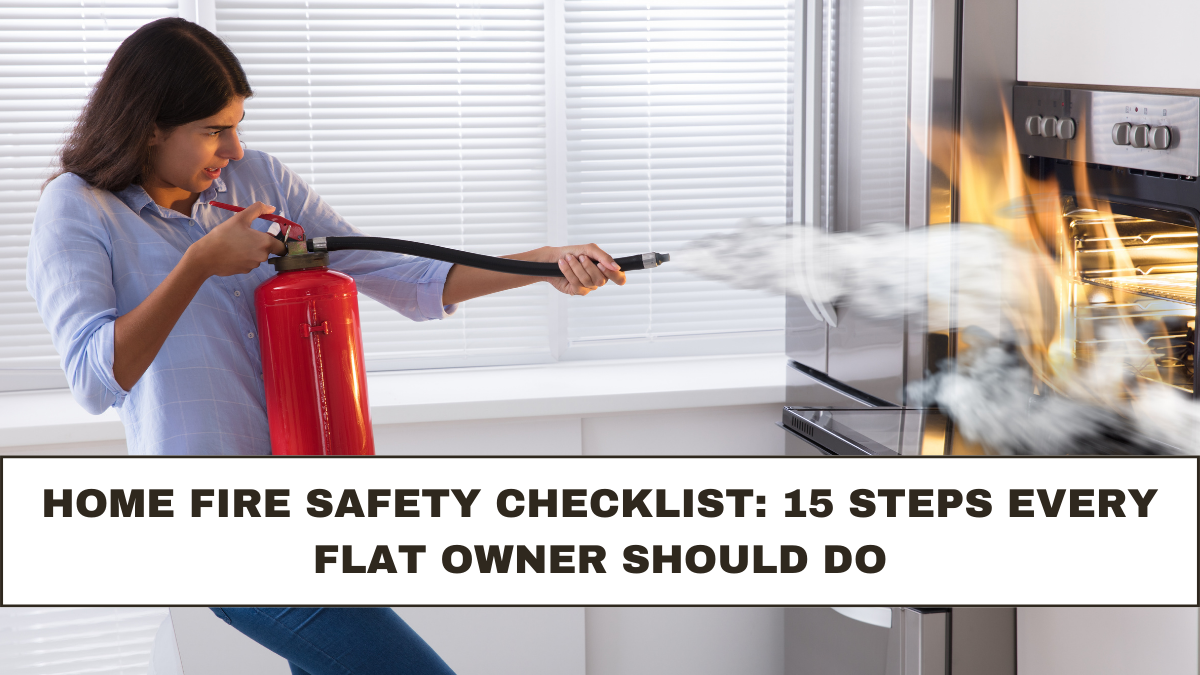
A home fire safety checklist is essential for every flat or high-rise owner. Fires can spread quickly in apartments, making preparation crucial for protecting lives and property. From smoke alarms to kitchen precautions and evacuation strategies, implementing a safety routine reduces risks and ensures peace of mind.
This guide outlines 15 practical steps to enhance high-rise safety and prevent fire hazards in your home.
1. Install and Maintain Smoke Alarms
Smoke alarms are the first line of defense:
• Place alarms in bedrooms, hallways, and living areas
• Test them monthly
• Replace batteries at least once a year
• Upgrade alarms every 10 years
2. Create an Evacuation Plan
Know your escape routes:
• Map at least two exits from each room
• Identify staircases instead of elevators
• Practice drills with family members
• Include neighbors in safety planning for high-rises
3. Check Fire Extinguishers
Have accessible extinguishers:
• Keep one in the kitchen and near main exits
• Learn proper usage (PASS: Pull, Aim, Squeeze, Sweep)
• Service or replace annually
4. Kitchen Safety Measures
Most apartment fires start in the kitchen:
• Never leave cooking unattended
• Keep flammable materials away from stoves
• Regularly clean oil residues from burners
• Avoid overloading electrical outlets with appliances
5. Electrical Safety
Electrical faults cause many home fires:
• Inspect wiring for wear or damage
• Avoid daisy-chaining multiple plugs
• Replace old or faulty appliances promptly
• Use certified surge protectors
6. Candle and Incense Precautions
Open flames can ignite quickly:
• Never leave candles or incense unattended
• Keep them away from curtains, paper, and furniture
• Use stable holders for candles
7. Smoke and Carbon Monoxide Detectors
Some detectors combine fire and gas alerts:
• Place CO detectors near bedrooms
• Test sensors regularly
• Replace expired detectors
8. Fireproof Storage
Store flammable materials safely:
• Keep matches, lighters, and cleaning chemicals away from children
• Use fireproof cabinets for important documents
• Avoid storing large quantities of flammable liquids
9. High-Rise Safety Practices
Special considerations for flats:
• Know the nearest emergency exit
• Familiarize yourself with building fire alarm systems
• Avoid obstructing stairwells or corridors
• Report any fire safety violations to management
10. Emergency Contact List
Keep vital contacts handy:
• Fire department and local emergency numbers
• Neighbors and building security
• Family or roommates for quick coordination
11. Fire Drills and Practice
Practice makes preparation effective:
• Conduct drills every 3–6 months
• Simulate smoke or blocked exits to practice alternative routes
• Ensure all household members understand safety signals
12. Use Fire-Resistant Materials
Reduce fire risks with smart choices:
• Fire-retardant curtains, furniture covers, and bedding
• Avoid highly flammable decorations
13. Safe Smoking Practices
If someone smokes indoors:
• Always use ashtrays
• Never smoke in bed
• Extinguish completely before leaving the area
14. Pet Safety
Include pets in your plan:
• Keep leashes near exits
• Train pets to follow evacuation signals
• Never leave animals in rooms with open flames
15. Review and Update Regularly
Fire safety is ongoing:
• Check alarms and extinguishers annually
• Update emergency contacts
• Refresh family members on evacuation plans
Why a Home Fire Safety Checklist Matters
Implementing a home fire safety checklist protects lives, reduces property damage, and ensures everyone in the flat knows how to act in an emergency. High-rise buildings, in particular, require careful planning due to limited escape options and proximity to neighbors.
Final Thoughts
Every flat owner should adopt a home fire safety checklist and make it part of daily life. From smoke alarms and evacuation plans to kitchen and electrical safety, these 15 steps cover essential precautions. Regular practice, updated equipment, and mindful living make your home safer for all residents.
FAQs
What is the first step in a home fire safety checklist?
Installing and maintaining smoke alarms in key areas of the flat is the first and most important step.
How often should I practice fire drills in a high-rise?
Conduct drills every 3–6 months to ensure everyone knows the evacuation plan.
Where should fire extinguishers be placed in a flat?
Keep one in the kitchen, near main exits, and accessible to all household members.
How can I reduce kitchen fire hazards?
Never leave cooking unattended, keep flammable items away from stoves, and clean oil residues regularly.
What are high-rise safety precautions for fire emergencies?
Know exits, avoid obstructing stairwells, report safety violations, and always use stairs instead of elevators during a fire.
Click here to know more.