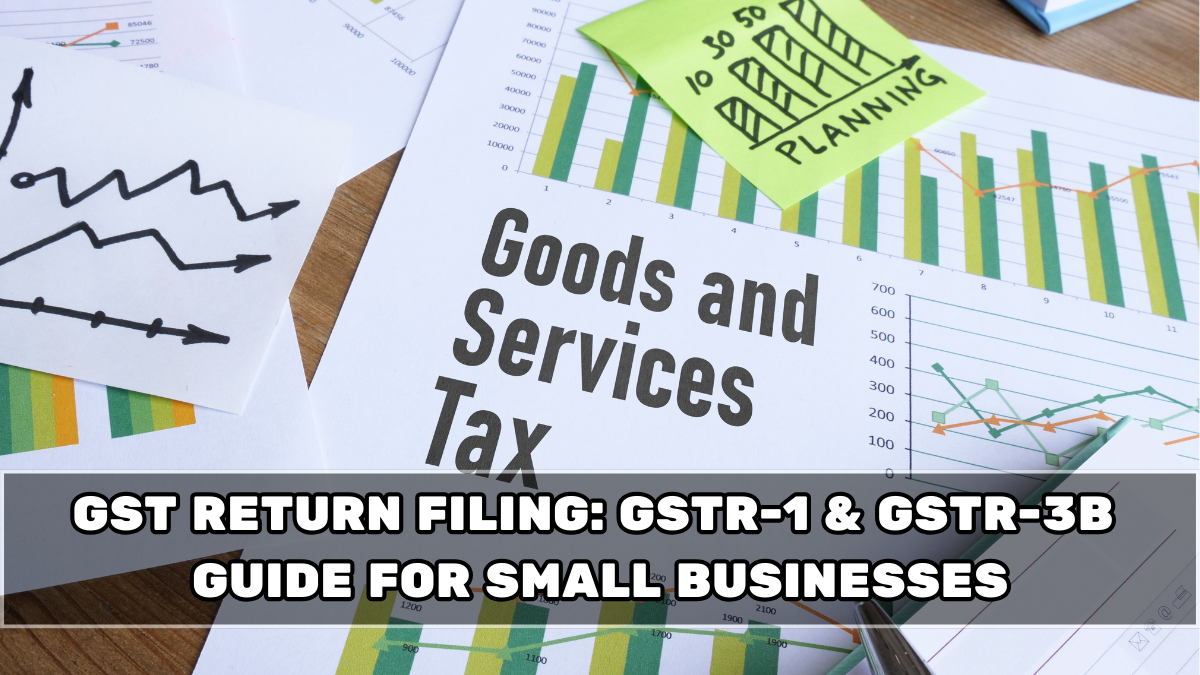
GST return filing for small business is where most compliance stress actually lives—not during registration, not during audits, but in the monthly routine. Small business owners don’t struggle because GST is complex; they struggle because one small mistake in GSTR-1 or GSTR-3B quietly snowballs into late fees, blocked ITC, or customer disputes.
This guide strips GST return filing down to what actually matters in 2026: which returns you must file, how GSTR-1 and GSTR-3B work together, exact due-date logic, and how to avoid errors that cause notices later.
Why GST Return Filing Becomes a Problem for Small Businesses
Small businesses operate with limited bandwidth.
Common realities:
• Owner handles operations + compliance
• Data comes from multiple sources
• Invoices are raised manually or via basic software
• GST portals don’t forgive delays
That’s why gst return filing for small business must be simple, repeatable, and mistake-proof.
Which GST Returns Small Businesses Must File
Not every business files every return.
Most regular taxpayers file:
• GSTR-1 → Sales details
• GSTR-3B → Summary + tax payment
Composition dealers and special cases follow different rules—but mixing categories causes trouble.
Understanding GSTR-1 (Sales Return)
GSTR-1 reports outward supplies.
It includes:
• B2B invoices
• B2C sales (where applicable)
• Credit/debit notes
• Export invoices
Once filed, GSTR-1 data flows to your customer’s ITC—mistakes affect them, not just you.
Understanding GSTR-3B (Summary Return)
GSTR-3B is where tax liability is paid.
It covers:
• Total taxable value
• Output tax
• Input tax credit claimed
• Net tax payable
You can’t “fix” payment errors later without complications.
How GSTR-1 and GSTR-3B Are Connected
This is where most errors happen.
Key rule:
• Sales reported in GSTR-1 must match liability in GSTR-3B
Mismatch consequences:
• ITC disputes
• Notices
• Reconciliation pressure
Accuracy beats speed every time.
GST Return Due Dates Explained (Simply)
Due dates depend on turnover and filing type.
Typical structure:
• GSTR-1 → Monthly or quarterly
• GSTR-3B → Monthly
Missing a deadline triggers automatic late fees—no reminders, no mercy.
Late Fees and Penalties: What Actually Hurts
Late fees accumulate quietly.
Impact:
• Daily late fee till filing
• Caps exist, but damage is done
• Interest applies on unpaid tax
Late filing is the most expensive “oversight” in gst return filing for small business.
Step-by-Step GST Return Filing Process
Use this exact sequence every cycle:
• Finalise sales invoices
• Reconcile purchase ITC
• File GSTR-1
• File GSTR-3B
• Pay tax liability
• Download acknowledgements
Reversing this order causes mismatch issues.
Input Tax Credit (ITC): Where Businesses Lose Money
ITC errors are silent killers.
Common ITC mistakes:
• Claiming ineligible credit
• Mismatch with supplier filings
• Claiming without invoice
Wrong ITC claims invite scrutiny faster than late filing.
Quarterly Filing (QRMP): Who Should Use It
QRMP is useful—but not for everyone.
Good for:
• Small turnover businesses
• Low invoice volume
• Stable monthly sales
Bad for:
• Rapid-growth businesses
• Frequent B2B invoicing
Choose based on cash flow, not convenience.
Common GST Return Filing Mistakes
Avoid these repeat offenders:
• Filing GSTR-3B before GSTR-1
• Forgetting amendments
• Ignoring ITC reconciliation
• Depending blindly on software
Software helps—but responsibility stays with you.
What to Do If You Filed Incorrect GST Return
Mistakes can be fixed—but not instantly.
Fix methods:
• Amend in next return
• Adjust liability carefully
• Maintain proper working papers
Panic corrections make things worse.
GST Notices: Why They Come and How to Avoid Them
Notices usually come due to:
• Data mismatch
• Late filing patterns
• ITC irregularities
Clean filing history reduces scrutiny automatically.
How to Stay GST-Compliant Without Stress
Smart habits:
• Fixed monthly filing date
• Invoice discipline
• Simple reconciliation checklist
• Professional review (when needed)
GST compliance is boring—but profitable when done right.
Conclusion
GST return filing for small business doesn’t need to be painful—but it does need discipline. File GSTR-1 correctly, match it with GSTR-3B, respect due dates, and stay conservative with ITC. Most GST problems don’t come from fraud—they come from casual compliance.
Treat GST like a system, not a task—and it will stop bothering you.
FAQs
Which GST returns do small businesses need to file?
Usually GSTR-1 and GSTR-3B.
What happens if I miss GST return due date?
Late fees and interest apply automatically.
Can I revise GST returns after filing?
No direct revision—corrections are made in subsequent returns.
Is QRMP scheme good for all small businesses?
No. It suits stable, low-volume businesses.
Why do GST notices usually come?
Due to mismatches, late filing, or incorrect ITC claims.