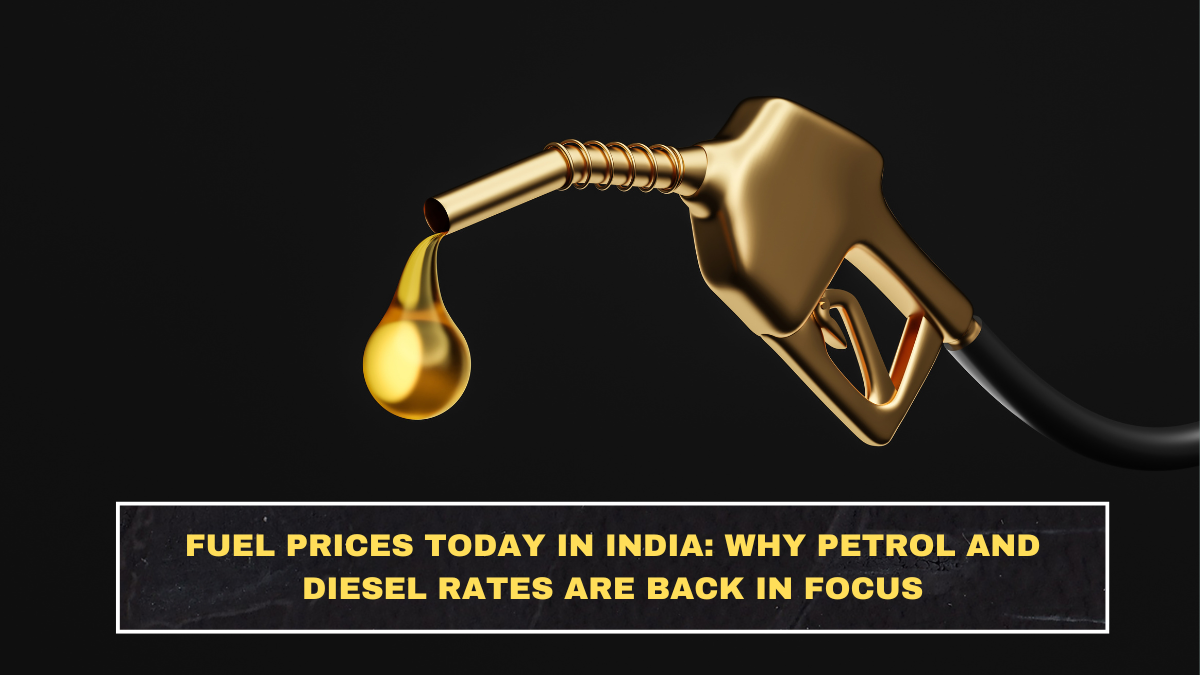
Fuel prices in India never truly disappear from public attention, but they return strongly into focus whenever multiple factors start shifting at once. Right now, this renewed attention is driven by a combination of recent state-level tax adjustments, fluctuations in global crude oil prices, and discussions around government revenue strategies. When these elements move together, uncertainty increases, and people start actively searching for current fuel rates.
Most people think petrol and diesel prices change randomly or only because of crude oil. That assumption is incomplete. In reality, fuel pricing in India is a structured system influenced by international oil markets, domestic taxation policies, and the rupee-dollar exchange rate. When even one of these changes, prices react. When multiple factors change together, the impact becomes more visible.
Why Does This Matter for Everyday Expenses?
Fuel prices are not just about how much you pay at the petrol pump. They directly influence the cost of living across the country. When fuel becomes expensive, transportation costs increase, and that cost gets passed on to consumers through higher prices of goods and services.
India relies heavily on road transport for moving essential items like vegetables, milk, and daily-use products. Data from logistics and transport sectors suggests that fuel contributes to nearly 40% of transportation costs in India. This means even a ₹2–₹3 increase per litre can lead to noticeable increases in food prices and delivery charges within weeks.
How Are Petrol and Diesel Prices Actually Decided?
India follows a dynamic pricing system where fuel prices are revised based on international crude oil prices and currency exchange rates. However, what many people fail to understand is that crude oil is only one part of the final price.
A large portion of what you pay comes from taxes. The central government applies excise duty, while state governments add VAT and sometimes additional charges like cess. Together, taxes can contribute up to 50–60% of the retail fuel price in India, which is why prices remain high even when crude oil becomes cheaper globally.
Why Do Fuel Prices Differ Across Cities in India?
One of the most confusing things for people is why petrol costs more in one city and less in another. This difference exists because each state government sets its own VAT rates on fuel, and these rates vary significantly.
Here is a simplified comparison to understand how prices can differ across major cities:
| City | Petrol Price (Approx ₹/L) | Key Reason for Difference |
|---|---|---|
| Delhi | 96 – 97 | Lower VAT compared to others |
| Mumbai | 106 – 108 | Higher state taxes |
| Bengaluru | 101 – 103 | State VAT adjustments |
| Jaipur | 108 – 110 | Higher combined tax structure |
This variation shows that fuel pricing is not uniform across India, and local tax policies play a major role in determining what you pay.
What’s Happening Right Now (Data-Based Insight)?
Globally, crude oil prices have been fluctuating in the range of $75 to $85 per barrel in recent months. While this is not extremely high compared to past spikes, the impact on Indian fuel prices depends heavily on taxation and currency value.
At the same time, the Indian rupee’s performance against the US dollar also affects import costs, since crude oil is purchased in dollars. A weaker rupee increases the cost of importing oil, which can indirectly push fuel prices higher even if crude remains stable.
Additionally, several states have started adjusting taxes or adding cess to increase revenue, which is another reason why fuel prices are back in public discussion.
What Should You Do as a Consumer?
Most people react to fuel price hikes emotionally instead of adjusting their behavior. That’s a mistake. While you cannot control prices, you can control your consumption.
Simple but effective steps include maintaining proper tyre pressure, avoiding unnecessary short trips, and driving at consistent speeds. Studies show that aggressive driving can increase fuel consumption by up to 20%, which means you are wasting money without realizing it.
Planning routes and combining multiple tasks into a single trip can also significantly reduce monthly fuel expenses.
What Are the Common Mistakes People Keep Making?
A major mistake is blaming only crude oil prices without understanding the role of taxes. In India, taxes have a much bigger impact on final fuel cost than most people realize.
Another mistake is ignoring personal driving habits. People often continue inefficient driving even after price hikes, which increases their fuel expenses further.
Many also fail to track their monthly fuel spending. Without tracking, you have no idea how much extra you are paying over time.
What Should You Watch Next?
Fuel pricing is not a one-time event — it is a continuous cycle. Going forward, you should watch global crude oil trends, government tax policies, and the rupee-dollar exchange rate.
Budget announcements and state-level decisions can also directly influence fuel costs. If more states introduce additional cess or increase VAT, prices can rise even if crude remains stable.
Reality Check: Are Fuel Prices Likely to Fall Soon?
The expectation that fuel prices will drop significantly is unrealistic in the current scenario. While short-term fluctuations may happen, long-term trends suggest that prices are more likely to remain stable or gradually increase.
This is because governments depend heavily on fuel taxes for revenue, and reducing these taxes significantly would impact public finances.
Conclusion: What Does This Mean for You?
Fuel prices in India are not random — they are the result of a structured system where global and domestic factors interact. If you don’t understand this system, you will keep reacting instead of planning.
The smarter approach is to adapt early. Monitor your fuel usage, improve efficiency, and stay informed about pricing factors. This is not just about saving a few rupees — it’s about controlling a recurring expense that keeps increasing over time.
FAQs
Why are fuel prices rising again in India?
Fuel prices are rising due to a mix of global crude oil fluctuations, state-level tax changes, and currency movements affecting import costs.
Why do petrol prices differ from city to city?
Different states apply different VAT rates and additional charges, which leads to variation in fuel prices across cities.
How much of fuel price is tax in India?
Taxes can contribute around 50–60% of the final petrol and diesel price in India.
Does crude oil price directly control petrol rates?
Crude oil is a major factor, but taxes and currency exchange rates also play a significant role.
How can I reduce my fuel expenses?
You can reduce expenses by improving driving habits, maintaining your vehicle, and planning trips efficiently.
Click here to know more.