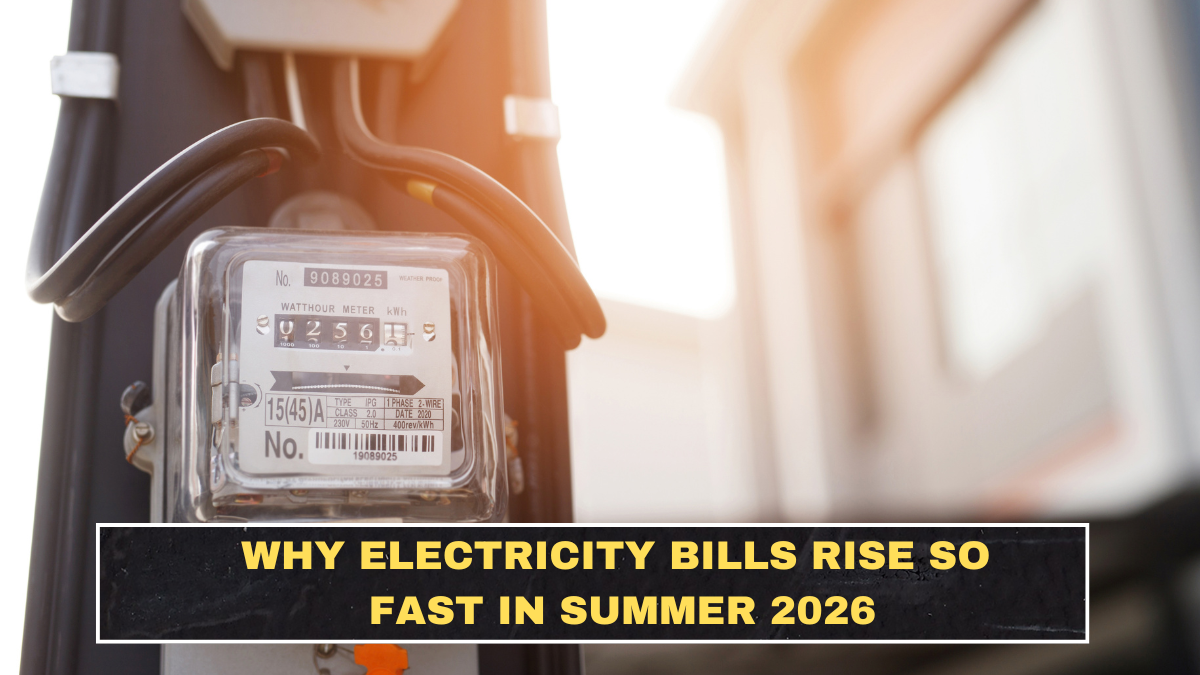
Electricity bills jump in summer because heat does not just make homes uncomfortable. It drives much heavier cooling use, longer AC run times, and higher peak demand on the grid. The International Energy Agency says space cooling is now the fastest-growing source of energy demand in buildings, rising by almost 4% annually to 2035 under current policies. In India, the IEA says each 1°C increase during cooling season now adds more than 7 GW of peak demand, up from around 4 GW in 2019.
That matters for households because higher system demand usually means more electricity use at home and more pressure on utilities and fuel supply. Reuters reported on April 8, 2026 that India said it had enough coal stocks to meet current power demand, which shows how seriously governments are treating summer electricity pressure.
Why do electricity bills rise so fast in summer?
The biggest reason is simple: air conditioning runs harder and longer. The U.S. Department of Energy says air conditioners use about 12% of household electricity in the United States, and in an average-sized home central air conditioning can consume more than 2,000 kilowatt-hours per year. Even if your local usage pattern is different, the basic logic is the same everywhere: when heat rises, cooling becomes one of the largest parts of the bill.
Heatwaves also make the problem worse because demand spikes across entire cities at the same time. The IEA says heatwave-driven demand curves are getting steeper, meaning power demand rises faster at high temperatures than it used to. That is why bills can jump suddenly during very hot months even when your normal routine has not changed much.
Which home habits push summer bills up the most?
A lot of households blame the weather alone, but part of the damage comes from bad cooling habits. The U.S. Department of Energy says poor maintenance, dirty filters, bad thermostat placement, weak weatherization, and unnecessary heat from appliances can all make cooling systems run longer than necessary.
The blunt truth is that many people want cooler rooms without running an efficient setup. That is not a utility problem. That is a usage problem. If the AC is fighting hot sunlight, warm indoor appliances, clogged filters, and air leaks at the same time, your bill is going to punish you.
What should households check first to reduce the damage?
| Problem area | What to check | Why it matters |
|---|---|---|
| AC maintenance | Clean or replace filters regularly | Dirty filters make the unit work harder |
| Thermostat setup | Keep lamps and TVs away from thermostat | Extra heat can make AC run longer |
| Air leaks and insulation | Seal gaps and improve weatherization | Prevents cool air loss |
| Window heat gain | Use coverings and shade | Cuts indoor heat load |
| Cooling strategy | Cool occupied rooms, not everything | Reduces wasted power |
This is where most households can save the fastest. The Department of Energy recommends monthly filter cleaning or replacement as needed, using window coverings, weatherizing the home, and operating cooling systems more efficiently. It also notes that room air conditioners can be less expensive to operate when you only need to cool a smaller area instead of the whole home.
How much can smarter cooling choices really help?
They can help more than people think. The Department of Energy says programmable thermostat use can save up to 10% a year on heating and cooling, while ceiling fans can allow you to raise the thermostat setting by about 4°F without hurting comfort. It also says duct losses can account for more than 30% of cooling energy use in ducted systems, and well-placed landscaping can save up to 25% of the energy a typical household uses.
That does not mean every household will save those exact numbers. But it does prove the main point: summer bill pain is not only about the weather. It is also about system efficiency.
What is the smartest approach for summer 2026?
Start with the boring fixes first. Clean filters, check thermostat behavior, block direct heat, and avoid cooling empty rooms more than necessary. If your equipment is old or inefficient, upgrading later may make sense, but the fastest wins usually come from maintenance and reducing wasted cooling demand. The IEA’s 2025 analysis makes the broader case clearly: rising heat is putting more pressure on households and grids, so efficiency matters more, not less.
FAQs
Why do electricity bills jump during heatwaves?
Because cooling demand rises sharply during very hot periods, and AC systems run longer and harder. The IEA says heatwaves are pushing electricity demand curves higher and steeper.
Is air conditioning the main reason summer bills rise?
In many homes, yes. The U.S. Department of Energy says air conditioners use about 12% of household electricity in the United States, and central AC can consume more than 2,000 kilowatt-hours per year in an average-sized home.
What is the easiest way to lower AC costs?
Regular filter cleaning or replacement is one of the easiest first steps, because dirty filters force the system to work harder.
Can simple home changes really lower summer bills?
Yes. The Department of Energy says better thermostat use, shading, weatherization, fans, and duct improvements can all reduce cooling energy waste.