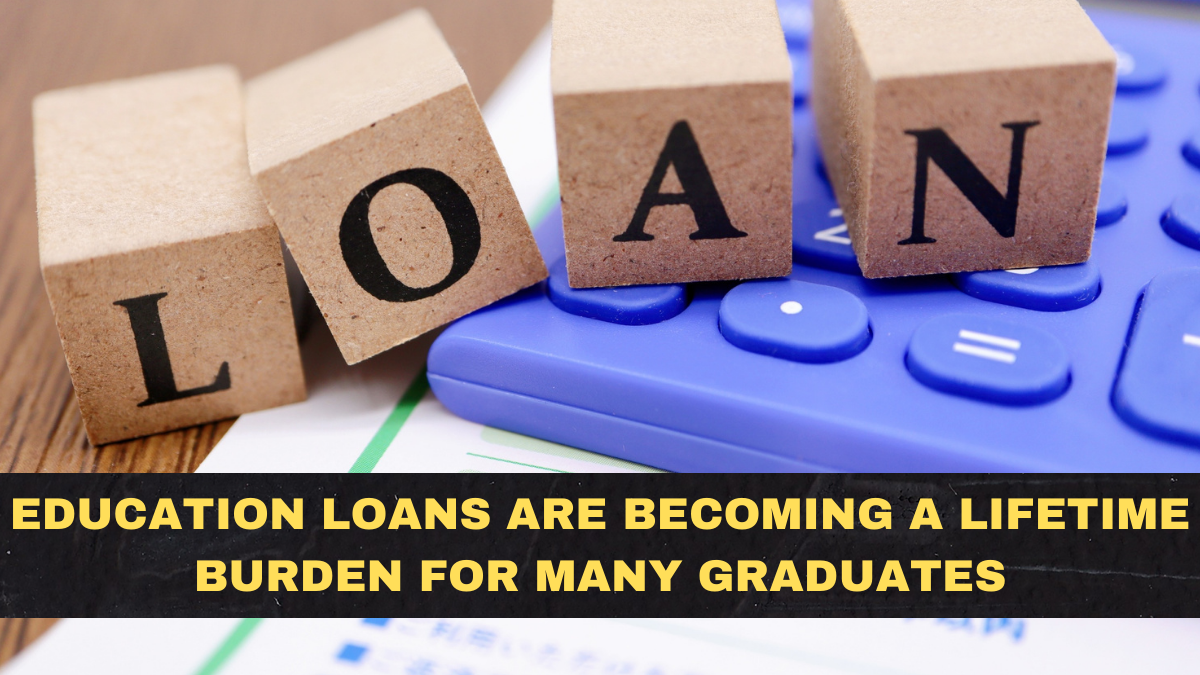
Education loans were once seen as a bridge to a better future, but in 2026 they are increasingly becoming a long-term financial trap for many graduates. What starts as a hopeful investment during college slowly turns into a constant source of anxiety after graduation. For thousands of young professionals, the loan does not fade away with their degree; instead, it follows them into every career decision they make.
The burden is not just about money. It affects mental health, job choices, family planning, and overall confidence. Many graduates realize too late that their expected salary growth does not match the repayment pressure they signed up for. In 2026, education loan stress has become a defining part of early professional life for middle-class families.
Why Education Loans Feel Heavier After Graduation
During college, loans feel distant and abstract. Repayment begins only after graduation, creating a false sense of comfort while studying.
Once EMIs start, reality hits hard. Entry-level salaries often fail to match repayment expectations, leaving little room for savings or emergencies.
In 2026, this mismatch between income and loan burden is the core problem.
The Salary vs EMI Reality Most Students Ignore
Many students calculate loan eligibility but not EMI sustainability. A job that looks decent on paper may barely cover monthly obligations.
After rent, food, and transport, EMIs consume a large portion of income. Financial breathing space disappears quickly.
This creates a cycle where graduates live paycheck to paycheck despite being employed.
How Education Loans Limit Career Choices
Graduates with heavy loans avoid risk. They hesitate to switch jobs, upskill, or explore better long-term opportunities.
Lower-paying but high-growth roles are often rejected in favor of immediate cash flow. Career satisfaction takes a backseat to survival.
In 2026, education loans quietly shape careers in ways few openly admit.
The Mental Health Cost of Long-Term Debt
Constant repayment pressure leads to anxiety, sleep issues, and chronic stress. Many graduates feel trapped even when performing well at work.
The fear of default or delayed payments creates emotional fatigue. Financial stress spills into personal relationships.
Education loan burden is no longer just financial; it is psychological.
Why Loan Repayment Takes Longer Than Expected
Graduates expect quick promotions and salary hikes. In reality, growth is slower and uneven across industries.
Job changes, layoffs, or health issues disrupt repayment plans. Interest accumulation quietly extends loan duration.
By 2026, many borrowers realize their loans will stay far longer than originally planned.
Family Pressure and Hidden Emotional Guilt
For many students, families co-sign loans or make sacrifices to support education. This adds emotional pressure to succeed quickly.
Graduates carry guilt when repayment becomes difficult. Asking for help feels like failure.
This unspoken emotional weight intensifies the loan burden beyond numbers.
Why Refinancing and Restructuring Feel Confusing
Loan terms, interest changes, and restructuring options are often poorly understood. Graduates feel overwhelmed by financial jargon.
Many delay action due to confusion, worsening the situation. Lack of clear guidance leads to poor decisions.
In 2026, financial literacy gaps worsen loan stress significantly.
The Impact on Major Life Decisions
Marriage, relocation, entrepreneurship, and higher studies are often postponed due to loan pressure.
Graduates prioritize stability over growth. Dreams are delayed indefinitely.
Education loans quietly reshape life timelines across India.
Why Education Loans Hit Middle-Class Families Hardest
Middle-class families rely heavily on loans for education. They lack safety nets available to wealthier households.
At the same time, they do not qualify for extensive subsidies. The burden falls squarely on the student.
In 2026, this gap makes education loans especially punishing for the middle class.
What Students Should Consider Before Taking Large Loans
Understanding realistic salary outcomes is crucial. Optimistic assumptions often backfire.
Calculating EMI sustainability, not just eligibility, can prevent future stress. Course ROI matters more than reputation.
Better planning reduces long-term regret.
Conclusion: Education Loans Need Honest Conversations
Education loans are not inherently bad, but blind borrowing has serious consequences in 2026.
Graduates are carrying debt longer, under more pressure, and with less flexibility than previous generations.
Honest discussions about affordability, career outcomes, and repayment reality are essential before taking on lifelong financial stress.
FAQs
Why do education loans feel overwhelming after graduation?
Because entry-level salaries often fail to match EMI expectations, creating constant financial pressure.
Do education loans affect career choices?
Yes, many graduates avoid risk, career switches, or lower-paying growth roles due to repayment pressure.
How long do graduates typically take to repay education loans?
Many loans extend far beyond initial estimates due to interest accumulation and slow salary growth.
Are education loans mainly a middle-class problem?
Yes, middle-class families rely heavily on loans and lack financial buffers to absorb repayment stress.
Can education loan stress affect mental health?
Yes, long-term debt often leads to anxiety, sleep issues, and emotional exhaustion.
What should students check before taking an education loan?
Realistic salary outcomes, EMI sustainability, course ROI, and long-term financial impact.