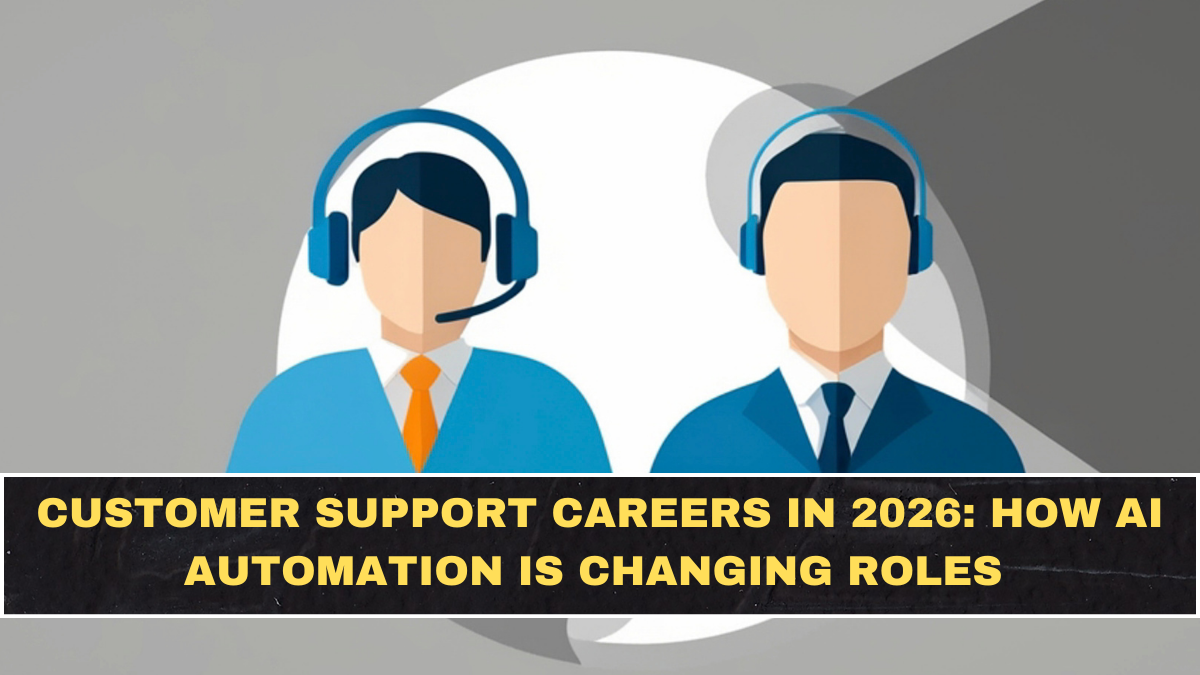
Customer support careers in 2026 look very different from what they were just a few years ago. The biggest change is not that jobs are disappearing, but that the nature of the work has shifted away from repetitive interactions toward higher-judgment roles. AI automation has absorbed a large share of routine queries, forcing support teams to rethink how value is created and measured.
In India, this shift is especially visible because many companies scaled support rapidly in earlier years. As automation matured, organizations realized that support is no longer just a cost center. It has become a CX operations function that influences retention, trust, and long-term revenue. This evolution has reshaped career paths for support professionals who are willing to adapt.
Why AI Automation Is Reshaping Customer Support
AI automation entered support teams to reduce response time and handle volume. Chatbots, auto-classification, and suggested replies became standard.
Over time, companies learned that automation works well for predictable issues but fails in emotionally charged or complex cases. This created a new division of labor between machines and humans.
In 2026, support roles exist where judgment, empathy, and exception handling matter most.
What Tasks Are Fully Automated Now
Common repetitive tasks are largely automated. These include order status queries, password resets, basic refunds, and account updates.
AI systems handle these efficiently by integrating with backend systems. Human involvement is minimal unless something breaks.
This automation has reduced entry-level ticket volume but increased the complexity of remaining work.
New Roles Emerging in Customer Support Teams
As automation expanded, new roles appeared. CX operations analysts monitor automation performance and identify failure patterns.
Chatbot governance roles define tone, escalation logic, and safety boundaries. Knowledge managers maintain content that AI systems rely on.
In India, these roles offer growth paths beyond frontline support without requiring engineering backgrounds.
From Agent to CX Operations Professional
The modern support career path often moves from agent to CX operations. This transition focuses on systems thinking rather than ticket handling.
Professionals analyze workflows, escalation rates, and customer sentiment. Their work improves efficiency and experience simultaneously.
In 2026, career growth depends more on operational insight than on ticket resolution speed.
Skills Support Professionals Must Learn Next
Analytical skills have become critical. Understanding dashboards, trends, and root causes differentiates senior support professionals.
Writing and documentation skills also matter because AI systems depend on clear knowledge bases. Poor content weakens automation.
In India’s service-heavy ecosystem, communication and process design skills drive advancement.
Chatbot Governance and Oversight Responsibilities
Chatbots require ongoing supervision. Governance roles define what bots can and cannot say, and when humans intervene.
These roles also monitor hallucinations, tone drift, and policy compliance. Mistakes here directly affect brand trust.
In 2026, governance responsibility is one of the fastest-growing areas in support automation careers.
Human Skills That Became More Valuable
As automation handles routine queries, human interactions concentrate on emotionally sensitive cases. Empathy and conflict resolution are essential.
Support professionals now manage escalations, churn risk, and high-value customers. This work cannot be automated reliably.
Human judgment has become a premium skill rather than a baseline expectation.
How Companies Measure Support Performance Now
Metrics have shifted away from raw volume. Resolution quality, customer satisfaction, and escalation handling carry more weight.
Support teams are also evaluated on how well automation performs under their supervision. Ownership extends beyond individual tickets.
In 2026, performance measurement reflects outcomes rather than activity.
Transition Paths for Existing Support Professionals
Existing agents can transition by taking ownership of automation tools and processes. Volunteering to manage bot content or workflows builds relevance.
Learning basic analytics and process mapping accelerates growth. These skills are easier to acquire than many assume.
In India, professionals who adapt early avoid stagnation and role erosion.
Common Fears About AI Replacing Support Jobs
Fear of replacement is understandable but often misplaced. AI replaces tasks, not accountability.
Support work still requires human judgment, especially in edge cases. Automation shifts roles upward rather than eliminating them.
In 2026, those who resist change struggle more than those who upskill.
How Hiring Teams Evaluate Support Automation Roles
Hiring teams look for problem-solving and ownership. They assess how candidates respond when automation fails.
Experience with tools matters, but mindset matters more. Candidates must show responsibility for outcomes.
Support professionals who speak in terms of systems rather than scripts stand out.
Conclusion: Customer Support Careers Are Upgrading, Not Disappearing
Customer support careers in 2026 are evolving into CX operations, governance, and high-judgment roles. AI automation removed repetitive work but increased the importance of human decision-making and accountability.
Professionals who embrace analytics, process thinking, and oversight responsibilities find new growth paths. Those who cling to old definitions of support risk being left behind. In an AI-augmented future, support careers reward adaptability and ownership more than ever.
FAQs
Are customer support jobs disappearing because of AI?
No. Routine tasks are automated, but new roles focused on oversight and judgment are growing.
What new roles exist in AI-driven support teams?
CX operations analysts, chatbot governance leads, and automation specialists are common.
Do support professionals need coding skills now?
Coding is not required. Process thinking, analytics, and communication matter more.
Is empathy still important in customer support?
Yes. Human-handled cases are often emotionally complex and require strong empathy.
How can existing agents upgrade their careers?
By learning analytics, owning automation workflows, and contributing to governance.
Are these roles relevant in India’s job market?
Yes. India’s large support ecosystem makes these roles especially relevant and scalable.