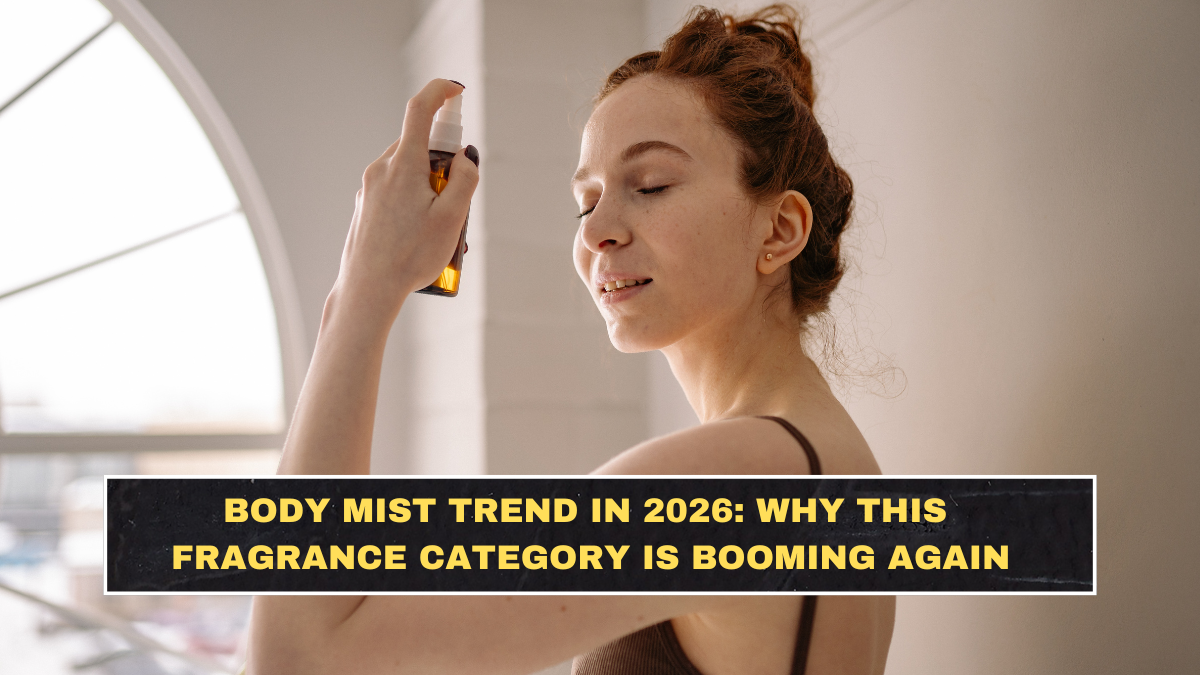
Body mists are back because they solve three things at once: price, wearability, and layering. Market forecasts show the category is not tiny anymore. Fortune Business Insights says the global body mist market was valued at $7.58 billion in 2025 and is projected to reach $7.93 billion in 2026, while Global Market Insights estimates the market at $5.7 billion in 2025 and $5.9 billion in 2026. The exact numbers differ because forecasts use different models, but both point in the same direction: this is a growing fragrance category, not a throwback side shelf.
The cultural reason is even clearer. Recent trend coverage says fragrance buyers are leaning into layering and into old categories returning with a modern twist. Vogue India’s 2026 fragrance trends report highlighted layering as one of the defining themes of the year, while Marie Claire’s April 2026 beauty trends piece pointed directly to all-over body mists as one of the formats making a comeback.
What changed from the old body-spray era?
The old body-spray image was cheap, loud, and often unsophisticated. That is not the current pitch. Today’s body mist is being sold as lighter fragrance, skin-friendly fragrance, or fragrance layering rather than just a cloud of scent for teenagers. Vogue’s recent profile of Bella Hadid’s Ôrəbella expansion shows exactly how the category has shifted: the new launch centers on body and hair parfum mists with alcohol-free, bi-phase hydrating formulas and a “skin-first” philosophy. That is a very different message from the old “spray more, smell stronger” body-spray era.
This matters because brands are no longer treating mists like lesser perfume. They are treating them like flexible daily fragrance products. That change is why the category feels bigger in 2026. The product is now tied to wellness language, body care, and affordability rather than just being the cheap version of perfume.
Why do shoppers like body mists more now?
The first reason is affordability. Buyers still want fragrance, but not everyone wants to pay full perfume prices for everyday wear. Body mists offer an easier entry point. Marie Claire’s 2026 trend report directly linked the comeback of all-over body mists to demand for lighter, more accessible scent formats, and Vogue’s coverage of Ôrəbella’s new mists placed them at $39, which is meaningfully lower than many prestige perfumes.
The second reason is intensity. A mist is easier to wear casually, especially in warm weather, at work, or when someone wants scent without committing to a heavier perfume trail. That is why layering matters so much. Buyers can wear a mist alone, refresh during the day, or combine it with lotions and perfumes. Vogue India’s 2026 trend piece explicitly called out layering as a defining fragrance behavior, and body mists fit that behavior better than many full-strength perfumes do.
Is this trend more about price or more about fragrance layering?
It is both, but layering is what makes the trend feel modern instead of cheap. A lower price gets people in the door. Layering keeps the category interesting. Marie Claire’s report describes body mists as part of the return of lighter, more flexible fragrance formats, and Vogue’s recent brand coverage shows mists being launched as part of a broader ritual rather than as isolated products.
That is the key change. Consumers are not only buying body mists because they cost less. They are buying them because they work better in a routine where scent gets built step by step across skin, hair, and clothing. This is why body mists now sit closer to body care and fragrance styling than to bargain-bin spray culture.
What is actually driving the category in 2026?
| Driver | Why it matters in 2026 |
|---|---|
| Lower price than perfume | Makes fragrance easier to buy and re-buy |
| Fragrance layering | Fits current scent routines better than heavier perfume alone |
| Lighter wear | Better for daily use, warm weather, and casual settings |
| Body-care crossover | New launches now emphasize skin feel, hydration, and alcohol-free formulas |
| Category growth | Multiple market trackers show ongoing market expansion |
This is the cleaner way to read the trend. The category is growing because it is useful, not because people suddenly forgot perfume exists. Market reports point to growth, while trend coverage keeps tying body mists to layering, nostalgia, and more wearable everyday fragrance.
Are body mists replacing perfume?
No, and that is where people get lazy. Body mists are not replacing perfume. They are expanding the fragrance wardrobe. A mist works when someone wants something softer, more repeatable, and less expensive to overspray. Perfume still wins on depth, strength, and lasting impact. The growth of body mists does not mean perfume is weak. It means consumers want more than one format for different parts of the day. That logic lines up with the layering trend experts are describing in 2026.
The smarter view is that body mists now occupy the same kind of role that tinted balm occupies in makeup. It is not replacing the full-strength version. It is becoming the easy, high-usage version people actually reach for more often.
Who is this trend really for?
Body mists make the most sense for buyers who want everyday fragrance without full perfume intensity or cost. They also make sense for people who enjoy scent layering and for shoppers who now treat body products as part of beauty identity. Marie Claire’s reporting ties the category to accessible all-over scent, while Vogue’s recent coverage shows brands positioning mists as body-and-hair ritual products rather than just fragrance extras.
They make less sense for buyers who want maximum projection, longest wear, or one signature scent to do all the work. Those users will still be happier with perfume. A body mist is attractive because it is lighter and easier. If that sounds like a compromise to you, then you probably do not want one.
Conclusion
Body mists are booming again in 2026 because they fit how fragrance shopping has changed. Buyers want lower-cost entry points, more flexible wear, and products that work inside layering routines. The market data supports the growth story, and current beauty coverage shows the category being repositioned as modern, wearable, and tied to body care rather than just being the cheap cousin of perfume.
The blunt truth is this: body mists are back because they are practical. They are affordable enough to use generously, light enough to wear often, and versatile enough to fit current fragrance habits. That is a stronger reason for growth than nostalgia alone.
FAQs
Are body mists really growing in 2026?
Yes. Multiple market reports project category growth in 2026 and beyond, even though the exact market-size estimates vary by research firm.
Why do shoppers like body mists instead of perfume?
Mainly because they are lighter, more affordable, and easier to use for everyday fragrance and layering.
Are body mists just for younger shoppers?
No. The category is now being repositioned as a broader fragrance format, with prestige and celebrity brands launching more sophisticated body and hair mists.
Are body mists replacing perfume?
No. They are becoming a complementary product for everyday wear and layering, not a full replacement for perfume.
Click here to know more