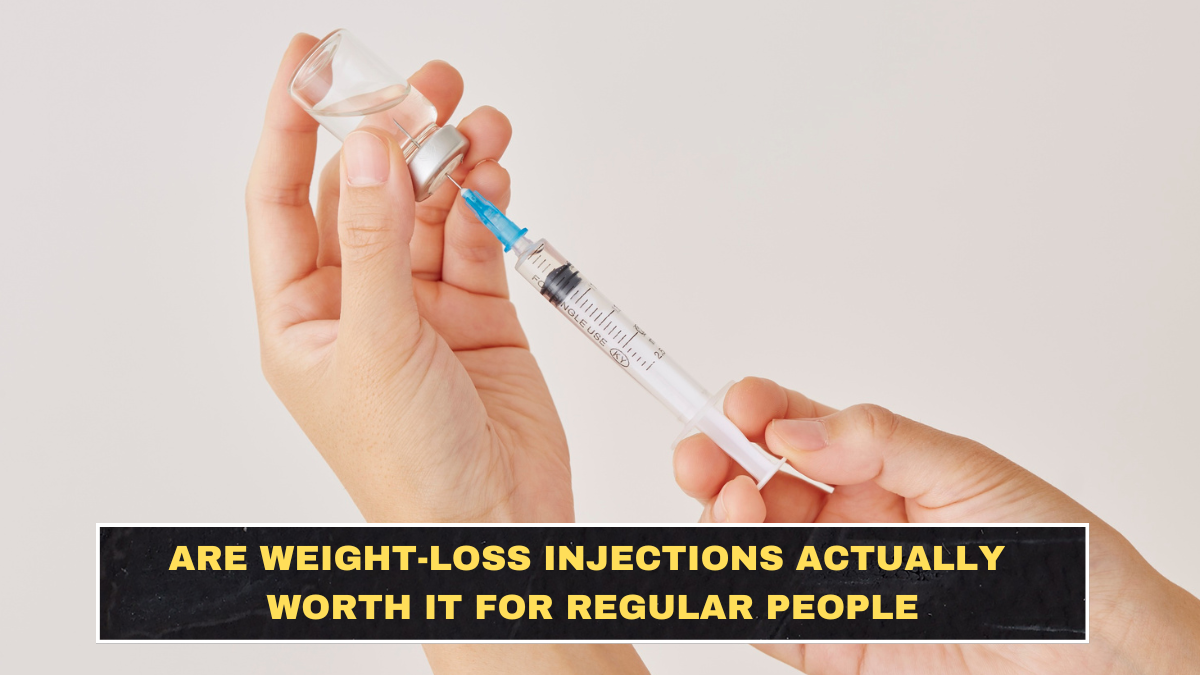
Weight-loss injections are now sold with the kind of confidence that usually belongs to a miracle product, which should make you suspicious immediately. These drugs can work, but “worth it” depends on who is asking. For someone with obesity and serious weight-related health risks, the answer can be very different from someone who just wants to look better for a wedding or lose a few quick kilos. NICE’s guidance on tirzepatide recommends it for adults with obesity only under specific criteria, not as a casual vanity tool.
The evidence for meaningful weight loss is real. Reuters reported last week that Eli Lilly’s new oral GLP-1 pill Foundayo helped trial participants lose about 12% to 15% of body weight, while Wegovy has separate evidence strong enough that NICE now recommends it to reduce serious cardiovascular events in people with overweight or obesity plus established heart disease. Reuters said that recommendation was based on a study of over 17,600 participants showing a 20% reduction in major heart events versus placebo.
When these drugs may actually be worth it
For people with obesity, or overweight plus related medical risk, these drugs can be worth it because the upside is bigger than just appearance. The potential gains include clinically meaningful weight loss and, in some cases, better cardiometabolic outcomes. NICE’s tirzepatide guidance is built around this type of patient, not around random cosmetic use.
This is the part many people dodge because it is less glamorous: the strongest case is medical, not aesthetic. If excess weight is driving diabetes risk, cardiovascular risk, sleep apnea, mobility problems, or similar issues, then a GLP-1 can be more than a “weight-loss product.” It can be a risk-reduction tool. But if the problem is mostly impatience, body-image pressure, or social comparison, then the cost-benefit math gets weaker fast. That is not moral judgment. That is basic decision quality supported by how these drugs are actually recommended and studied.
Why “worth it” falls apart for many regular people
The first problem is side effects. Wegovy’s prescribing information warns about serious adverse effects including possible thyroid tumor risk, pancreatitis, gallbladder problems, kidney issues, severe stomach problems, and increased heart rate, along with more common gastrointestinal problems such as nausea, vomiting, diarrhea, constipation, and abdominal pain. FDA’s March 2026 announcement on higher-dose semaglutide also reiterated the boxed warning about thyroid C-cell tumors based on rodent studies.
The second problem is durability. A 2026 BMJ systematic review found that stopping weight-management medication is followed by rapid weight regain and reversal of beneficial cardiometabolic effects. JAMA Internal Medicine also reported that in the SURMOUNT-4 setting, most adults regained weight after tirzepatide withdrawal, and greater regain was associated with greater reversal of cardiometabolic benefit. So if you think this is a short sprint and then you go back to old habits, that is fantasy, not planning.
The money question is where a lot of people fool themselves
These drugs are becoming cheaper in some markets, but “cheaper” does not mean cheap, and it definitely does not mean cost-effective for everyone. Reuters reported last week that Lilly’s Foundayo would launch in the U.S. at $149 per month through LillyDirect for some users, while other reporting on the same launch showed out-of-pocket prices going higher depending on dose and coverage. A 2025 Annals of Internal Medicine cost-effectiveness analysis found tirzepatide provided greater health benefits at lower costs than semaglutide in that comparison, but the whole point is that cost-effectiveness still depends heavily on who is taking the drug and for what baseline risk.
So the dumb way to think about price is, “Can I squeeze this into my budget this month?” The smarter question is, “Can I afford this as a long-duration treatment if it works and I need to stay on it?” Because that is where reality bites. A drug that works only while you keep paying for it is not a one-time purchase. It is a commitment decision.
What regular people should compare before deciding
| Question | Why it matters | What it changes |
|---|---|---|
| Do I meet medical criteria for obesity treatment? | These drugs are intended for specific risk profiles | Avoids casual misuse. |
| Am I prepared for GI side effects and monitoring? | Side effects are common and sometimes serious | Affects tolerability. |
| Can I afford long-term use, not just a trial month? | Weight regain after stopping is common | Changes the real cost calculation. |
| Am I using this for health or for deadline-driven appearance pressure? | The medical case is stronger than the cosmetic one | Helps expose bad reasons. |
| Am I also willing to change food, activity, and routine? | Drugs help, but behavior still matters | Improves odds of sustainable benefit. |
The honest answer for “regular people”
For regular people with genuine obesity-related health risk, weight-loss injections can be worth it. For regular people chasing fast cosmetic change, they are often oversold. That is the uncomfortable truth. The drugs are effective enough to matter, but not clean enough, cheap enough, or permanent enough to justify casual use just because social media made them look easy. Evidence supports real weight loss and, in some cases, meaningful health benefit, but the same evidence also supports side-effect risk, long-term dependence, and weight regain after stopping.
The blind spot most people have is this: they keep asking whether the drug works, when they should be asking whether the whole plan works. A treatment that reduces weight but creates cost stress, constant nausea, or regain after discontinuation may still be a bad fit. So the right answer is not “yes” or “no” in the abstract. It is “worth it for the right patient, badly misread by the wrong one.”
Conclusion
Weight-loss injections are worth it for some regular people, but mostly when “regular” still includes real obesity-related medical risk, willingness to stay on treatment if needed, and readiness for side effects and lifestyle change. They are much less compelling when the goal is mainly short-term appearance improvement or panic-driven weight loss. The drugs are real medicine, not a cheat code. People who forget that are the ones most likely to be disappointed, financially stretched, or stuck regaining the weight later.
FAQ
Do weight-loss injections actually work?
Yes. Clinical evidence and current approvals support meaningful weight loss with GLP-1 medicines, and Reuters reported that Lilly’s new oral GLP-1 showed about 12% to 15% body-weight loss in trials.
Are the side effects serious?
They can be. Wegovy prescribing information lists common gastrointestinal side effects and warns about serious risks including pancreatitis, gallbladder problems, kidney injury, and a boxed warning related to thyroid tumor risk seen in rodents.
Do people regain weight after stopping?
Often yes. A 2026 BMJ review and JAMA analysis both found substantial weight regain after stopping medication, along with reversal of some cardiometabolic benefits.
Are these drugs worth it for someone who just wants to look slimmer quickly?
Usually that is the weaker case. The strongest evidence and recommendations support use in people with obesity or overweight plus medical risk, not casual deadline-driven appearance goals.