The AI content sameness problem isn’t theoretical anymore—it’s visible. Scroll any feed, open ten articles on the same topic, and you’ll notice the pattern: identical intros, predictable headings, recycled “key takeaways,” and a tone that feels polished but empty. This is triggering audience fatigue, shrinking engagement, and quietly hurting visibility on platforms like Discover where sameness is punished faster than errors.
If you publish content, the risk isn’t using AI. The risk is sounding like everyone else who does.

Why AI Content Started Converging So Fast
AI didn’t ruin originality—shortcuts did.
Sameness accelerated because:
-
Publishers optimized for speed over voice
-
Prompt templates became shared playbooks
-
SEO checklists replaced thinking
-
“Safe” structures beat risky storytelling
The result: thousands of pages that look correct, rank briefly, then disappear.
What the Sameness Trap Actually Looks Like
You can spot it instantly.
Common signals:
-
Generic hook paragraphs (“In today’s fast-changing world…”)
-
Overused subheads (“Why this matters,” “Key benefits”)
-
Balanced-but-bland conclusions
-
FAQ sections that restate the obvious
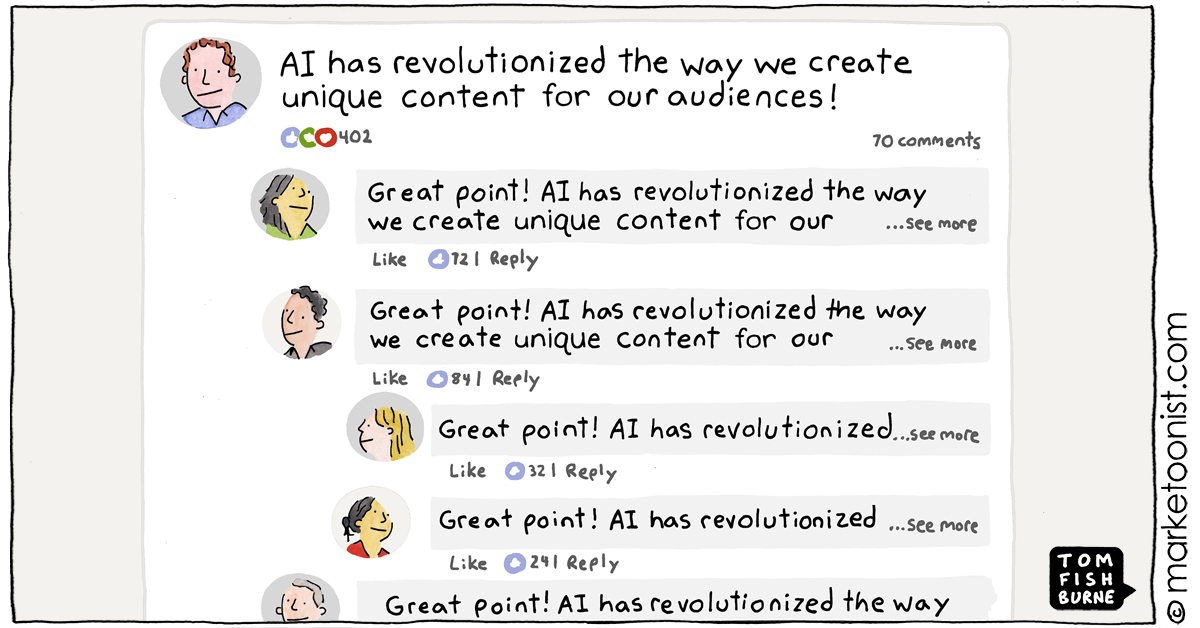
This is the AI content sameness problem in action—technically fine, emotionally forgettable.

Why Discover and Feeds Penalize Sameness First
Search engines forgive duplication longer than feeds do.
Feeds care about:
-
Click-through signals
-
Read depth and scroll behavior
-
Return engagement
When users sense déjà vu, they bounce. Discover learns fast—and stops showing you.
Originality Isn’t Style—It’s Positioning
Most people think originality means:
-
Fancy words
-
Quirky tone
-
Creative metaphors
Wrong. Originality is about angle.
Ask:
-
What assumption am I challenging?
-
What does everyone say that isn’t fully true?
-
What do readers feel but never see written?
That’s where real differentiation lives.
Why “More Data” Doesn’t Fix the Problem
Adding stats doesn’t save generic structure.
Data fails when:
-
It supports an obvious point
-
It’s disconnected from experience
-
It’s used as decoration, not evidence
Readers remember insight—not numbers.
The Hidden Cost: Audience Fatigue
The scariest part isn’t rankings—it’s trust erosion.
When readers see the same article pattern repeatedly:
-
They skim faster
-
They stop finishing pieces
-
They disengage silently
This audience fatigue compounds. Recovery is harder than prevention.
How to Break the Pattern (Without Abandoning AI)
You don’t need to ditch AI. You need to reframe how you use it.
Effective shifts:
-
Start with a contrarian outline
-
Write conclusions first, intros last
-
Use lived scenarios, not summaries
-
Replace “explaining” with “deciding”
AI should assist thinking—not replace it.
Change the Unit of Value
Most content answers questions. Standout content resolves tension.
Instead of:
-
“Here’s what X is”
Try:
-
“Why X is misunderstood—and what actually matters”
Resolution beats information every time.
Structure Is the Silent Differentiator
Sameness hides in structure.
Break it by:
-
Varying section length intentionally
-
Mixing short verdicts with deep dives
-
Using strong, opinionated transitions
Predictable rhythm equals skimmable irrelevance.
What Actually Performs Better in 2026 Feeds
Based on engagement patterns:
-
Clear stances (not neutrality)
-
Practical frameworks readers can apply
-
Writing that acknowledges trade-offs
-
Pieces that feel useful, not “complete”
This aligns with how Discover surfaces content that earns attention.
How Editors Can Detect Sameness Early
A quick test:
-
Read the intro and conclusion only
-
Ask: “Could this belong to any site?”
If yes, rewrite. If no, you’re closer to escape.
Common Mistakes When Trying to Be “Different”
Avoid:
-
Forced controversy
-
Clickbait negativity
-
Over-personalization with no insight
Different isn’t loud. It’s precise.
Conclusion
The AI content sameness problem isn’t about machines writing—it’s about humans surrendering judgment. In 2026, feeds reward clarity, angle, and usefulness over completeness. Use AI for speed, research, and structure—but protect your point of view like an asset. Because once readers sense sameness, they don’t argue. They leave.
FAQs
What is the AI content sameness problem?
It’s the convergence of structure, tone, and ideas across AI-assisted content, making articles feel identical.
Does Google penalize AI content for sameness?
Indirectly—through engagement signals, especially on Discover and feeds.
How can publishers avoid audience fatigue?
By leading with angle, challenging assumptions, and prioritizing usefulness over coverage.
Is originality about writing style?
No. It’s about positioning, perspective, and decision-making clarity.
Should creators stop using AI?
No. They should stop letting AI decide what to say instead of how to say it.