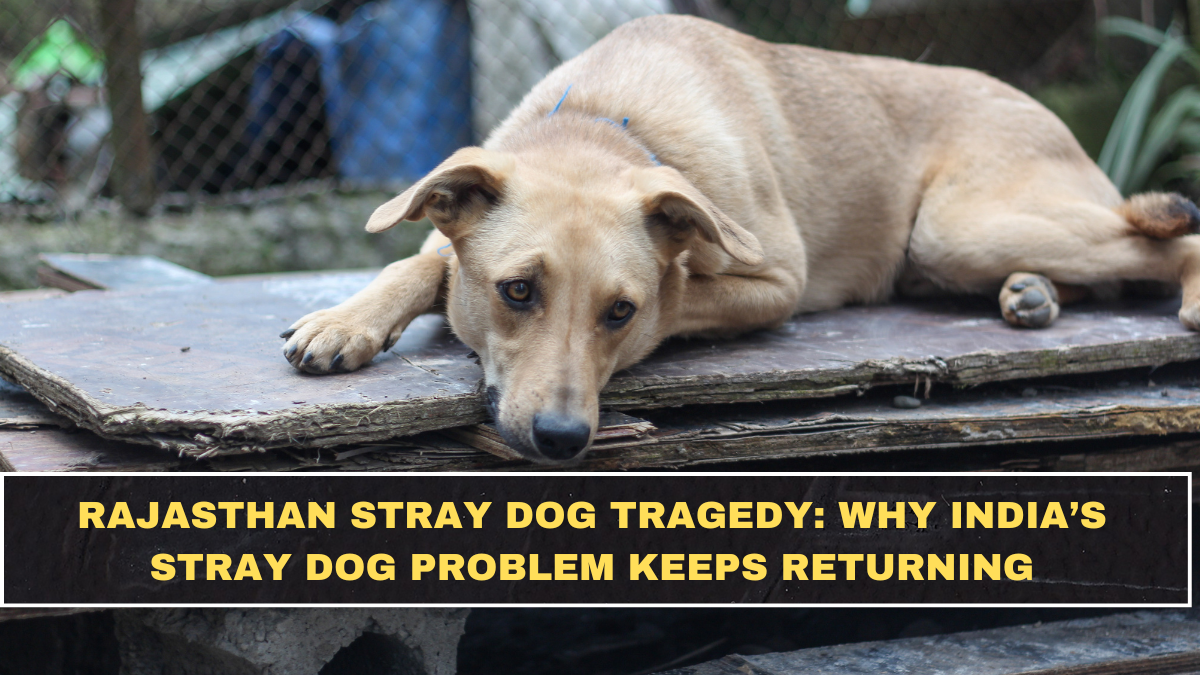
A nine-year-old girl was mauled to death by a pack of stray dogs in Rajasthan’s Bundi district, turning a local tragedy into a wider public-safety debate. Reports identified the child as Rinku Bheel, a Class 3 student from Alkodia village under Talera police jurisdiction. She had reportedly stepped out near the fields early in the morning when the dogs attacked her, and she was declared dead after being taken to a government health centre.
This is not the kind of story that should be reduced to one shocking headline. It exposes a chain of failures: unsafe open spaces, poor stray-dog control, rural sanitation gaps, weak early-warning systems and slow administrative response. Lok Sabha Speaker and Kota-Bundi MP Om Birla visited the family, gave initial compensation of ₹1 lakh and asked officials to ensure preventive action against future attacks.
Why Was She So Vulnerable?
The child was reportedly outside her home near the fields when the attack happened, which shows how public safety and sanitation are connected. In many villages, children and women remain exposed when they go toward open areas early in the morning. That is not just a stray-dog problem; it is also a basic infrastructure and dignity problem.
The family’s background makes the case even more painful. Reports said her family members work as daily wage labourers, and relatives reached only after hearing her screams. A child from a poor household should not have to face a fatal risk just for stepping outside near her own village.
What Are The Key Facts?
| Detail | Reported Information | Why It Matters |
|---|---|---|
| Location | Alkodia village, Bundi district | Shows rural areas are also unsafe |
| Victim | Rinku Bheel, Class 3 student | Young children are the most vulnerable |
| Incident time | Early morning near fields | Open spaces increase attack risk |
| Cause | Pack of stray dogs | Shows failure of local animal control |
| Police action | Unnatural death case registered | Legal record has begun |
| Relief | ₹1 lakh initial help from Om Birla | Compensation cannot replace prevention |
The table makes one thing clear: this was not just an “animal attack.” It was a predictable civic failure. Stray-dog attacks become deadly when local bodies do not track aggressive packs, sterilisation is weak, waste attracts animals and vulnerable people have no safe public spaces.
Is This A Bigger India Problem?
Yes, and the national data is ugly. A Government of India reply in 2025 said 5,19,704 dog-bite cases among children below 15 years were reported across the country during January–December 2024. Another government-linked dataset cited in a 2026 medical article reported more than 37 lakh dog-bite incidents in India in 2024, along with 54 rabies-infected deaths.
These numbers show why the Bundi tragedy should not be treated as an isolated village accident. India has a large animal-bite burden, and children remain one of the highest-risk groups because they are smaller, less able to fight back and more likely to panic during an attack. The real failure is that action usually becomes serious only after a child dies.
What Should Authorities Do Now?
- Identify aggressive packs quickly: Local bodies should map danger zones around schools, fields and waste points.
- Speed up sterilisation and vaccination: Random drives are not enough; they need measurable coverage.
- Control garbage dumping: Open waste attracts dogs and increases territorial behaviour near human spaces.
- Protect children’s routes: Villages need safer access to toilets, schools, anganwadis and public areas.
- Improve bite-response care: Anti-rabies treatment, awareness and emergency transport must be easy to access.
The answer is not cruelty against animals, and it is not careless sympathy that ignores human safety. The practical solution is strict animal birth control, vaccination, waste management, complaint tracking and fast response to aggressive dogs. Anything less is just another press statement before the next tragedy.
Why Do These Attacks Repeat?
These attacks repeat because responsibility is scattered. Health departments focus on rabies treatment, local bodies are expected to handle dog control, animal welfare rules limit brutal removal, and citizens often feed dogs without understanding territorial risks. When everyone owns a small part of the problem, nobody owns the full safety outcome.
The Ministry of Health has said animal-bite data is collected under the National Rabies Control Program and post-exposure prophylaxis is being made available through healthcare facilities. That is important, but prevention must come before hospital treatment. A child mauled by a pack of dogs may not get the chance to reach a vaccine schedule.
What Is The Final Conclusion?
The Rajasthan stray dog tragedy is heartbreaking because it was not impossible to prevent. A child died near her village, a family was destroyed, and only after the death did the system begin talking about compensation and preventive measures. That is not good governance; that is delayed reaction.
The blunt truth is simple: India’s stray-dog problem keeps returning because cities and villages are still managing it emotionally, not scientifically. Sterilisation, vaccination, sanitation, child-safe public spaces and fast local response are the only serious answers. Without that, Bundi will not remain an exception; it will become another name in a growing list of avoidable tragedies.
Frequently Asked Questions
What happened in the Rajasthan stray dog attack?
A nine-year-old girl named Rinku Bheel was mauled to death by a pack of stray dogs in Alkodia village of Rajasthan’s Bundi district. She had reportedly gone near the fields early in the morning when the dogs attacked. Her family rushed after hearing her screams, but she was declared dead at a government health centre.
Where did the Bundi dog attack happen?
The incident happened in Alkodia village under Talera police jurisdiction in Bundi district, Rajasthan. Reports said the child was a Class 3 student from a daily-wage labourer family. The location matters because it shows that stray-dog danger is not only an urban issue; rural areas also face serious risk.
How many dog-bite cases are reported in India?
Government-linked data shows the scale is serious. A 2025 government reply said 5,19,704 dog-bite cases among children below 15 years were reported in India during 2024. A 2026 medical article citing government data reported more than 37 lakh dog-bite incidents in India in 2024.
What should be done to prevent stray dog attacks?
Authorities need aggressive sterilisation and vaccination drives, proper garbage control, mapping of dangerous dog packs and quick response to complaints. Villages also need safer access to toilets, schools and public spaces for children. The goal should be humane dog control with human safety as the top priority.
Click here to know more