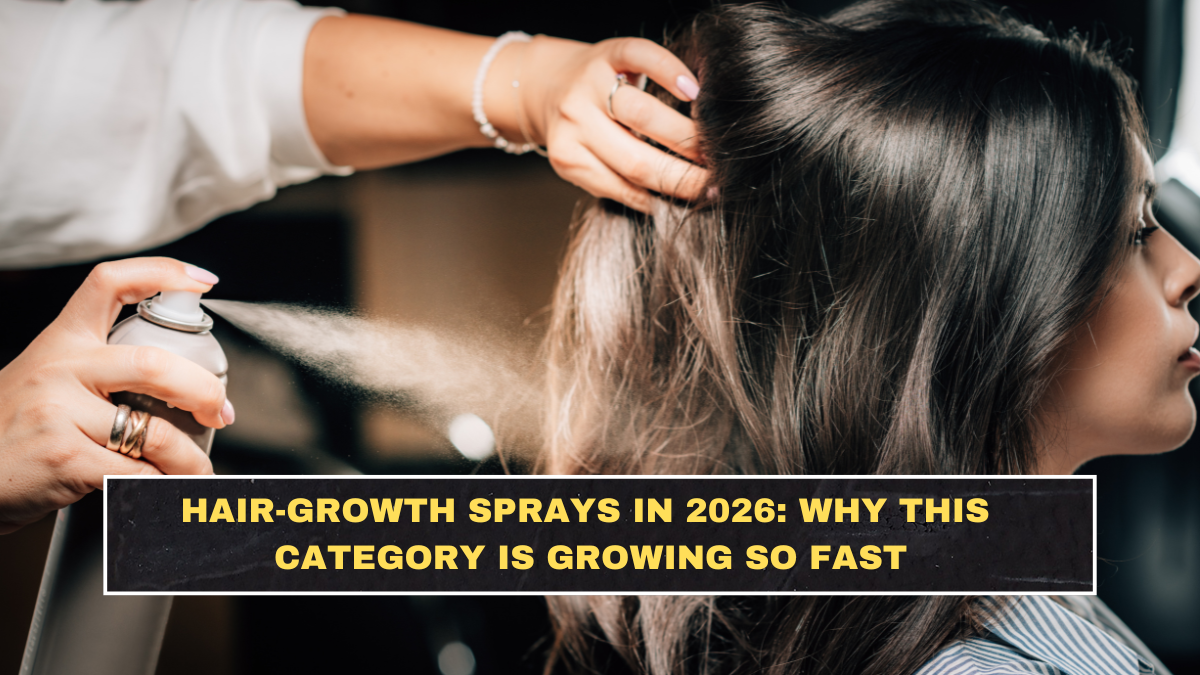
Hair-growth sprays are growing because they promise something people desperately want: visible help for thinning hair without pills, procedures, or messy routines. That is exactly why the category is catching attention inside the broader ingredient-led hair-care wave. Vogue’s 2026 hair-trend coverage specifically called out hair-growth sprays as one of the year’s rising categories, alongside scalp-first care and bond repair.
The appeal is obvious. Sprays feel lighter, easier, and less intimidating than full treatment systems. They also fit into the current beauty habit of “one more targeted product” for a specific concern. But that convenience is also why the category gets overhyped. People hear “spray” and imagine easy regrowth. Reality is less exciting. Some products may help certain types of thinning. Many others are just scalp-care products wearing the language of regrowth.
What do hair-growth sprays usually claim to do?
Most hair-growth sprays claim to reduce shedding, stimulate follicles, support scalp health, or improve the environment for stronger growth. The ingredient stories vary, but the most common ones are minoxidil, caffeine, peptides, botanical extracts, and scalp-support ingredients. Recent reviews of anti-hair-loss cosmetics show the category is leaning heavily on exactly those kinds of actives.
This is where buyers need to think clearly. “Hair growth” can mean different things. Some products are trying to slow shedding. Some are trying to support thicker-looking hair. Some are just trying to reduce scalp irritation so hair behaves better. Those are not the same outcome. A lot of brands deliberately blur those lines because “growth” sells better than “maybe less breakage and irritation.”
Which ingredients actually have the strongest evidence?
Minoxidil still has the strongest mainstream evidence. The American Academy of Dermatology says minoxidil can help early hair loss and is one of the standard at-home treatments dermatologists use for certain types of hair loss. Mayo Clinic’s updated 2026 guidance says topical minoxidil is used to stimulate hair growth in adult men and women with a certain type of baldness, but it usually takes months to work and the benefit fades if treatment stops.
Caffeine is the next ingredient getting heavy attention, but the evidence is weaker than the marketing. A 2025 review concluded that topical caffeine preparations appear safe and show promise against hair loss, but that is not the same as saying they rival proven drug treatments. The honest reading is that caffeine is interesting and probably lower-risk, but it still sits in the “promising, not dominant” category.
Botanicals and peptides are also growing in the market, but the support is mixed. Recent 2025 reviews say there is emerging clinical interest in botanical interventions and other cosmetic anti-hair-loss technologies, yet the evidence base remains more uneven than people want to believe.
What deserves the most caution in this category?
The biggest red flag is when brands imply that a spray can solve every kind of thinning hair. It cannot. Hair loss has many causes, including androgenetic alopecia, stress-related shedding, autoimmune conditions, traction, and scarring disorders. Recent expert coverage aimed at consumers keeps repeating the same warning: proper diagnosis matters because not all hair loss behaves the same or responds to the same treatment.
That means a spray that helps with mild shedding or early pattern thinning may do nothing for scarring hair loss or inflammation-driven conditions that need medical treatment. This is where people waste time. They keep buying “growth” products because it feels easier than getting an actual diagnosis. Meanwhile, the underlying cause keeps progressing.
How should buyers compare hair-growth sprays more honestly?
| Spray type | What it may do well | Main limitation |
|---|---|---|
| Minoxidil-based spray | Best-supported for certain pattern hair loss cases | Needs consistent long-term use |
| Caffeine-based spray | May help support scalp and reduce shedding modestly | Evidence is weaker than minoxidil |
| Peptide/botanical spray | May support scalp environment and cosmetic density | Often overclaims regrowth |
| Cosmetic thickening spray | Makes hair look fuller temporarily | Does not meaningfully regrow hair |
This is the comparison that matters. A lot of buyers confuse cosmetic improvement with biological regrowth. Those are not the same thing. If a product makes hair look denser for a few hours, that may still be useful. It just should not be confused with actually reversing thinning.
Why is the spray format itself becoming so popular?
Because sprays feel modern, clean, and easy to apply directly to the scalp. They also fit the current consumer preference for lightweight leave-ins over greasy, old-fashioned treatment textures. That convenience is a real advantage. But it also creates false confidence. A pleasant spray format does not make the underlying treatment more powerful. It just makes it easier to use.
And to be fair, consistency matters a lot in hair care. A product that is slightly less potent but actually gets used every day may outperform a stronger product that people quit after two weeks. That is part of why sprays are growing so fast. They lower the behavior barrier, even when they do not lower the biology barrier.
Who should actually consider a hair-growth spray?
People with early thinning, mild shedding, or clear scalp-focused concerns may reasonably consider them, especially when the active ingredients are grounded and the expectations are realistic. Minoxidil-based sprays make the most sense when the goal is evidence-backed support for pattern hair loss. Caffeine or peptide-led sprays may make more sense for buyers who want a lower-commitment cosmetic route and understand the results may be modest.
But let’s be blunt. If someone has sudden hair loss, patchy loss, painful scalp symptoms, or obvious progression, they should stop experimenting like a consumer and start acting like a patient. That means proper medical evaluation, not another pretty bottle with the word “growth” on it.
Conclusion
Hair-growth sprays are growing fast in 2026 because they offer an appealing story: simple, non-invasive support for thinning hair in a format people are more likely to use. The trend is real, and some ingredients do have meaningful support. Topical minoxidil remains the strongest mainstream option for certain kinds of hair loss, while caffeine and other cosmetic ingredients have more limited but growing interest.
The smarter takeaway is this: the category is useful, but the claims need discipline. A spray can help in the right situation. It cannot erase the fact that hair loss has different causes, different timelines, and different treatment needs. If buyers understand that, this trend is practical. If they do not, it becomes another expensive form of denial.
FAQs
Do hair-growth sprays actually work?
Some do, depending on the ingredient and the cause of hair thinning. Minoxidil-based topicals have the strongest mainstream evidence for certain pattern hair loss cases.
Are caffeine hair-growth sprays proven?
They are promising, but not as strongly supported as minoxidil. Recent reviews suggest topical caffeine may be safe and potentially helpful, but the evidence is still more limited.
Can hair-growth sprays fix every kind of thinning hair?
No. Different causes of hair loss require different approaches, and some forms need medical diagnosis and treatment rather than cosmetic products.
Why is this category growing so fast in 2026?
Because buyers want non-invasive, easy-to-use products for thinning hair, and spray formats feel simpler and more modern than older treatment styles.
Click here to know more