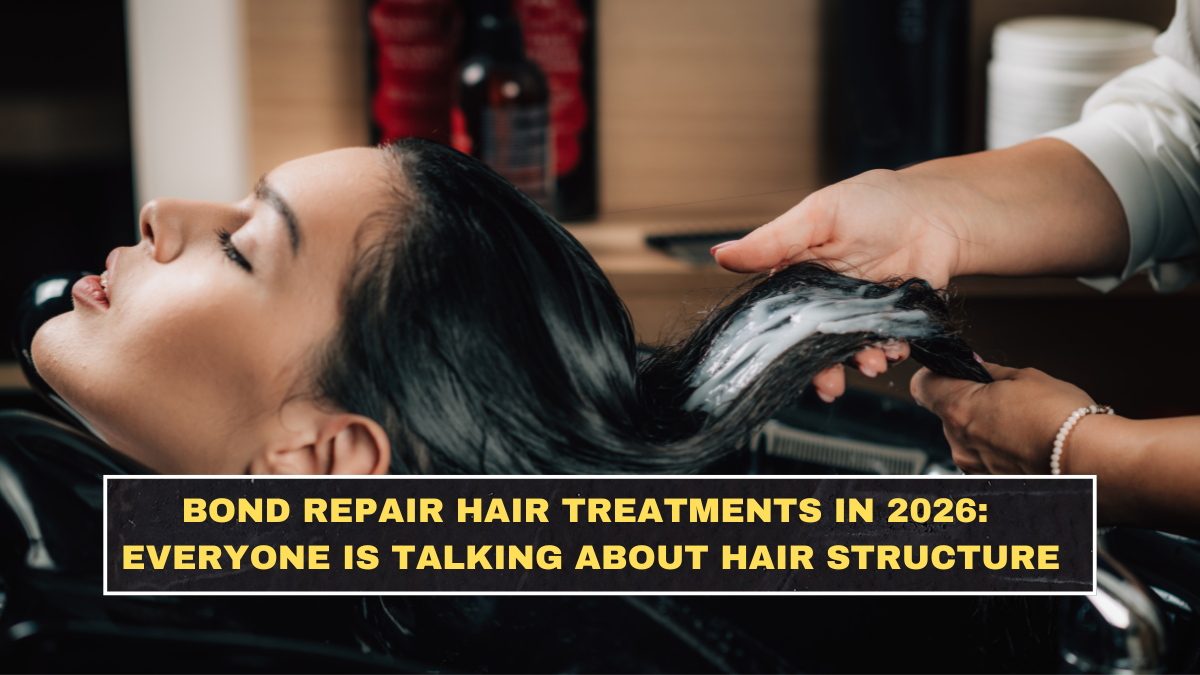
Bond repair is trending because hair care is shifting away from surface-level “shine” promises and toward structural treatment language. Vogue’s 2026 hair-care trends piece says ingredient-led products are now focusing more directly on hair structure, with bond-repair treatments named as one of the standout categories this year.
The reason is not complicated. More people are dealing with bleach, color, heat styling, smoothing treatments, and general breakage from overprocessing. Once consumers started hearing that damage happens inside the hair structure, not just on the surface, “bond repair” became an easy category for brands to sell. That does not make it fake. It just means the marketing now has a scientific-looking hook people can understand.
What does bond repair actually mean?
Bond repair products are marketed around the idea that hair contains structural bonds that help give it strength and shape. Olaplex explains that hair is made of keratin and held together by disulfide, salt, and hydrogen bonds, with disulfide bonds being especially important for strength and structure. The company also says its bond-building technology is designed to target damaged disulfide bonds.
That is the core concept buyers need to understand. Bond repair is not just about making hair feel softer for a day. It is about trying to reinforce weakened internal structure so hair becomes more resistant to breakage. Dermatology Times described bond-building treatments as products that increase tensile strength and make the hair shaft more resistant to pulling and grooming damage.
How do bond repair products differ from regular conditioners and masks?
A regular conditioner usually works mainly on the surface. It smooths, softens, detangles, and can temporarily improve how hair feels and looks. A bond repair treatment is sold as something deeper and more structural. That is why these products are usually framed around bleach damage, repeated heat damage, or chemical services rather than simple dryness. Vogue’s 2026 trend report specifically positions bond repair as part of a move toward structure-focused treatment, not just cosmetic smoothing.
This is where people get confused. A product can make hair feel amazing without truly addressing structural weakness. On the other hand, a bond repair product can improve resilience without making the hair feel like silk in one wash. The smartest buyer stops expecting one category to do every job. Softness, shine, smoothing, and structure are related, but they are not identical outcomes.
Why are Olaplex and K18 always part of this conversation?
Because they helped define the category in consumers’ minds. Olaplex centers its positioning on bond repair and says its technology targets disulfide bonds, while K18 positions its peptide treatment as biomimetic hair science that reconnects broken keratin chains. K18 also says its leave-in mask is clinically proven to reverse damage from bleach, color, chemical services, and heat.
That does not mean they are interchangeable. Olaplex and K18 use different language and different scientific framing. The important point is that both helped move the category away from vague repair claims and toward more specific structural claims. Once that happened, bond repair stopped sounding like a niche salon concept and started becoming mainstream consumer language.
Who actually needs bond repair treatments?
| Hair situation | Bond repair likely useful? | Why |
|---|---|---|
| Bleached or heavily colored hair | Yes | Chemical services weaken internal structure |
| Frequent heat styling | Often | Repeated stress can worsen breakage |
| Mild dryness only | Sometimes not necessary | A regular conditioner may be enough |
| Severe breakage and overprocessing | Yes | Structure-focused support matters more |
| Healthy untreated hair | Usually less necessary | May be overkill for no clear problem |
This is the honest filter buyers should use. Bond repair makes the most sense for people with real structural stress in their hair, not for every person with a bit of frizz. Dermatology Times specifically linked bond-building treatments to increased tensile strength and better resistance to breakage from physical stress.
What are brands overselling in this category?
The biggest exaggeration is the idea that damaged hair can be completely reversed like nothing happened. That is where the language gets slippery. K18 says it can reverse hair damage in minutes, and Olaplex says it restores strength and structure with clinically proven results. Those claims may reflect real product performance in controlled testing, but consumers still need to think clearly: damaged hair is still damaged hair, and no product turns overprocessed hair into untouched virgin hair.
Another exaggeration is when people assume bond repair replaces all other hair care. It does not. If hair is dry, tangled, rough, or badly handled day to day, bond repair alone will not rescue bad habits. These products work best as part of a broader routine that includes less heat abuse, less chemical damage, and better overall care. That is the uncomfortable part many buyers avoid because buying one “science” product feels easier than changing what keeps damaging the hair.
Why is the category likely to keep growing in 2026?
Because it fits the current direction of beauty: ingredient-aware, treatment-led, and structurally focused. Vogue’s 2026 report makes clear that consumers are increasingly looking at ingredient logic and deeper repair claims rather than only styling benefits. Bond repair fits that shift perfectly.
It also keeps growing because the problem is real. People are not inventing bleach damage, breakage, and heat stress. As long as those behaviors continue, bond repair will keep sounding useful. The category has more staying power than a random beauty fad because it is tied to a visible, frustrating problem that many buyers actually have.
Conclusion
Bond repair hair treatments are trending in 2026 because the market has moved toward structure-first hair care. The category is built around a real idea: hair damage is not only about how strands feel on the outside, but also about weakened internal structure. That is why products from brands like Olaplex and K18 keep dominating the conversation and why bond repair keeps appearing in 2026 hair-trend reporting.
The smarter takeaway is this: bond repair is useful, but it is not magic. It makes the most sense for people dealing with real damage from bleach, color, or heavy heat styling. For everyone else, the category can quickly become another expensive way to pretend routine damage is being “fixed” while the same bad habits continue.
FAQs
Do bond repair hair treatments actually work?
They can help improve hair strength and resistance to breakage, especially for damaged hair. The strongest support for the category is around structural reinforcement and tensile strength, not miracle transformation.
Are bond repair products only for bleached hair?
No. They are especially relevant for bleached or chemically treated hair, but they can also help hair stressed by repeated heat styling or other physical damage.
Is bond repair the same as keratin or conditioning?
No. Bond repair is marketed around restoring or reinforcing internal hair structure, while conditioners mainly soften and smooth the surface. They can complement each other, but they are not the same job.
Why is bond repair so popular in 2026?
Because ingredient-led, science-framed hair care is growing, and bond repair directly addresses a common problem: breakage from bleach, color, and heat damage.
Click here to know more