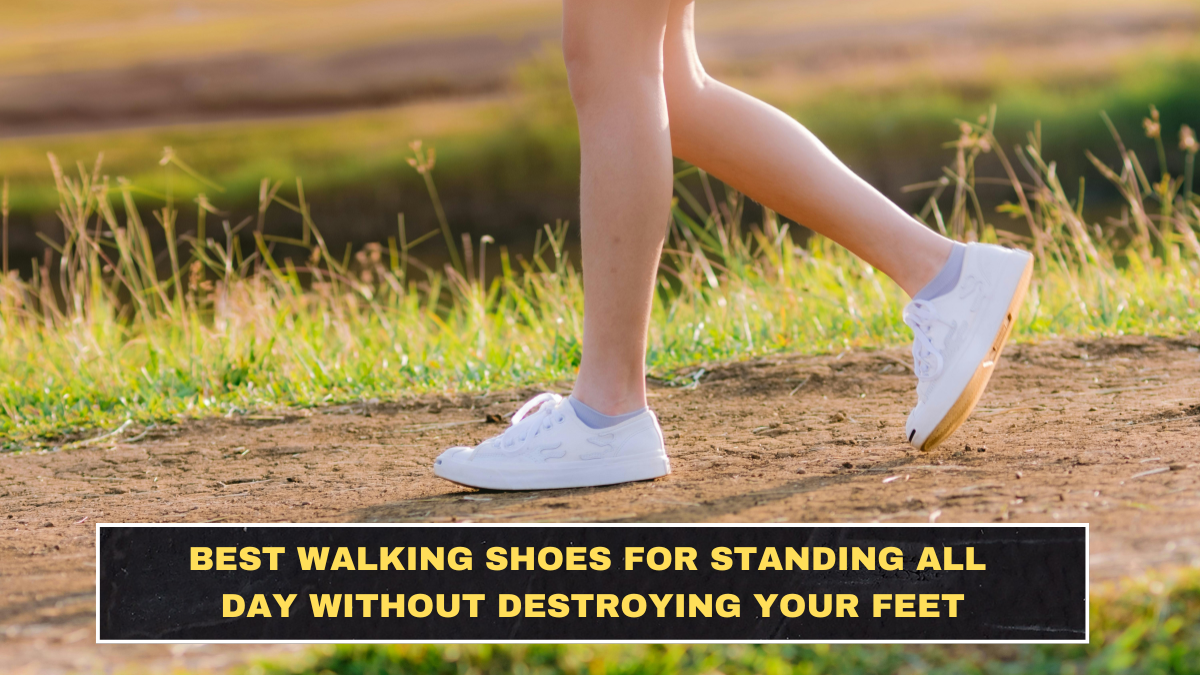
The biggest mistake people make is buying shoes that feel soft for five minutes and assuming that means they will feel good after eight hours. That is how people end up with tired arches, sore heels, and lower-back irritation by the end of the week. If you stand or walk all day, the best shoe is not just “cushy.” It needs a stable base, decent arch support, enough room in the toe box, and cushioning that does not collapse too fast. The American Podiatric Medical Association’s seal program exists for exactly this reason: some shoes are specifically recognized as being beneficial to foot health, which is a better starting point than random hype on social media.
Why do so many people still buy the wrong pair?
Because most people shop for comfort too quickly. A shoe can feel plush in the store and still be a bad match for all-day standing if it is unstable, too narrow, or too flat for the person wearing it. Health’s 2026 testing with podiatrist input leaned on factors like comfort, support, durability, and value after more than 1,000 hours of wear, which tells you something useful: real comfort is about how the shoe performs over time, not how it feels in the first 30 seconds.
Which features matter most when you are on your feet all day?
Start with four things: support, cushioning, fit, and weight. Support matters because your feet are carrying your body for hours, not just during a quick walk from the car. Cushioning matters because repeated impact and pressure add up. Fit matters because a cramped toe box or heel slippage will annoy you long before the shift is over. Weight matters because a heavy shoe can make your legs feel more tired than you expect.
That is why the “best” shoe is rarely one universal model. Some people need more arch structure. Some need softer cushioning. Some need a roomier forefoot. And some need a shoe that is easier on plantar fasciitis or high arches. The better way to think about it is not “What is the single best walking shoe?” but “Which shoe solves the kind of discomfort I actually have?”
| What to look for | Why it matters for all-day standing |
|---|---|
| Supportive midsole | Helps reduce foot fatigue over long hours |
| Enough cushioning | Softens repeated impact and pressure |
| Stable base | Keeps plush shoes from feeling sloppy |
| Roomy toe box | Prevents squeezing and irritation |
| Good fit at the heel | Reduces rubbing and sliding |
| Reasonable weight | Makes long wear less tiring |
Which walking shoes stand out in 2026?
The strongest names showing up in expert-tested 2026 lists are not all the same kind of shoe, which is exactly the point. Health named the Nike Motiva its best overall comfortable walking shoe for 2026, highlighting its cushioning and rocker design. The Ryka Devotion X was singled out there for all-day standing, while Orthofeet Kita stood out for orthopedic support and a hands-free design. Health also pointed to the Skechers Go Walk Flex as a budget-friendly option and the Adidas Ultraboost Light as a strong choice for all-day comfort in its high-arches coverage.
That mix is useful because it kills the lazy idea that everyone should buy the same shoe. If you want a general comfort pick, Nike Motiva makes sense. If your job has you standing for long stretches, Ryka Devotion X deserves attention. If you need more orthopedic-style support, Orthofeet is the more obvious lane. If you want something more budget-aware, Skechers keeps showing up for a reason.
Are expensive shoes automatically better?
No. Expensive shoes are sometimes better, but sometimes they are just better marketed. Price can reflect better materials, more cushioning technology, or stronger brand reputation, but it can also reflect branding and nothing else. The useful question is whether the shoe matches your actual problem. A pricier runner-style shoe with soft foam is not automatically the right answer if you really need more structure and support. At the same time, the cheapest pair on the shelf often feels cheap after a week because the cushioning flattens and the support was weak to begin with.
How should you choose based on your feet, not the hype?
If your feet feel generally tired and beaten up, start with cushioned walking shoes that still have a stable platform. If you deal with plantar fasciitis, arch pain, or heel pain, lean toward shoes known for support rather than only softness. If your forefoot feels squeezed by most shoes, look harder at roomy designs instead of forcing yourself into standard-width styles. Health’s 2026 lists separated picks for plantar fasciitis, high arches, wide feet, and budget shoppers because foot problems are not interchangeable.
What shopping mistakes ruin comfort the fastest?
One, buying based only on looks. Two, buying too narrow because you like how sleek the shoe appears. Three, assuming ultra-soft equals supportive. Four, waiting until the shoe is totally dead before replacing it. And five, refusing to admit your foot type matters.
This is where people waste money. They keep buying what is trendy instead of what actually supports them through a full day. If your feet hurt every evening, that is not normal adult life. That is feedback that your footwear is probably wrong.
What is the smartest takeaway before buying?
Stop hunting for the mythical perfect shoe and start looking for the right category of shoe. In 2026, the strongest all-around names from expert testing include Nike Motiva, Ryka Devotion X, Orthofeet Kita, Skechers Go Walk Flex, and Adidas Ultraboost Light, but the real winner depends on whether you need cushioning, support, width, or budget value most. Shoes that carry the APMA seal also deserve extra attention because they have been reviewed for foot-health benefit, which is more useful than trusting random influencer praise.
FAQs
What is the best walking shoe for standing all day in 2026?
There is no single universal winner, but Health’s 2026 testing named the Nike Motiva its best overall comfortable walking shoe and the Ryka Devotion X as a standout for all-day standing.
Are soft shoes always better for standing all day?
No. Softness helps, but shoes also need stability and support. A shoe that is only plush can still feel bad after long hours if it lacks structure.
Is APMA approval worth checking?
Yes. The APMA seal program recognizes footwear found beneficial to foot health, so it is a smarter filter than shopping blindly.
What if I have plantar fasciitis or high arches?
Then your best shoe may be different from the best general walking shoe. Health’s 2026 coverage specifically separates options for plantar fasciitis and high arches, which is the smarter way to shop.