Extreme heat changes how the body handles fluids, appetite, and energy. The basic problem is dehydration. The CDC says dehydration can contribute to overheating, mood change, and poor thinking, while heat illness risk rises as fluid loss increases. The CDC also advises drinking plenty of fluids in hot weather and limiting alcohol and drinks high in sugars, sodium, and caffeine.
That is why heat-wave eating should not be built around heavy, greasy, salty meals and random cold drinks. In hot weather, the smarter approach is lighter meals, water-rich foods, and enough sodium and fluids when sweating heavily. The American Heart Association notes that water-rich foods such as melons, berries, lettuce, celery, tomatoes, cucumbers, soups, and yogurt can support hydration, and says foods can provide about 20% of the body’s fluid intake.
Which foods help most in extreme heat?
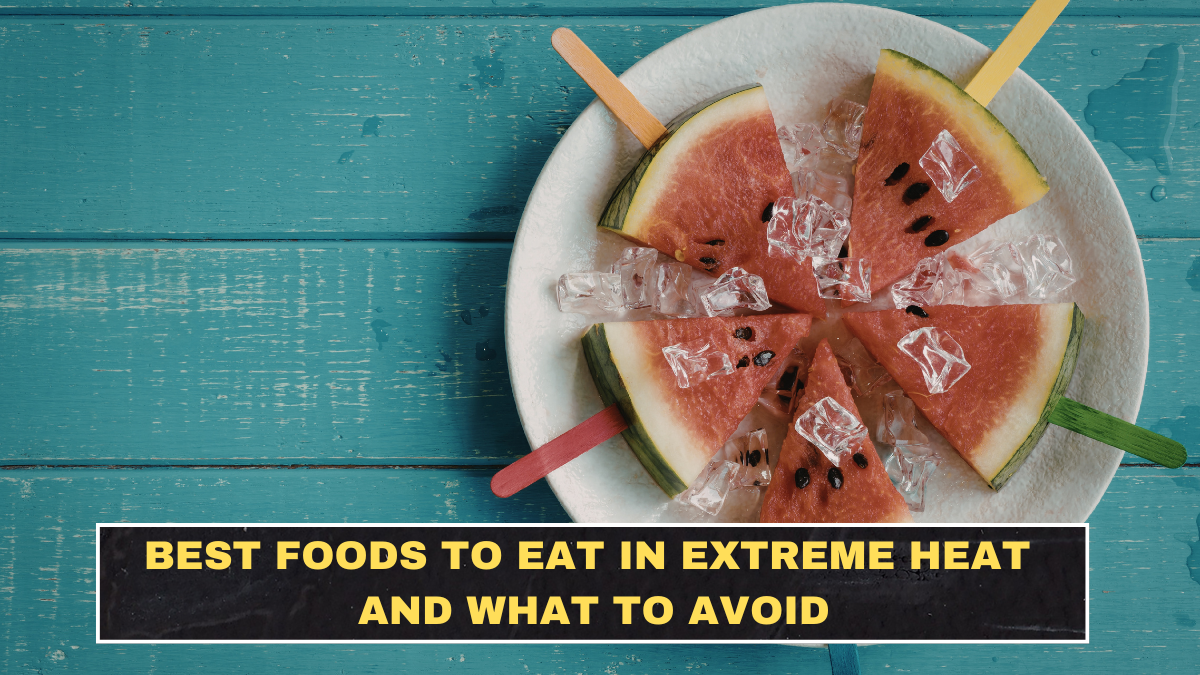
The best foods in extreme heat are usually simple, light, and high in water. Cucumbers, watermelon, oranges, berries, tomatoes, lettuce, and yogurt are strong choices because they help with hydration without feeling too heavy. The American Heart Association highlights cucumbers at about 95% water and recommends fruits and vegetables with at least 85% water. The Academy of Nutrition and Dietetics also points to water-rich foods such as lettuce, watermelon, grapefruit, broccoli, and tomatoes during hot weather.
Cold salads, fruit bowls, curd or yogurt-based meals, vegetable soups served cool or lukewarm, and simple meals with fruit plus protein are often more practical than rich hot dishes. The point is not that hot food is forbidden. It is that heavy food can feel harder to tolerate when appetite drops in heat, which the AHA says is common during summer.
What should a good heat-wave food plate look like?
| Food type | Good examples | Why it helps |
|---|---|---|
| Water-rich produce | Cucumber, watermelon, oranges, berries, tomatoes | Adds fluid and feels lighter |
| Cooling dairy or similar | Yogurt, curd, smoothies | Helps with hydration and recovery |
| Light balanced meals | Salad with beans, lentils, fish, or eggs | Gives energy without heaviness |
| Easy snacks | Fruit, chilled veggies, homemade popsicles | Helps maintain intake in low appetite |
| Smart drinks | Water, oral rehydration options, moderate unsweetened iced tea | Supports hydration |
This is the part many people get wrong. They either eat too little or live on sugary drinks. Neither is smart. Water is still the best default drink for most people, according to the AHA, while electrolyte drinks can be useful during vigorous activity in very hot weather.
When do electrolytes matter more than plain water?
Plain water is best for most normal summer days, but electrolytes matter more when sweating is heavy for a long time, especially during outdoor work, exercise, or heat exposure. The CDC Yellow Book notes that sweat contains sodium and chloride, and dehydration is a major factor in heat-related illness. NIH clinical guidance on dehydration also says oral rehydration solutions or clear liquids may be useful in mild dehydration, while excessive sugar should be avoided.
That means water alone is not always enough after long hours in severe heat. If you are sweating heavily, feel drained, or are physically active outdoors, some sodium replacement can matter. But do not use that as an excuse to drink sugar-heavy beverages all day.
Which foods and drinks should people avoid in extreme heat?
Avoid alcohol first. Both the CDC and the AHA warn against alcohol in hot weather because it can worsen dehydration. Drinks high in added sugar are also a weak choice because they can add calories without hydrating as well as plain water. Very salty foods can make thirst worse, and extremely heavy fried meals can feel harder to manage when heat already suppresses appetite.
Caffeine is not a total ban, but it should be moderate. AHA reporting notes that moderate unsweetened iced coffee or tea can still be hydrating, but overdoing caffeine in intense heat is not smart.
What is the smartest eating strategy during extreme heat?
Eat lighter meals more often, keep water nearby, and build meals around high-water foods. Add fruit, vegetables, yogurt, soups, and simple proteins instead of waiting until you feel exhausted and then overeating something heavy. If you are working or exercising outside, hydration planning matters even more because heat illness can escalate quickly. The CDC and NIOSH both stress that extreme heat can lead to heat exhaustion and heat stroke.
The blunt truth is simple: in extreme heat, food should help you stay functional, not make the body work harder.
FAQs
What are the best foods to eat in extreme heat?
Water-rich foods such as cucumber, watermelon, berries, tomatoes, lettuce, citrus fruits, and yogurt are among the best choices because they support hydration and feel lighter in hot weather.
Is water enough in extreme heat?
Usually yes for normal daily activity, but electrolytes may matter more if you are sweating heavily for long periods during work, sport, or severe heat exposure.
What should be avoided in extreme heat?
Alcohol, very sugary drinks, and overly heavy meals are poor choices in extreme heat because they can worsen dehydration or make heat fatigue feel worse.
Can food really help with hydration?
Yes. The AHA says foods can provide about 20% of the body’s fluid intake, especially fruits and vegetables with high water content.