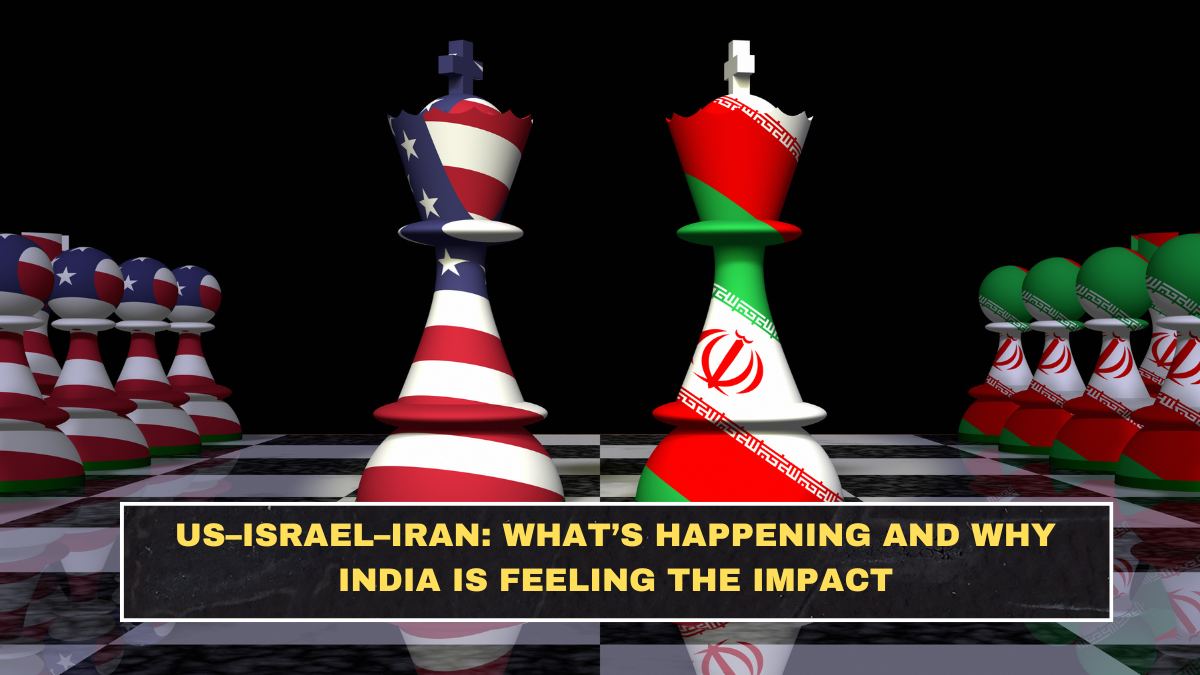
The US–Israel–Iran situation is trending because of rising geopolitical tension in the Middle East and its direct connection to global oil markets. Unlike isolated conflicts, this triangle matters because it links military tension with economic impact—especially energy prices.
Search interest has surged as people try to understand whether the situation could disrupt oil supply and how it affects countries like India that rely heavily on imports.

What Is Actually Happening (Confirmed Context)
Here are the facts grounded in established geopolitical dynamics and recent reporting patterns:
-
Israel and Iran are involved in ongoing indirect conflict, often through regional proxies
-
The United States supports Israel strategically and maintains military presence in the region
-
Tensions periodically rise due to strikes, counter-strikes, or security incidents
-
No official declaration of direct full-scale war between all three has been confirmed
This is not a new conflict—it is a continuation of long-standing geopolitical friction. What changes is the intensity and frequency of incidents.
Why Oil Prices React Immediately
The biggest reason this situation trends globally is oil. The Middle East accounts for a significant portion of global crude oil supply, and even the risk of disruption impacts prices.
| Factor | Impact on Oil Market | Why It Matters |
|---|---|---|
| Middle East Tension | Price volatility increases | Supply risk perception rises |
| Iran’s Role | Major oil producer under sanctions | Supply uncertainty |
| US Involvement | Military and strategic influence | Market confidence shifts |
| Shipping Routes | Sensitive chokepoints (Hormuz) | Trade flow concerns |
Oil markets react to uncertainty faster than actual disruption. That’s why prices move even without confirmed supply cuts.
Why India Feels the Impact
India imports over 80% of its crude oil needs. That’s the uncomfortable reality most people ignore.
So when global oil prices rise:
-
Fuel prices may increase or remain elevated
-
Inflation pressure rises across sectors
-
Rupee may face pressure due to higher import bills
Even if no physical supply is disrupted, price volatility alone affects India’s economy.
Impact on Markets and Travel Sentiment
The ripple effects go beyond fuel:
-
Stock markets react negatively to rising oil prices
-
Airline costs increase due to higher fuel expenses
-
Travel sentiment weakens due to regional instability
This is why even people not directly connected to the region feel the impact.
What Is NOT Confirmed (Avoid These Assumptions)
Let’s be clear—most viral claims exaggerate the situation.
Not confirmed:
-
Full-scale war between US, Israel, and Iran
-
Closure of major oil routes
-
Immediate global supply crisis
If you’re seeing headlines claiming “global war” or “oil shutdown,” they are not backed by verified official announcements.
What You Should Watch Next
Stop reacting to noise. Watch these actual indicators:
-
Brent crude oil price movement
-
Official US, Israeli, and Iranian government statements
-
Any confirmed disruption in shipping routes
-
OPEC or global energy policy responses
These are real signals—not speculation.
Conclusion
The US–Israel–Iran situation is trending because it directly connects geopolitics with economic impact—especially oil.
There is no confirmed full-scale war, but the tension is enough to influence global markets and India’s economic outlook. The real story is not conflict escalation—it’s how quickly uncertainty translates into financial impact.
If you’re ignoring the oil angle, you’re missing the entire point.
FAQs
Is there a war between US, Israel, and Iran?
No full-scale war has been officially confirmed. The situation involves ongoing tension and indirect conflict.
Why are oil prices affected?
Because the Middle East is a major oil-producing region, and any tension creates supply uncertainty.
How does this impact India?
India depends heavily on imported oil, so rising prices increase fuel costs and inflation.
Should people be worried about global supply disruption?
As of now, there is no confirmed disruption, only risk perception affecting markets.
Click here to know more.